Off To Italy

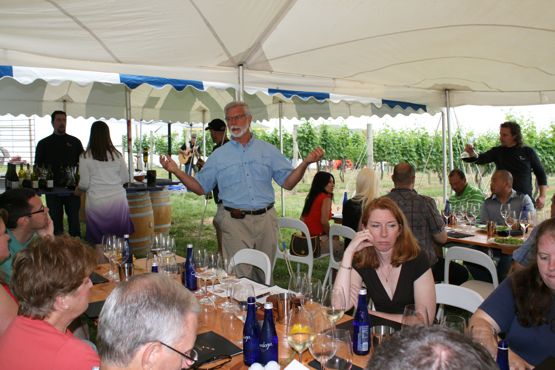
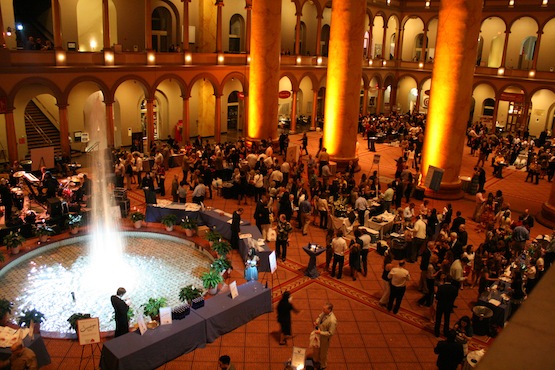
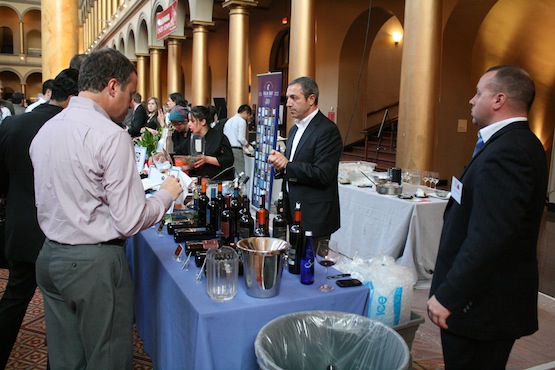
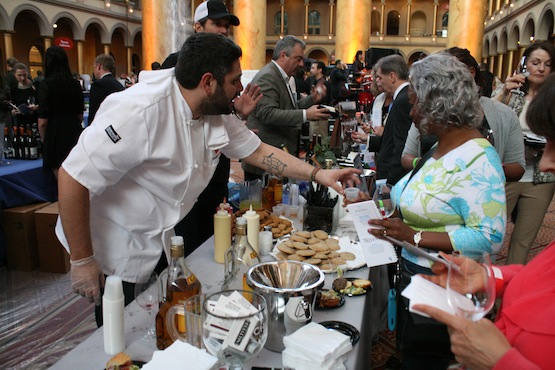
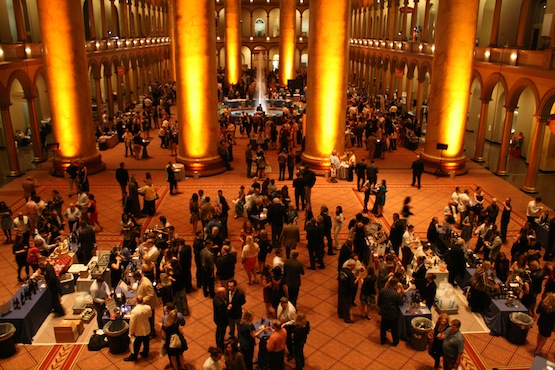
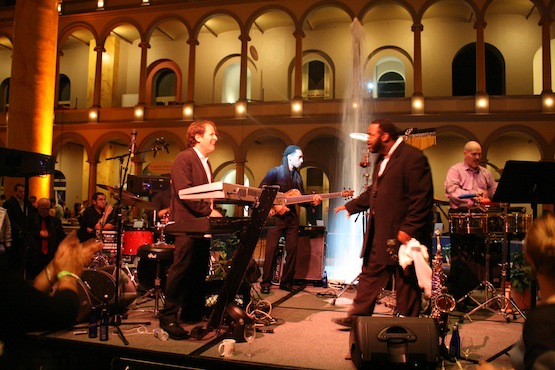
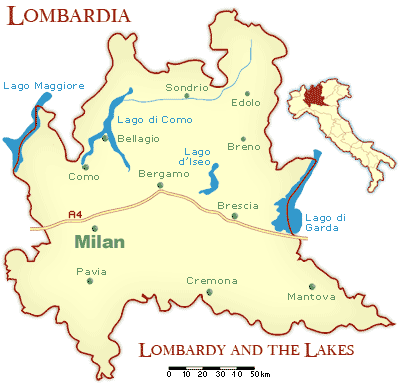
Well, not really. Last week I was invited by Tiffany Van Gorder, general manager of Balzac Communications & Marketing, to attend a luncheon and wine tasting at the W Hotel. Featured at the event were wines from Lombardy. Readers may know that I enjoyed last year’s Taste of Lombardy event at the Palomar Hotel, so I could not refuse an invitation to attend the again this year. A history of wines and winemaking in Lombardy was provided in last year’s post, so rather than repeat that information again, I will simply provide the link to that article here for readers to enjoy. My focus now will be this year’s event and the wines that I sampled.

Tasters were greeted to the event with a glass of Franciacorta, a wine which looks like a sparkling wine but is labeled Franciacorta. Sippers may be familiar with Prosecco, another style of Italian bubbly; however, the tasting notes explained that Franciacorta “names the growing area, the production method and the wine…” It can be made from Chardonnay and/or Pinot Noir although Pinot Blanc may also be used. Franciacorta is produced by secondary fermentation in the bottle, and in an interesting historical note, the process goes as far back as the Middle Ages when Benedictine monks first produced the wine. The growing region, located in the northeastern region between Lombardy and Venetia, was officially approved in 1967 with the boundaries similar to those that were defined in a statute approved in 1429. Of course, it is served in a flute so that its bubbles can race to the top of the glass. Crisp and refreshing with bright apple notes, it was a nice way to start the event.

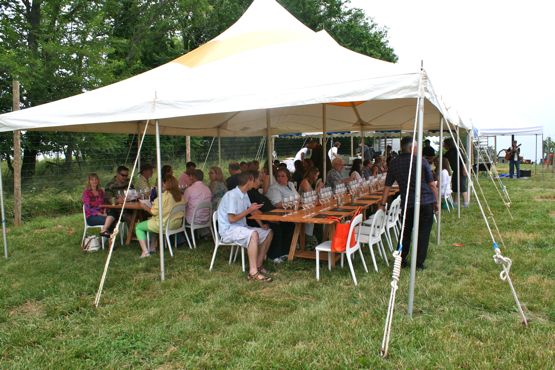
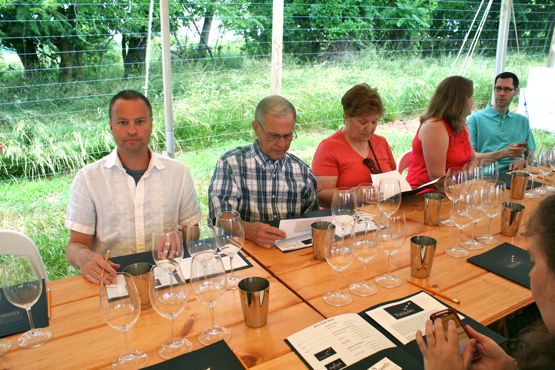
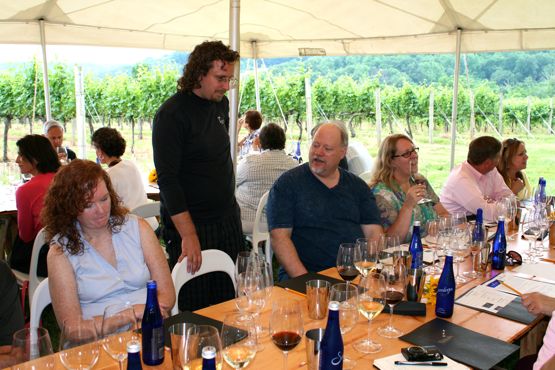
The dining tables were organized according to the various wineries representing the Lake Garda territory at the event with three wineries listed per table. Wines from the designated wineries were then served their wines with the courses served at the luncheon. A creamy risotto topped with shrimp was served for the first course, and this was paired at my table with an offering from the Monte Cicogna label, the aromatic 2007 Il Torrione made with 100% Riesling Renano. Fruity with a nice mouth feel, it paired well with the risotto. Feel free to also serve this with a brie-style cheese. The second course featured a braised beef topped with fresh dill partnered with a 2009 Gropello from Averoldi. This presented a dark garnet color with elements of juicy berries and spice on the nose and palate. Quite nice with the beef, it should also pair well with summer sausage and tangy cheeses. Lamb chops were served with the third course alongside the more complex 2005 Akros Riserva from Cantina Bergamasca. Aged for three years in French oak, this blend of Merlot and Cabernet Sauvignon was rich in dried fruit aromas and flavors with additional nuances of anise and vanilla. Though fine with lamb chops, I’d serve this one with almost anything that moos, quacks or oinks. Cheesecake finished the luncheon and served with the delightful Moscato di Scanzo; a red Moscato, the lovely floral nose was truly intoxicating! Chocolates or blue cheese might also be a match for this rich dessert wine.

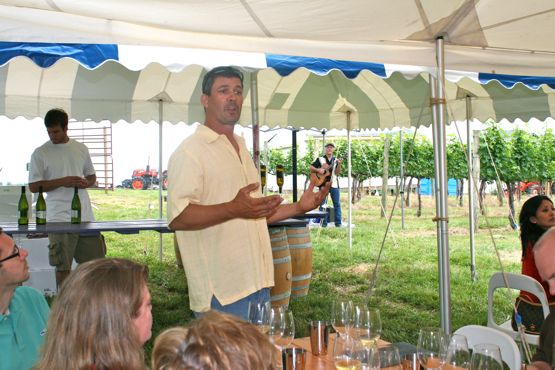
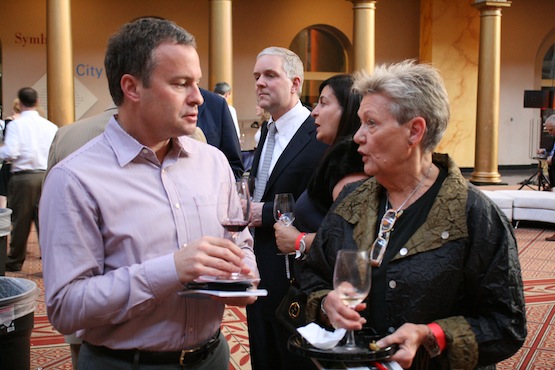
Representatives from the wineries sat at our tables during the luncheon, and this provided an opportunity for tasters to learn more about the wines from the Lombardy region. Of interest to me was the conversation about reaching a larger American consumer base as it recalled many conversations that I have had with local winemakers. Both share a number of similar obstacles. Wineries in both regions tend to be small and therefore yield limited productions. Furthermore, varietals that grow well in these regions are not necessarily ones that have immediate name recognition. When was the last time you looked for an Italian Gropello, for example? Probably the last time you were in search of that Petit Verdot from Virginia! The perceived American palate is yet another dilemma. There is no doubt that Americans may be more willing to sip beyond California these days; however, the Napa region with its familiar styles and varieties still captivates the American consumer. And the Italian wines that are most familiar to Americans tend to be low-end, vast productions of Pinot Grigio and Chianti. Therefore, part of the marketing model for both Virginia and Lombardy winemakers has to be educating the American consumer to encourage them to “drink” outside of the box. Price inevitably came up as yet another inhibiting factor—how much will the American consumers pay for a bottle of wine? High quality but limited productions tend to make for a more expensive bottle of wine. This is probably the chief issue that Virginia wineries grapple with, but it was also the issue shared by the Lombardy winemakers. (However, I will say that some of the price points that were quoted to me seemed more than reasonable given the quality of wines that I tasted.)

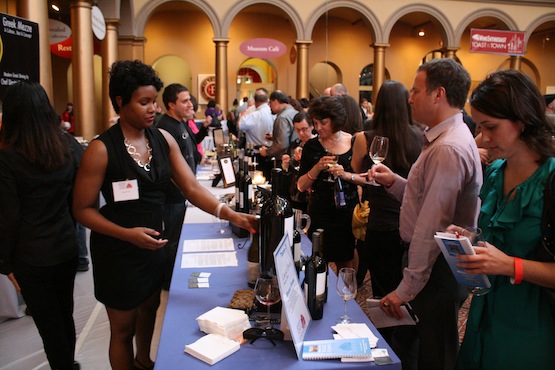
Lunch came to end, and Tiffany invited us all to visit the 16 stations which represented the various wineries of the Lombardy region. Each station offered wines that best expressed the vineyards’ terroir. With glass in hand, I made my rounds to the various stations to swirl and sip away. What were my favorites? That will be the focus of my next post. Until then, visit your local wine shop and ask for a wine made in Lombardy; be sure to mention that Virginia Wine Time sent you!

More Catching Up: Loudoun Trail

This post will be a round up of reviews from visits done within the past month and will feature Casanel Vineyards, Doukenie Winery. and Fabbioli Cellars.

Casanel Vineyards: As the weather is warming up, white wines are bound to be more popular. At Casanel Vineyards, the fruity Batucada Viognier was rich with floral aromas and apricot flavors. The Batucada Norton is a rose made from the Norton grape and is fermented as a white wine. I got red hots in the mouth; Norton fans may appreciate this version of the grape with barbeque. The earthy 2007 Chegada Cabernet Sauvignon took a gold at the Virginia State Fair.

Doukenie Winery: A summer favorite is always the Mandolin, a blend of Traminette, Vidal Blanc, and Seyval Blanc; however, this was not available for tasting on the day that we visited the winery. The 2009 Sauvignon Blanc was aged in acacia barrels and certainly had a fuller mouth feel; citrus flavors abounded here. Of the reds, the 2008 Petit Verdot presented the characteristic inky color with aromas of violet, dark fruit, and tobacco. Of course, Hope’s Legacy is the raspberry wine that all visitors enjoy especially with a piece of dark chocolate.

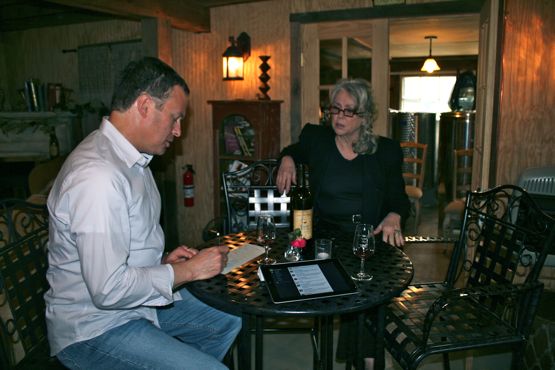
Fabbioli Cellars: It’s always a pleasure to taste Doug’s wines. We enjoyed the current tasting set up which allows guests to sit at a station with a personal tasting associate; Nadia conducted our tasting on this particular visit. Our notes suggest that Doug will be releasing a Traminette, and this may have already happened as of this writing. The 2009 Rosa Luna, a rose, was dry with characteristics of grapefruit and bright berries and should prove to popular for the summer. The juicy 2009 Cabernet Franc was Paul’s favorite red with its elements of brambleberries and spice. I preferred the more complex 2009 Tre Sorelle, a blend of Merlot, Cabernet Sauvignon and Petit Verdot. An age-worthy wine, it should be enjoyed with a steak!

Pay these wineries a visit to sample the current releases. Be sure to mention that Virginia Wine Time sent you!

Meritage Vertical

On April 13 2011 , third president and wine visionary Thomas Jefferson would have turned 268 years old; fittingly, Jefferson Vineyards remembered the event on April 16 with a Meritage Vertical Tasting. On display for tasting were Meritage blends from 2002 to 2009; of course, Virginia Wine Time was there swirl and sip!

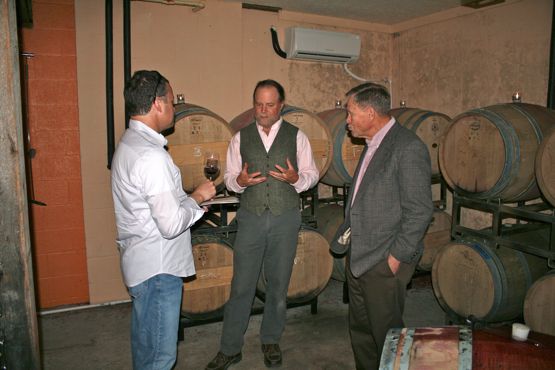
Winemaker Andy Reagan greeted us in the refitted barrel room where the tasting was held. This facility is located across from the tasting room, and it now includes a fireplace with comfy sofas and bar space. Barrels continue to share some of the space to create a hip environment for tasters to enjoy these kinds of events. In keeping with this informal vibe, Regan wisely planned a decontructed tasting which allowed guests to visit different bar stations to sample Meritage vintages while noshing food pairings appropriate for each vintage. The result was an unpretentious evening of well-crafted wines, excellent food and great company!

Station #1 featured the 2004 and 2006 Meritage partnered with ham biscuits. Paul and I both favored the earthy 2004 Meritage with its mixed berry and dried herb elements. I found it to be elegant yet rustic enough to enjoy with the salty ham. Station #2 featured the 2005 and developing 2009 vintages, and these were paired with seared duck breast. Paul favored the rich 2005 Meritage blend with its amoras of dark fruit and spice. While I also enjoyed this one, I recognized the potential in the 2009 Meritage. Both the 2005 and 2009 vintages were products of hot, dry summers, and I suspect that the 2009 vintage will be a blockbuster wine. It was already rich with dark plum and cherry fruit complimented by earthy notes that will create a complex pour. Of course, this one is still in the barrel, but I expect that Reagan will earn several medals with this one.

So on to Station #3 where we sampled the 2008 and 2007 Meritage blends. Unlike the Merlot- based blends that dominated the Meritages at Stations #1 and #2, these featured Cabernet Franc in the starring role. This was a coin flip for me; however, I reached a more nuanced conclusion. Both were excellent, but the 2008 Meritage is more accessible and could be enjoyed now. If cellaring is the goal, then opt for the 2007 Meritage, the product of a stellar growing season with extreme drought conditions, reduced yields, but more concentrated flavors (sounds like 2010?). Complex fruit with earthy elements of tobacco and cedar made for a rich, bold wine that should age quite well. (I made a note to take home a bottle each of the 2007 and 2008.) Oh, and these were partnered with a sliced beef tenderloin—quite divine!

The tasting ended back in the tasting room with a sip of the 2002 Meritage and the blockbuster blend of Meritage 7.8.9 crafted by Reagan from a blend of the 2007, 2008, and 2009 Meritage vintages. The 2002 vintage was produced from yet another stellar growing season; dried fruit, licorice and tobacco characteristics prevailed here. The latter blend will be BOLD—wait for the release in April 2012 but anticipate the need to either decant or age. Of course, take my course of action and buy two bottles—decant one bottle to serve upon purchase and save the other for a future occassion. These were paired with strong cheeses and dried fruit.

As always, these events seem to fly by very quickly, and we were able to join this tasting with Frank Morgan of Drink What You Like and the dynamic duo who write Sip Swirl Snark after the tasting. Andy gave us a preview tasting of the 2010 Viognier. Amazing! We can’t wait for the release! It might even rival the 2007! Andy was a gracious host and spent much time with us to present the vintages as they were poured. We always have a great time with our fellow wine bloggers and Andy and his crew. We could not think of a better way to celebrate the birthday of Thomas Jefferson, and he would be quite proud of the Meritage blends poured in his honor at Jefferson Vineyards.  Plan a trip to Jefferson Vineyards, and mention that Virginia Wine Time sent you!

So Much Wine Too Little Time

I’m seriously backlogged with posting about our experiences, but I’ll try to get caught up in the next couple of weeks. I will start with the most recent experiences and feature Chester Gap Cellars and Hume Vineyards.

I’ll begin with Chester Gap Cellars. We always looks forward to running into Bernd Jung in the tasting room at Chester Gap Cellars, and this time was no exception. In fact, Bernd conducted our tasting; of course, he began with the white wines. Viognier is a specialty at Chester Gap, and Bernd produces both a stainless steel and barrel-aged version. Paul preferred the crisp 2008 Viognier with its floral nose and fruity flavors; however, I always tend to prefer barrel-aged over stainless steel. These always seem more substantial to me, and Bernd treated us to a comparison of the 2007 Viognier Reserve and the 2008 Viognier Reserve. Both were very good, but I kept reaching for the 2007 vintage. It presented a nice integration of floral aromas, stone fruit elements and oak nuances. However, the 2008 vintage was equally nice with citrus notes and a honeyed texture. With spring in the air and summer not so far away, do try the slightly sweet 2009 Cuvee Manseng and its heady tropical fruit characteristics.

Of the red wines, we both enjoyed the fruit forward 2008 Pettit Verdot with its dark berry and tobacco/earthy characteristics. Enjoy with roasted meats, leg of lamb or on its own with strong cheeses! We enjoyed a glass after our tasting—sans food.

We were eager to make our return to Hume Vineyards since several months had passed since our first visit. We recalled an unfinished tasting room but quality wines on the racks. This time around, we witnessed a finished facility and a crowded tasting bar; therefore, lots of things are going right at Hume Vineyards. Owner and winemaker Stephane Baldi guide us through a tasting of wines, and we were very pleased with the newly released 2010 Seyval Blanc. Crisp with a refreshing minerality, it presented notes of pear, melon and hay. Crabcakes should be served with this one! Of the reds, I was still a fan of the 2008 Detour which seems to be opening up quite nicely. Dark fruit and earthy elements prevailed here, and decanting would still be advised for those who wish to pour this one now. Chambourcin fans may be pleased with the 2010 Chambourcin, another new release at Hume Vineyards. The tasting notes suggest that this one is bold, and I will not argue with it! Big and jammy with 15.1% alcohol, it makes for an assertive wine. This was the first 2010 bottled red that we sampled, and when winemakers claim that 2010 may be the year for Virginia to rival California for big reds, this may be proof positive. Serve with big steaks and baked potatoes loaded with cheese and bacon—and then plan to hit the gym for about a week!

With spring already here and summer not so far away, think about picnic and barbeque fare with your favorite Virginia wines. Out of Virginia wine? Plan a trip to Cheaster Gap Cellars and Hume Vineyards to replenish your wine racks, and mention that Virginia Wine Time sent you.
Cowboy Up to Desert Rose

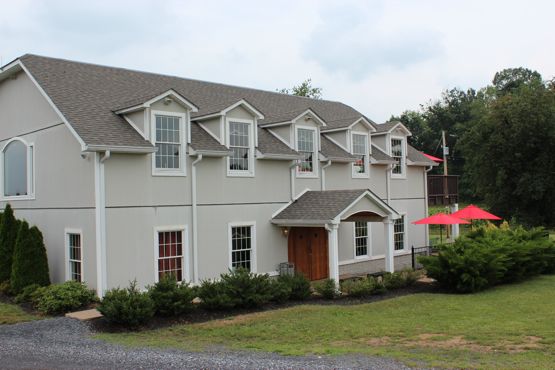
Yes, another new winery has opened in Virginia, and this one is Desert Rose Ranch and Winery. We happened upon Desert Rose Ranch and Winery on its second day of opening, and the place was packed with visitors. We hitched our favorite horse, Honda, out in the parking lot and made our was to the tasting room to see what the buzz was all about!

The tasting room is indeed a unique experience for Virginia and it resembles a ranch commonly found in Texas. A decidedly cowboy motif dominates the interior decor right on down to the toilet seats which advise visitors to “cowboy up” when in use and to “cowboy down” when finished. In fact, the name Desert Rose recalls the crystalline formation known as the desert rose, an example of which can be found in a display case in the tasting room. Since I was sporting a pair of cowboy boots myself, I felt quite comfortable walking up to the tasting bar to sample the releases! (Paul felt oddly out of place in his sneakers.)

All of Desert Rose’s releases were from estate grown fruit, and the current pours represent the winery’s first releases. Of the white wines, we both favored the oak aged 2010 Hitch Hollow Chardonnay with its pear and apple flavors and butterscotch finish. (Hitch Hollow refers to a 19th century community located on the Desert Rose property.) With summer on the way, some sippers may find the rose called Sparky a refreshing pour. Created from the 2010 harvest of Cabernet Sauvignon, Merlot and Cabernet Franc, its strawberry and melon flavors begged for a hot summer day and a picnic that included light cheeses, fruit salad, and spicy barbeque.

The red wines found us reaching another unanimous decision—the 2009 Cabernet Franc. We noticed brambleberries and spice characteristics that are unique to Cabernet Franc; aged for 15 months in American oak, it possessed a peppery finish. Port lovers should try the 2009 Starboard made from Northon grapes; dense in color and texture, it presented flavors of dark plums and licorice. A complimentary dark chocolate chip elevated the fruit characteristics. Starboard’s alcohol level clocks in at 18% with a sugar content of 8%; its port-like qualities were achieved by letting the Norton grapes hang on the vine for as long as possible. Once harvested, half of evolving Starboard is aged in American oak barrels with the second half aged in used whiskey barrels.

So cowboy up to the Desert Rose Ranch and Winery to enjoy this unique experience. Be sure to mention that Virginia Wine sent you!

Sneak Previews at Glen Manor

Glen Manor Vineyards held a barrel tasting this weekend, and we attended the event so that we could sample the developing wines from the 2010 vintage. We keep hearing about the potential for the 2010 vintage to be among the best ever for Virginia, and this barrel tasting gave us the first opportunity to see how this vintage is progressing in the barrels.

We must admit that we are big fans of winemaker Jeff White, and we had high hopes going into the tasting. We were not disappointed at the end of our tasting. Four red wines and one white wine were offered for sneak peaks, and all were intense in aromas and flavors. We started with the 2010 Cabernet Franc, and we noted dark fruit and earthy characteristics; these elements along with a dash of spice were even more evident in the 2010 Hodder Hill, a blend of Cabernet Sauvignon, Merlot and Petit Verdot. The Hodder Hill was developing in new French oak barrels for the tasting but the rest of the aging will eventually occur in older French oak barrels.

Stations III and IV allowed us to compare the 2010 barrel sample and the special release 2009 Petit Verdot that was already bottled. The 2010 will be a dynamite pour upon release—inky and jammy with lots of bold black fruit and spice, it was easy to conclude that this will be a blockbuster. However, only three barrels were produced, so it will indeed be limited. I must say, though, that I was as enamored with the elegant 2009 Petit Verdot offered at Station IV; it offered the characteristic dark fruit and spicy components that are associated with Petit Verdot but seemed more structured and refined. Candle lights and dinner parties with this one!

Our final sample was actually from a tank, and it featured the 2010 Late Harvest Petit Manseng. Waves of tropical fruit flavors seemed to say “aloha” in the mouth; at only 5% residual sugar, it could serve as a dessert wine or a partner with a cheese course and some proscuitto on the side. Speaking of food, I must add that the barrel samples were offered alongside a variety of foods that included mousse truffle canapes, mushroom fritters, empanadas, and dark chocolate truffles. My favorite was the fig preserve and mascarpone serve atop savory walnut shortbread paired with the Petit Manseng.

So when to expect to see these wines in the tasting room? Probably in 2012; however, the tasting room menu now features enough current releases to keep Glen Manor fans quite happy. Jeff White continues his excellence with Sauvignon Blanc; the 2009 vintage featured classic elements of citrus and grass with a vibrant acidity and minerality that beg for springtime crabcakes. The reds included the 2009 Cabernet Franc, 2008 Hodder Hill, and the 2008 Vin Rouge. All were well crafted; however, we both concurred that the bolder 2008 Vin Rouge was our favorite; this blend was heavier on the Petit Verdot (33%) with other components including Cabernet Sauvignon, Merlot, and Cabernet Franc. I noted aromas of blackberry, black cherry,tobacco and pepper with some anise to boot; similar fruit characters abounded in the mouth with a lenghty finish.

Needless to say, we left Glen Manor Vineyards with a few bottles of our favorite wines. We’ll be back soon, though, and we encourage readers to stop by for a tasting. Be sure to mention that Virginia Wine Time sent you.
Return To Cardinal Point

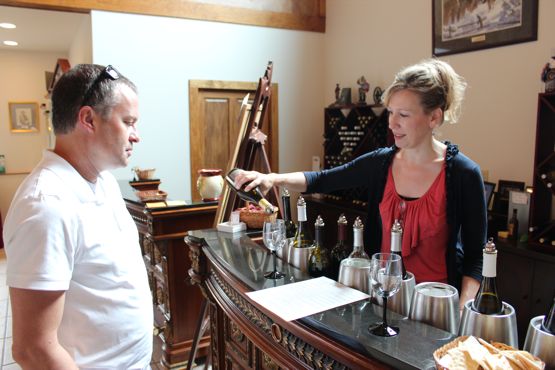
Our cider tasting event was a blast, but we were able to fit in a couple of wine tasting too. Along the way was Cardinal Point Vineyard and Winery and we were fairly certain that our last visit was well over a year or so ago. We also gambled that Sarah Gorman, sister of winemaker Tim Gorman, would be in the tasting room, so decided to stop by for a tasting and visit.

And indeed Sarah was in the tasting room upon our arrival! Sarah conducted our tasting and filled us in the latest happenings at Cardinal Point Vineyard and Winery. Five white wines were offered for tasting, and we both agreed that teh 2009 A6 was the gold-star winner. A blend of Viognier and Chardonnay, it presented pear and honey characteristics with a longer finish. I detected some cedar on the nose too. Nice for spring—I’d serve with shellfish now that crabcake season is around the corner. Sarah offered a comparison tasting between the 2008 Barrel Select Chardonnay and the 2009 Barrel Select Chardonnay, and I found the 2009 vintage to be more vibrant with apple, pear, and honey elements and a rich mouth feel. Paul became more nostalgic when he sipped the 2009 Quattro, a blend of Riesling, Gewuztraminer, Viognier, and Traminette.This is our traditional Christmas tree trimming wine that we serve with baked ham; in fact, Paul began to hum White Christmas as he brought his nose to the glass.

Of the red wines, an intriguing blend was the 2008 Cab F+Vio, and as the label implies it is a blend of Cabernet Franc and Viognier. Certainly a lighter bodied red wine, it offered bright red berry aromas and flavors with some spice notes too. A nice sipper especially for those who do not like red wines, this could also be served with herbed poutry or lamb chops. However, the ultimate favorite for both of us was the yet to be released 2009 Union, a blend similar to the impressive “3” blend. It’s a blend of three varietals from Cardinal Point. Tim Gorman, the winemaker created it on his own. Sarah gave us a top-secret sample of this one, so we’ll keep quiet on the details until the release date. Like suspense? For now, we can say that this is a blend of Petit Verdot, Cabernet Franc, and Tannat. Otherwise, we’ll keep readers posted on this one as it develops!

As always, it was a pleasure to sip and chat with Sarah Gorman. Sarah confirmed what we’ve heard along the wine trail about 2010—lower yields but spectacular fruit quality. Expect good things from the vintage. With spring in the air, stop by Cardinal Point Vineyard and Winery to enjoy a tasting of their current releases, and mention that Virginia Wine Time sent you.
Cider Houses Rule!

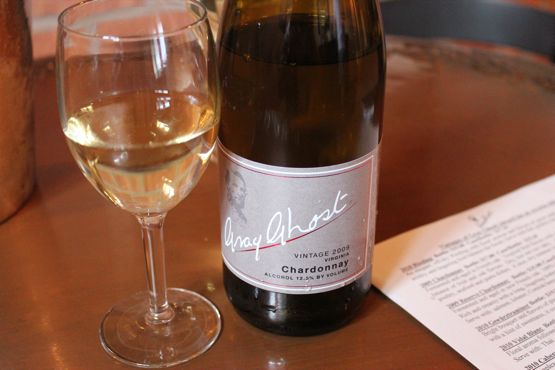
How’s that for a play on literary titles? Anyway, Frank Morgan of DrinkWhatYouLike teamed up with cider makers Diane Flynt of Foggy Ridge Cider and Chuck and Charlotte Shelton of Albemarle CiderWorks to organize a cider tasting at the Albemarle CiderWorks tasting room. We joined other bloggers and winemakers for the event and the evening ended with a cookout, wine and more cider!

A caveat must be issued here—neither Paul nor I have any experience with cider; therefore, our opinions must be taken with a huge grain of salt. Before we tasted, Charlotte Shelton provided us with a brief history of cider making in Virginia, and does it indeed go back to colonial times. Remember, the winemaking experiments were unsuccessful despite best efforts by early settlers, and even Thomas Jefferson was confounded by Virginia’s difficult climate. Apples, however, did grow well, and orchards were widely planted in Virginia. Virginia hard ciders were widely enjoyed, and John Adams began each day with a glass of the beverage. Over time, American palates moved away from hard ciders, and during Prohibition, of course, all alcoholic beverages were illegal. Although the Virginia wine industry began its renaissance some time ago, the cider industry has undergone a more recently revival;in fact, Foggy Ridge Cider and Albemarle CiderWorks are the only cider houses now operating in Virginia.

With that background in mind, we felt like we were revisiting a slice of Americana. Albemarle CiderWorks began its tasting with the CiderWorks 2009 Old Virginia Winesap which had the appearance of a bubbly sparkling wine. I applied my wine tasting techniques to the cider and observed a floral nose and a tart, acidic presentation in the mouth; assuming that I did okay with this one, I continued to swirl, sniff, and sip away. My own palate trended toward the Foggy Ridge offerings with the Foggy Ridge 2009 Serious Cider and the 2009 First Fruit topping my list of favorites. Serious Cider is made primarily from the Yarlington Mill apple and seemed lean, clean and elegant with lengthy apple flavors. First Fruit was simply delicious and presented the aromatics and mouthfeel more akin to a Chardonnay. Apples used here include Parmar, Harrison and Graniwinkle. As tasters sipped away, locally made artisan cheeses were passed around, and the creamy, full mouth texture of the Old Chatham Shepherding’s Kinderhook Creek was more than a match with the fuller-bodied First Fruit.

Of the Albemarle CiderWorks offerings, I found the 2009 Royal Pippin most appealing. Made from the Pippin apple, it was fruity and clean with a refreshing effervesence. Paul concurred on this one, and we both enjoyed it with the creamy Caromont’s Bloomsbury cheese.

The Sheltons and Diane Flynt continued to educate us as we sampled the various ciders. Like grapes, apple flavor profiles are impacted by terroir, and varieties are carefully selected so that they suit soils and climate. The tannic Yarlington Mills apples used in the Serious Cider, for example, grow best in orchards located at a 3000 foot elevation in the Blue Ridge Plateau. These cider makers are also on a mission to debunk stereotypes about ciders—too sweet, cheap buzz, not for the dinner table, etc., In fact, most of these ciders were dry with residual sugars clocking in at well under 1%; moreover, all were at a 7% alcohol level. And do not hesitate to serve these elegant ciders at any dinner gathering!

After the tasting, we continued our tastings and conversations over a cook out! Frank and Nancy (from Virginia Wine In My Pocket) grilled burgers, favorite wines and ciders were opened, and a nice evening was had by all. In the group picture below you can see we all had a wonderful time enjoying the wines and ciders. A HUGE Thank you to Diane, Charlotte, and Chuck and all the staff at Albemarle Ciderworks for their wonderful hospitality and to all the wine bloggers, winemakers, and members from the Virginia Wine Board Marketing Office. We had a great time! Thank you!

Plan to sample ciders sometime this year, and be sure to pay a visit to Foggy Ridge Cider and Albemarle CiderWorks. Mention that Virginia Wine Time sent you.
More Sips On A Rainy Day

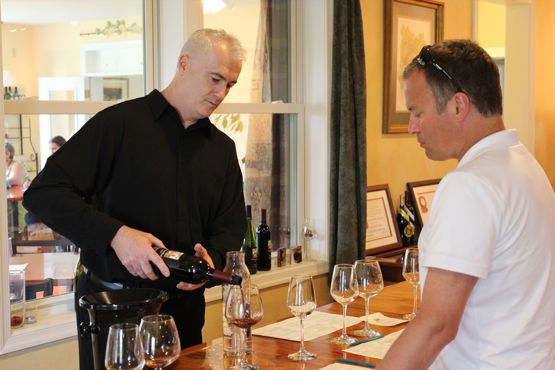
We continued our tour of Loudoun County wineries on our wet and dreary weekend. Wine tends to make things less dreary, though, and we made our way to Hiddencroft Vineyards.

Owner and winemaker Clyde Housel conducted our tasting which began with the white wine offerings. Included was a tank sample of the upcoming 2010 Vidal Blanc. When compared to the sweeter 2009 Vidal Blanc, the drier 2010 sample seemed similar to a dry Riesling. Rich with citrus zest and melon flavors it also presented mineral undertones; its finish was quite crisp and destined to herald the arrival to summer! Of the white wines that we tasted, Paul and I both favored the 2010 Vidal Blanc, and we look forward to its release in either June or July. Sweeter wine lovers may also like the floral-nosed 2009 Traminette with its 2 1/2 percent residual sugar.

Clyde moved us on to the red wines, and here we reached different conclusions. My gold-starred favorite was the 2008 Chambourcin Reserve which was aged for 22 months in French oak barrels and blended with 10% Petit Verdot. Lush ripe plum and cherry elements complemented by some spice notes made for a versatile wine that could partner with any beef or pork dish, a cheese course, or a simple plate of charcuterie. Paul selected the 2008 Cabernet Franc. The 2008 Cabernet Franc just earned gold at the Virginia Governor’s Cup competition, and it is made from all estate grown fruit. It possessed a “raisiny” nose with brambleberry flavors and a spicy finish. Of course, the tasting ended with a sample of fruit wines, and the pairing of cherry wine with dark chocolate was simply decadent!

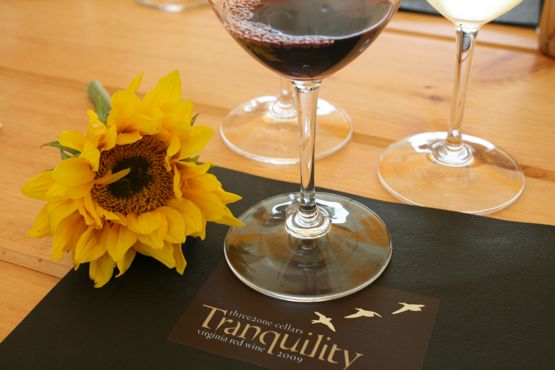
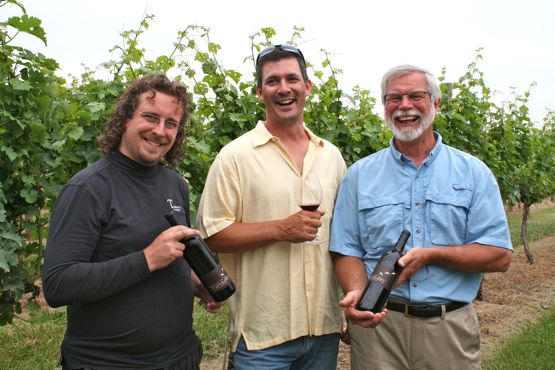
As we sipped and savored, Clyde revealed to us that he was part of a blending collaboration along with Jordan Harris at Tarara Winery and Ben Renshaw at 8 Chains North. This will be very similar to the successful “3” blend produced by Veritas Vineyards, King Family Vineyards and Pollak Vineyards. The red grapes used in this blend will all be from the Tranquility Vineyards in Loudoun County; although we did not jot down the varieties to be used in the blend, we will be sure to find out in time for the June 5 release!

With our tasting done, we shared a glass of the 2008 Cabernet Franc and nibbled on cheese and baguette while we watched the raindrops fall. We finished in time to take advantage of a lull between showers and headed for the car with Hiddencroft favorites in hand. Plan a visit to Hiddencroft Vineyards, and mention that Virginia Wine Time sent you.
What To Do On A Rainy Day?

We went wine tasting! First stop was Loudoun Valley Vineyards. Our last visit to Loudoun Valley Vineyards was in March, 2010, and we were anxious to taste the current releases.

Of the white wines, we both favored the very aromatic 2009 Traminette. The Traminette grape is a hybrid of Gewurztaminer and Seyval Blanc, and this offering presented characteristics of both parents. It floral nose was quite intoxicating, and we both noted citrus and stone fruit flavors. Spicy fare or spring time menus that include baked ham would pair nicely with this one.

The red wines resulted in a split decision. I tended to favor the 2008 Dynasty which is a blend of Cabernet Franc (50%), Merlot and Touriga Nacional. This is a more fruit forward offering with elements of mixed berries and spice. I noted a velvety finish, too. Winemaker Bree Ann Moore favors neutral French oak barrels which may explain the softer tannic presence. Paul preferred the 2008 Cabernet Franc. He appreciated its dark plum and cherry flavors and full fruit finish; Paul also noted hints of black pepper in the mouth that would be characteristic of Cabernet Franc. Tasters who are hope for an early grilling season may want to try the lighter bodied 2008 Chambourcin or the Vinifera Red that includes such Rhone varieties as Mouvedre and Syrah.

Upcoming releases will include a non-fortified port style wine made from Touriga Nacional. This will be called Legacy and will be available in May. We will be sure to check back when this and other new releases may be on the tasting menu. Be sure to stop by Loudoun Valley Vineyards for a tasting, and be sure to mention that Virginia Wine Time sent you.