Return To Cardinal Point

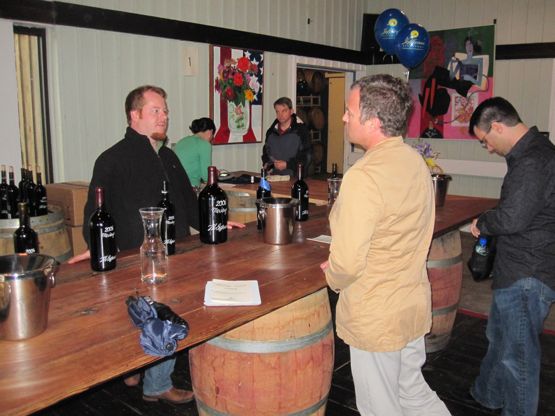
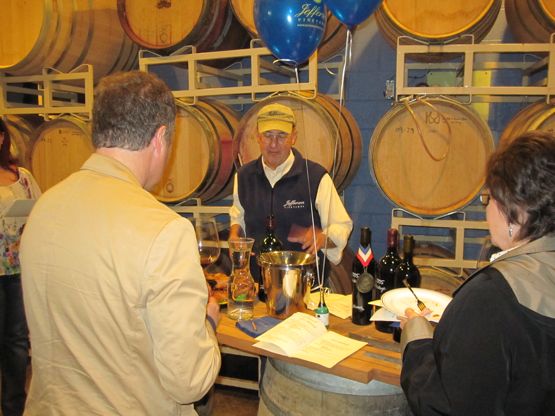
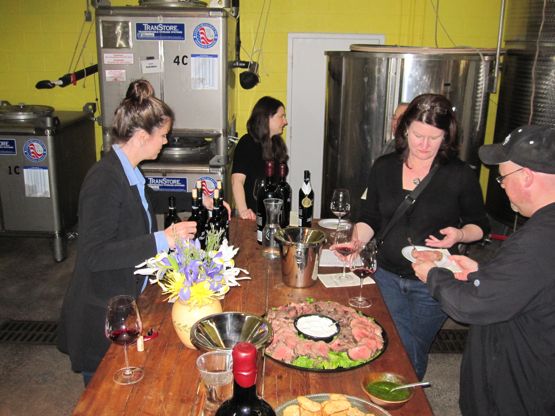
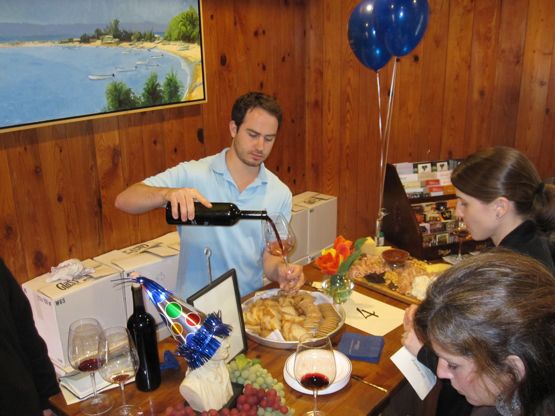
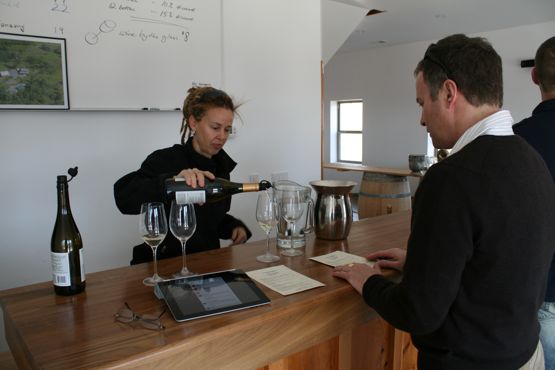
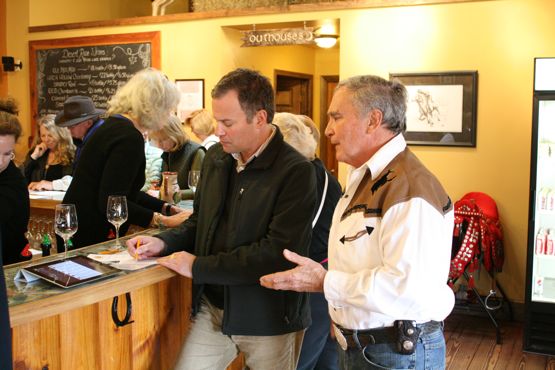
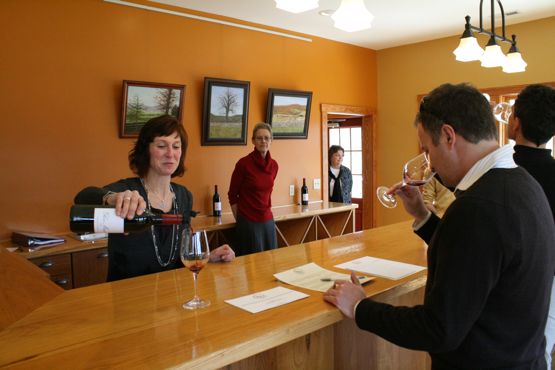
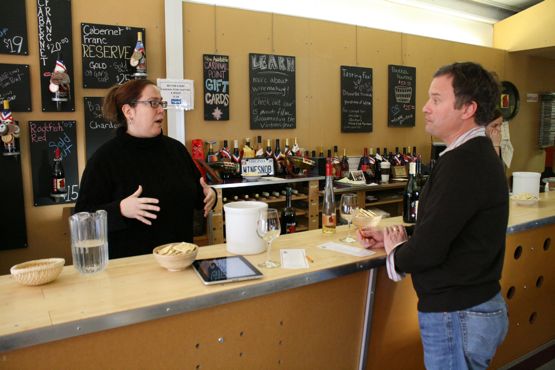
Our cider tasting event was a blast, but we were able to fit in a couple of wine tasting too. Along the way was Cardinal Point Vineyard and Winery and we were fairly certain that our last visit was well over a year or so ago. We also gambled that Sarah Gorman, sister of winemaker Tim Gorman, would be in the tasting room, so decided to stop by for a tasting and visit.

And indeed Sarah was in the tasting room upon our arrival! Sarah conducted our tasting and filled us in the latest happenings at Cardinal Point Vineyard and Winery. Five white wines were offered for tasting, and we both agreed that teh 2009 A6 was the gold-star winner. A blend of Viognier and Chardonnay, it presented pear and honey characteristics with a longer finish. I detected some cedar on the nose too. Nice for spring—I’d serve with shellfish now that crabcake season is around the corner. Sarah offered a comparison tasting between the 2008 Barrel Select Chardonnay and the 2009 Barrel Select Chardonnay, and I found the 2009 vintage to be more vibrant with apple, pear, and honey elements and a rich mouth feel. Paul became more nostalgic when he sipped the 2009 Quattro, a blend of Riesling, Gewuztraminer, Viognier, and Traminette.This is our traditional Christmas tree trimming wine that we serve with baked ham; in fact, Paul began to hum White Christmas as he brought his nose to the glass.

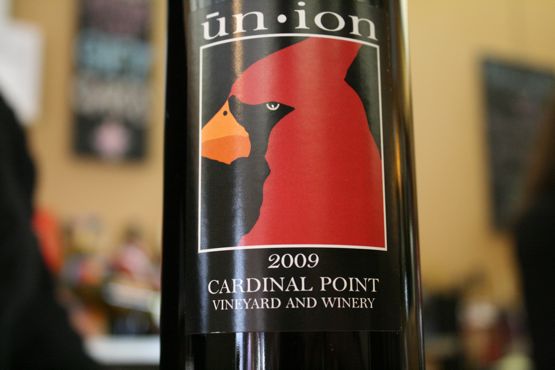
Of the red wines, an intriguing blend was the 2008 Cab F+Vio, and as the label implies it is a blend of Cabernet Franc and Viognier. Certainly a lighter bodied red wine, it offered bright red berry aromas and flavors with some spice notes too. A nice sipper especially for those who do not like red wines, this could also be served with herbed poutry or lamb chops. However, the ultimate favorite for both of us was the yet to be released 2009 Union, a blend similar to the impressive “3” blend. It’s a blend of three varietals from Cardinal Point. Tim Gorman, the winemaker created it on his own. Sarah gave us a top-secret sample of this one, so we’ll keep quiet on the details until the release date. Like suspense? For now, we can say that this is a blend of Petit Verdot, Cabernet Franc, and Tannat. Otherwise, we’ll keep readers posted on this one as it develops!

As always, it was a pleasure to sip and chat with Sarah Gorman. Sarah confirmed what we’ve heard along the wine trail about 2010—lower yields but spectacular fruit quality. Expect good things from the vintage. With spring in the air, stop by Cardinal Point Vineyard and Winery to enjoy a tasting of their current releases, and mention that Virginia Wine Time sent you.

Cider Houses Rule!

How’s that for a play on literary titles? Anyway, Frank Morgan of DrinkWhatYouLike teamed up with cider makers Diane Flynt of Foggy Ridge Cider and Chuck and Charlotte Shelton of Albemarle CiderWorks to organize a cider tasting at the Albemarle CiderWorks tasting room. We joined other bloggers and winemakers for the event and the evening ended with a cookout, wine and more cider!
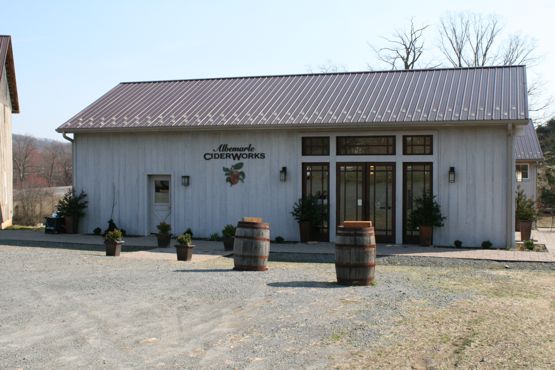
A caveat must be issued here—neither Paul nor I have any experience with cider; therefore, our opinions must be taken with a huge grain of salt. Before we tasted, Charlotte Shelton provided us with a brief history of cider making in Virginia, and does it indeed go back to colonial times. Remember, the winemaking experiments were unsuccessful despite best efforts by early settlers, and even Thomas Jefferson was confounded by Virginia’s difficult climate. Apples, however, did grow well, and orchards were widely planted in Virginia. Virginia hard ciders were widely enjoyed, and John Adams began each day with a glass of the beverage. Over time, American palates moved away from hard ciders, and during Prohibition, of course, all alcoholic beverages were illegal. Although the Virginia wine industry began its renaissance some time ago, the cider industry has undergone a more recently revival;in fact, Foggy Ridge Cider and Albemarle CiderWorks are the only cider houses now operating in Virginia.
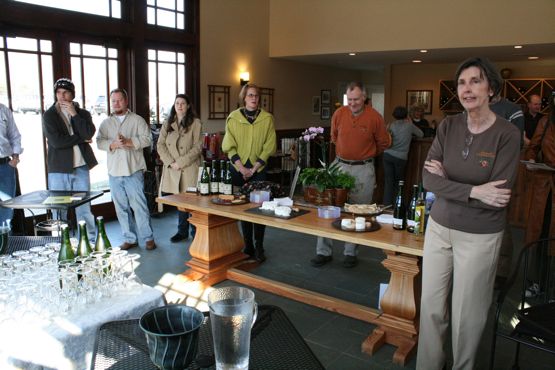
With that background in mind, we felt like we were revisiting a slice of Americana. Albemarle CiderWorks began its tasting with the CiderWorks 2009 Old Virginia Winesap which had the appearance of a bubbly sparkling wine. I applied my wine tasting techniques to the cider and observed a floral nose and a tart, acidic presentation in the mouth; assuming that I did okay with this one, I continued to swirl, sniff, and sip away. My own palate trended toward the Foggy Ridge offerings with the Foggy Ridge 2009 Serious Cider and the 2009 First Fruit topping my list of favorites. Serious Cider is made primarily from the Yarlington Mill apple and seemed lean, clean and elegant with lengthy apple flavors. First Fruit was simply delicious and presented the aromatics and mouthfeel more akin to a Chardonnay. Apples used here include Parmar, Harrison and Graniwinkle. As tasters sipped away, locally made artisan cheeses were passed around, and the creamy, full mouth texture of the Old Chatham Shepherding’s Kinderhook Creek was more than a match with the fuller-bodied First Fruit.
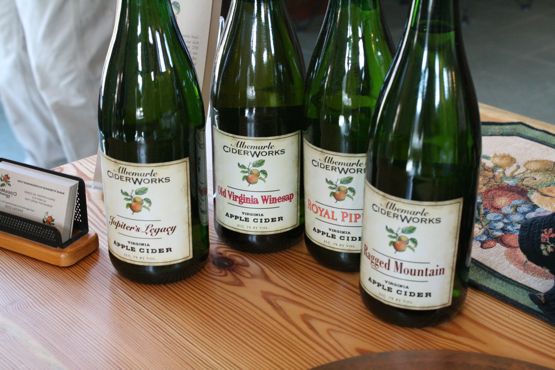
Of the Albemarle CiderWorks offerings, I found the 2009 Royal Pippin most appealing. Made from the Pippin apple, it was fruity and clean with a refreshing effervesence. Paul concurred on this one, and we both enjoyed it with the creamy Caromont’s Bloomsbury cheese.
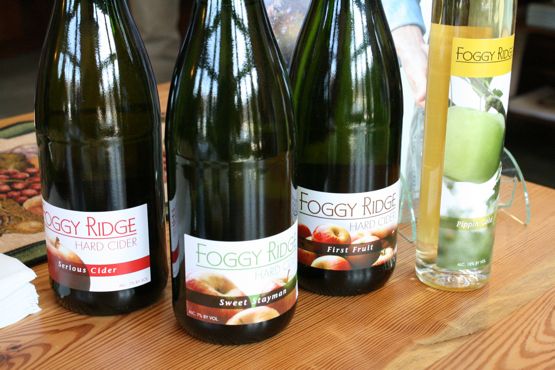
The Sheltons and Diane Flynt continued to educate us as we sampled the various ciders. Like grapes, apple flavor profiles are impacted by terroir, and varieties are carefully selected so that they suit soils and climate. The tannic Yarlington Mills apples used in the Serious Cider, for example, grow best in orchards located at a 3000 foot elevation in the Blue Ridge Plateau. These cider makers are also on a mission to debunk stereotypes about ciders—too sweet, cheap buzz, not for the dinner table, etc., In fact, most of these ciders were dry with residual sugars clocking in at well under 1%; moreover, all were at a 7% alcohol level. And do not hesitate to serve these elegant ciders at any dinner gathering!
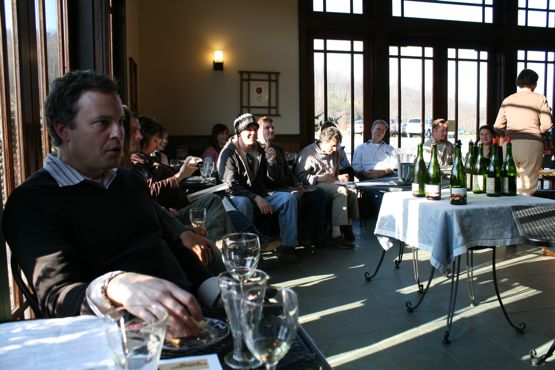
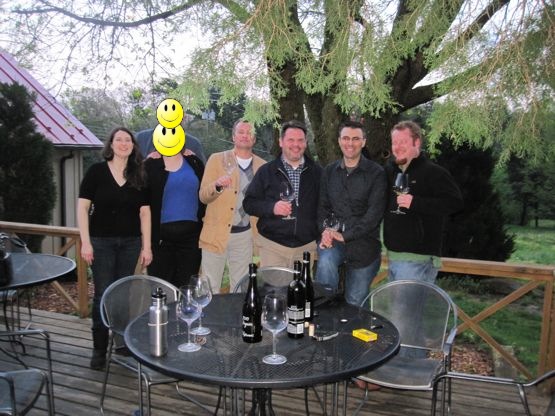
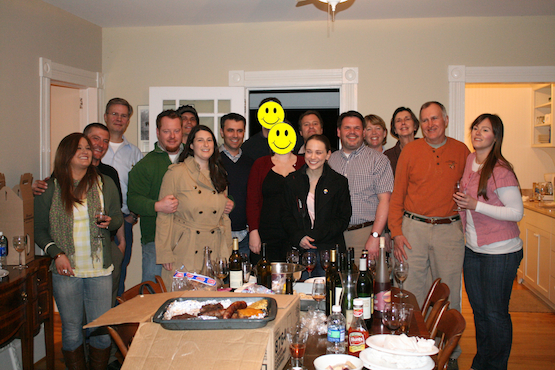
After the tasting, we continued our tastings and conversations over a cook out! Frank and Nancy (from Virginia Wine In My Pocket) grilled burgers, favorite wines and ciders were opened, and a nice evening was had by all. In the group picture below you can see we all had a wonderful time enjoying the wines and ciders. A HUGE Thank you to Diane, Charlotte, and Chuck and all the staff at Albemarle Ciderworks for their wonderful hospitality and to all the wine bloggers, winemakers, and members from the Virginia Wine Board Marketing Office. We had a great time! Thank you!
Plan to sample ciders sometime this year, and be sure to pay a visit to Foggy Ridge Cider and Albemarle CiderWorks. Mention that Virginia Wine Time sent you.
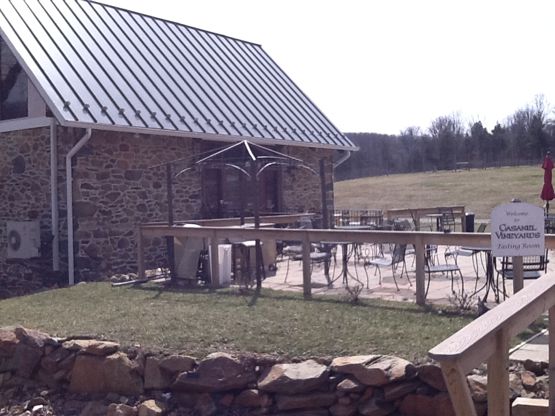
More Sips On A Rainy Day

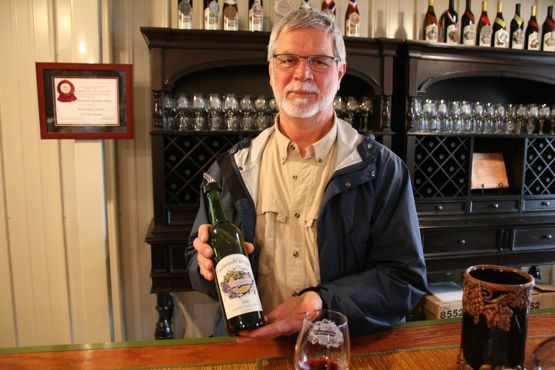
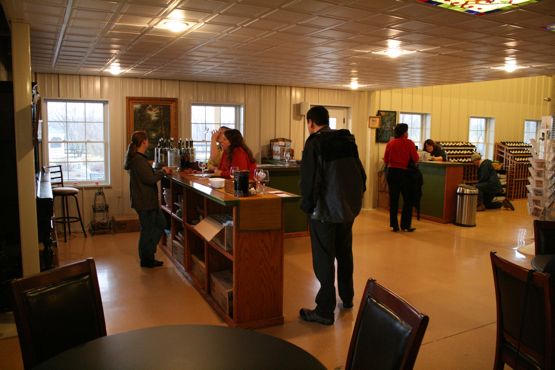
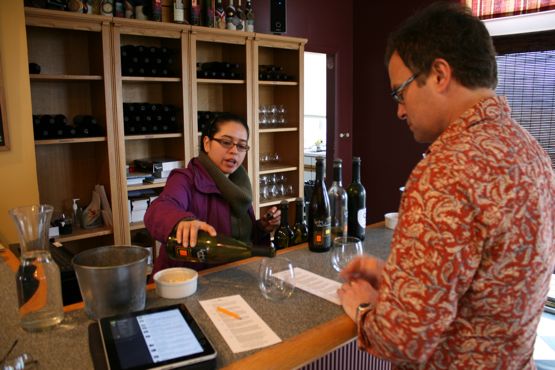
We continued our tour of Loudoun County wineries on our wet and dreary weekend. Wine tends to make things less dreary, though, and we made our way to Hiddencroft Vineyards.

Owner and winemaker Clyde Housel conducted our tasting which began with the white wine offerings. Included was a tank sample of the upcoming 2010 Vidal Blanc. When compared to the sweeter 2009 Vidal Blanc, the drier 2010 sample seemed similar to a dry Riesling. Rich with citrus zest and melon flavors it also presented mineral undertones; its finish was quite crisp and destined to herald the arrival to summer! Of the white wines that we tasted, Paul and I both favored the 2010 Vidal Blanc, and we look forward to its release in either June or July. Sweeter wine lovers may also like the floral-nosed 2009 Traminette with its 2 1/2 percent residual sugar.

Clyde moved us on to the red wines, and here we reached different conclusions. My gold-starred favorite was the 2008 Chambourcin Reserve which was aged for 22 months in French oak barrels and blended with 10% Petit Verdot. Lush ripe plum and cherry elements complemented by some spice notes made for a versatile wine that could partner with any beef or pork dish, a cheese course, or a simple plate of charcuterie. Paul selected the 2008 Cabernet Franc. The 2008 Cabernet Franc just earned gold at the Virginia Governor’s Cup competition, and it is made from all estate grown fruit. It possessed a “raisiny” nose with brambleberry flavors and a spicy finish. Of course, the tasting ended with a sample of fruit wines, and the pairing of cherry wine with dark chocolate was simply decadent!

As we sipped and savored, Clyde revealed to us that he was part of a blending collaboration along with Jordan Harris at Tarara Winery and Ben Renshaw at 8 Chains North. This will be very similar to the successful “3” blend produced by Veritas Vineyards, King Family Vineyards and Pollak Vineyards. The red grapes used in this blend will all be from the Tranquility Vineyards in Loudoun County; although we did not jot down the varieties to be used in the blend, we will be sure to find out in time for the June 5 release!

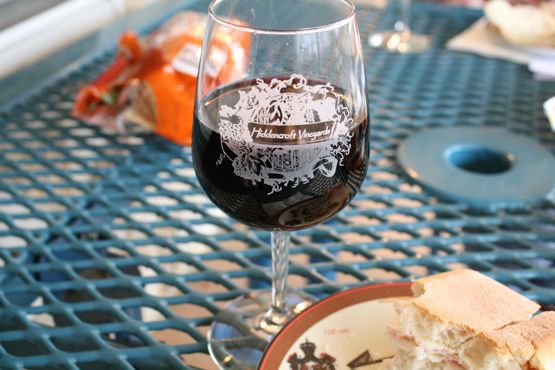
With our tasting done, we shared a glass of the 2008 Cabernet Franc and nibbled on cheese and baguette while we watched the raindrops fall. We finished in time to take advantage of a lull between showers and headed for the car with Hiddencroft favorites in hand. Plan a visit to Hiddencroft Vineyards, and mention that Virginia Wine Time sent you.
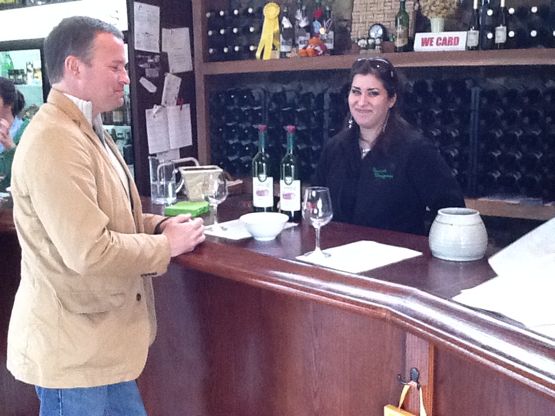
What To Do On A Rainy Day?

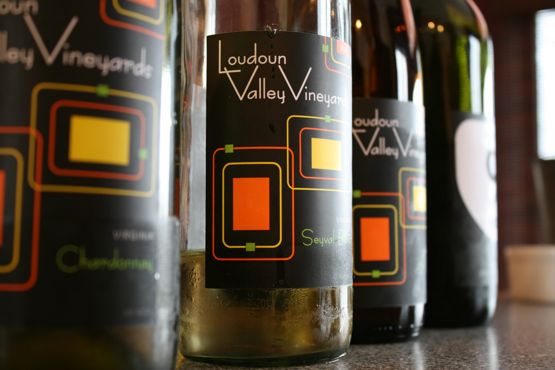
We went wine tasting! First stop was Loudoun Valley Vineyards. Our last visit to Loudoun Valley Vineyards was in March, 2010, and we were anxious to taste the current releases.

Of the white wines, we both favored the very aromatic 2009 Traminette. The Traminette grape is a hybrid of Gewurztaminer and Seyval Blanc, and this offering presented characteristics of both parents. It floral nose was quite intoxicating, and we both noted citrus and stone fruit flavors. Spicy fare or spring time menus that include baked ham would pair nicely with this one.

The red wines resulted in a split decision. I tended to favor the 2008 Dynasty which is a blend of Cabernet Franc (50%), Merlot and Touriga Nacional. This is a more fruit forward offering with elements of mixed berries and spice. I noted a velvety finish, too. Winemaker Bree Ann Moore favors neutral French oak barrels which may explain the softer tannic presence. Paul preferred the 2008 Cabernet Franc. He appreciated its dark plum and cherry flavors and full fruit finish; Paul also noted hints of black pepper in the mouth that would be characteristic of Cabernet Franc. Tasters who are hope for an early grilling season may want to try the lighter bodied 2008 Chambourcin or the Vinifera Red that includes such Rhone varieties as Mouvedre and Syrah.

Upcoming releases will include a non-fortified port style wine made from Touriga Nacional. This will be called Legacy and will be available in May. We will be sure to check back when this and other new releases may be on the tasting menu. Be sure to stop by Loudoun Valley Vineyards for a tasting, and be sure to mention that Virginia Wine Time sent you.
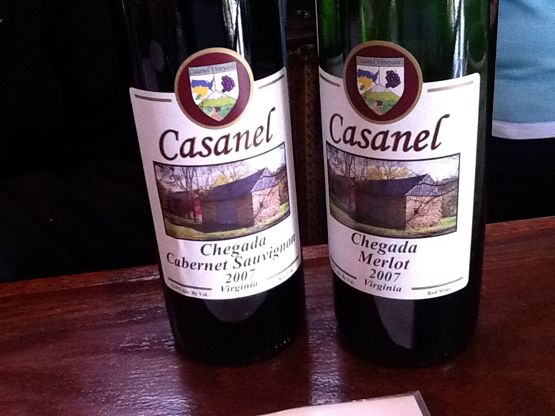
Wednesday Wine

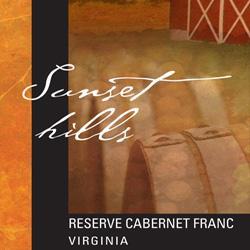
Not to be outdone by Paul, I’ve decided to present my own favorite wine of the week, and that would be the Sunset Hills Cabernet Franc Reserve from the outstanding 2007 vintage. I last sampled this one back in March of 2010, and I can say that it has gotten even better over time. It presented a nice dense color in the glass and a smoky nose that included aromas of concentrated dark fruit and spice. Lush and complex, I noted flavors of dark plum, dark cherry and blackberry along with complements of tobacco and pepper. Aging in both French and American oak barrels for 18 months made for a lengthy finish. I nursed a glass for an entire evening and noticed that it softened considerably with some air time. If readers still have a bottle of this one on their wine racks, consider aging for a little longer; however, the enclosure is synthetic, and I’ve grown to distrust the ability of these to keep wines from spoiling or aging properly. Do enjoy with any braised meats, steaks or roasts; be sure to serve with roasted veggies, too.

We have not done a tasting of current releases at Sunset Hills since last fall, so we are certainly due for a visit. If you get there before we do, mention that Virginia Wine Time sent you.
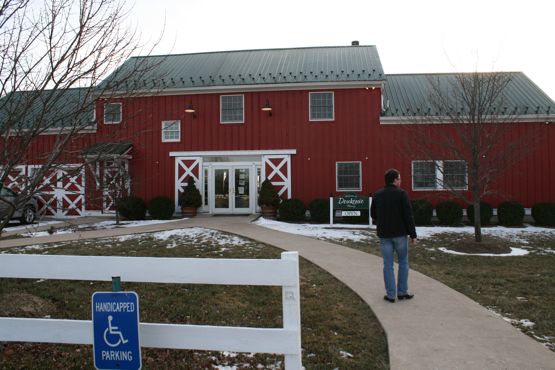
Time to Drink Naked

It’s that time of year when we go to Naked Mountain Vineyard and Winery to enjoy lasagna and wine. Which wine did we enjoy with lasagna? Well, to figure that out we had to complete a tasting of wines at the tasting bar, of course!

The 2006 Barrel Fermented Chardonnay and the sweeter Chardonnay Riesling were the two white wines offered for tasting. My favorite was the Barrel Fermented Chardonnay with its aromas of pear and vanilla; I also enjoyed its creamy mouth feel. Paul preferred the fruity characteristics of the Chardonnay Riesling, and I think he had visions of a warmer spring day and a refreshing fruit salad when he savored this one.

Speaking of food, we certainly had lasagna on our minds when we sampled the red wines. The Rhone-inspired 2006 Scarlet Oak Red earned my stamp of approval. Created from a blend of 45% Syrah, 45% Mouvedre, and 10% Tannat, it presented a smoky nose with cherry and raspberry aromas with a whiff dried herbs to boot; similar flavors with a toasty edge were evident in the mouth. Paul, however, was more inclined toward the newly released 2007 Raptor Red, a blend of Tannat (31%), Merlot (30%), Petit Verdot (20%) and Cabernet Franc (19%). Darker fruit elements abounded here with a smoky/earthy nose. I concurred that this blend offered a bolder, more complex wine; from the 2007 vintage, it will only improve with time.

So with lasagna on the way, we settled on a glass of our favorite red wines; I enjoyed a glass of the 2006 Scarlet Oak Red, and Paul sipped the 2007 Raptor Red. As we sipped and nibbled, we met cellar master Brooke Walter who hinted at exciting possibilities for the upcoming releases. She was particularly enthusiastic about the possible release of a stand-alone Malbec. Brooke also assured us that new owners Randy and Meagan Morgan were commited to maintaining the strong winemaking tradition at Naked Mountain Vineyards. Needless to say, we promised to return in the near future to sample new releases at Naked Mountain Vineyards and Winery.

We should also mention that the sausage lasagna is amazing at Naked Mountain, so plan to enjoy a lasagna lunch with a glass of wine at Naked Moutain Vineyards and Winery. Please mention that Virginia Wine Time sent you.
Another Newbie: Crushed Cellars

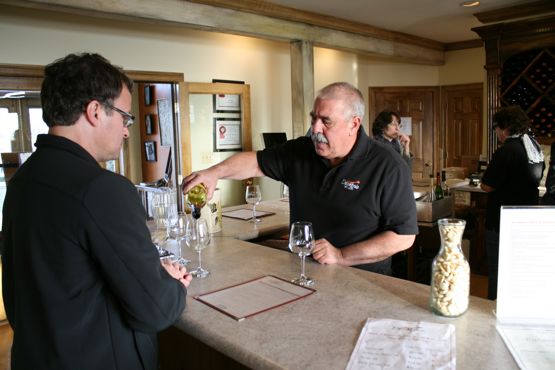
During a recent trip on the Loudon County trail, we paid a visit to newly opened Crushed Cellars. The finishing touches were still being placed in the tasting room, but the tasting bar was ready for business.

Owner and winemaker Bob Kalok guided us through a tasting of the three wines available to sample and purchase. The first wine was a crisp, dry 2009 Seyval Blanc with its characteristic citrus and mineral elements. This one was my favorite of the wines that we tasted, and I think it would pair well with goat cheeses, poultry or shellfish. As an aperitif, the fruitier (and slightly sweeter) 2009 Vidal Blanc should prove to be popular. Paul enjoyed the vibrant 2008 Cabernet Sauvignon with its cherry and plum flavors and lingering finish.

Bob hopes to expand the offerings at Crushed Cellars in the new year to include Petit Verdot and Syrah. He also sells locally produced eggs, butter, and cheeses in the tasting room; in fact, he paired the wines with cheeses produced from local dairy farms. Bob also promised to keep his operation rather small but focused on quality wines.

Of course we will return to Crushed Cellars to taste new releases at Crushed Cellars. If you are planning to visit soon, mention to Bob Kalok that Virginia Wine Time sent you.
Winter Fare and Virginia Wines

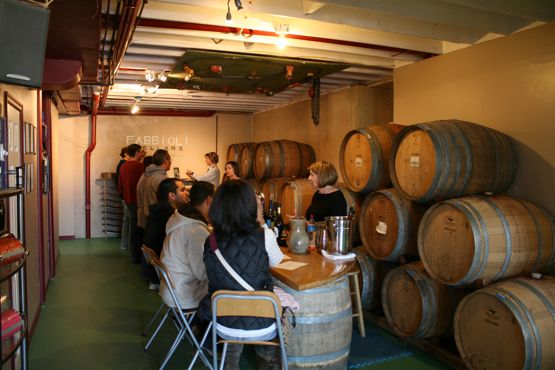
This past weekend was probably the coldest days we’ve experienced in a winter that has been extremely cold. No wonder we sought out food and wines that kept us warm!

On Friday night, we dined on braised veal shanks (known as osso bucco) paired with the 2003 Nebbiolo Reserve from Barboursville Vineyards. Displaying the trademark brickish hue in the glass, this Nebbiolo revealed cherry, violet and tobacco aromas with lingering fruit on the finish.

Sunday was the day for Chrysalis‘ VIP members to attend a food and wine party hosted at the winery. Chef Hump Astorga had prepared a kale and Portuguese sausage soup to partner with the 2006 Rubiana and a barrel sample of the 2010 Barrel Select Norton. While we both appreciated the fruity, drink now Rubiana, it was the 2010 Barrel Select Norton that won our stars of approval. This one was a dead ringer for a lush, fruity Beaujolais made from the gamay grape. It’s sure to be a crowd favorite once it is bottled and released.

Plan your winter menus around favorite Virginia wines some of which may already be on your wine racks. If you need to stock up, visit Barboursville Vineyards and Chrysalis Vineyards; however, please mention that Virginia Wine Time sent you.
Wine With A View at Delaplane Cellars

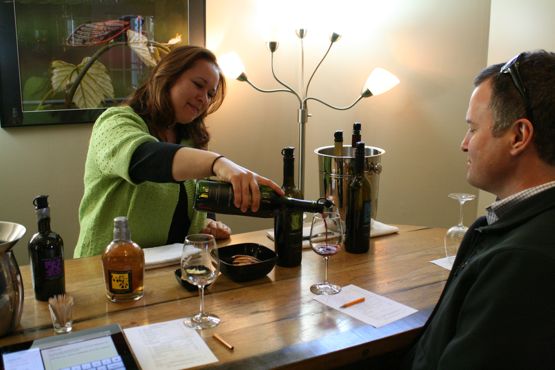
It seems as though our visits to Delaplane Cellars occur when it is chilly outside, and this time was no different. Regardless of the weather, though, the wines and the view at Delaplane Cellars are always impressive.

Most of the wines on the tasting menu were new to us including the 2008 Honah Lee Viognier. This one earned my gold star of the two Viogniers poured for us (and the only white wines, I should add.) Vibrant is the word to describe this distinctive Viognier produced from grapes grown on the Honah Lee Farm near Orange, Virginia. In fact, aromas of orange blossom first reached the nose followed by aromas of apricot and mango; similar tropical fruit flavors were noted on the palate. Owner and winemaker Jim Dolphin treated us to a sneak preview of the upcoming 2009 Honah Lee Viognier which seemed to have honey apricot elements to it. Paul preferred the 2007 Emerald Lake Viognier; I jotted down “bit-o-honey” on the tasting sheet, and Paul seemed to enjoy the creamier, honeyed texture to this one. He also appreciated the stone fruit flavors of this more mature offering.

Paul and I likewise reached a split decision on the red wines. My favorite was the 2008 Cinq, a blend of all five Bordeaux varietals with Cabernet Sauvignon dominating the mix. I noted characteristics of dark berries, anise, and spice with some violet on the nose to boot. Given that this is a more recent release (after May 2010), tannins were evident but likely to mature with time. Paul’s fave was the druit-driven 2008 Springlot Red Blend. The Cabernet Sauvignon (44%), Cabernet Franc (25%), Merlot (19%) and Petit Verdot (12%) which comprise the blend all come from the Springlot vineyard located near the winery. Dark cherry, plum and spice elements prevailed with a smooth tannic presence. Be certain to try the 2008 Syrah—crafted from grapes grown from borh the Shirland Vineyard near Middleburg and the Springlot Vineyard near the winery, this Syrah is all dark fruit flavors with earthy/tobacco, spice and pepper. Blended with 13% Tannat, this Syrah is a bolder option!

So with tasting done, we opted to take a moment to enjoy the gorgeous mountain views from the tasting room while enjoying a glass of the 2008 Honah Lee Viognier. Winter lanscapes are underappreciated, and even a quick glance from the tasting room windows reminded us just how lovely the barren scenery can be—paired with a favorite wine from Delaplane Cellars, of course!

Be sure to sample the current offerings at Delaplane Cellars this winter, but remember to mention that Virginia Wine Time sent you.
Upcoming Releases at Corcoran Vineyards

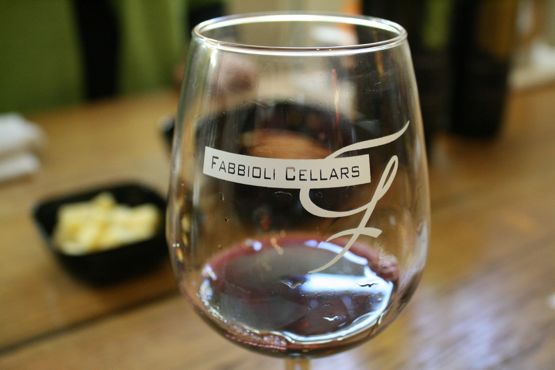
So we’re back on the trail, and one of our first stops of the year was at Corcoran Vineyards. Owner Jim Corcoran conducted our tasting, and our palates were treated to some new and exciting developments.
Jim and Lori Corcoran are always looking for ways to put their own unique stamp on the Virginia wine industry; not just satisfied with same old same old, their mission is to produce wines that help to define themselves as makers of distinct, quality wines. Therefore, Jim was eager for us to sample some of the upcoming releases that include a Petit Manseng, a Petit Limon styled after the popular Italian wine, lemoncello, a raspberry merlot, and a port crafted from Chambourcin. My favorites were the Petit Manseng and the port. At 6% residual sugar, this Petit Manseng will indeed be sold as a dessert wine; it’s floral and citrus characteristics should prove to be a lovely way to end a dinner party. However, I tend to also like these kinds of wines with blue cheeses and a drizzle of honey. The Chambourcin-based port could likewise complement a cheese course or an afterdinner dessert that featured dark chocolate. Paul and I both predict, though, that summer-time favorites will be the Petit Manseng-based Petit Limon and the Raspberry Merlot. The Petit Limon is made with real lemons zested by Jim Corcoran himself—lots of them, too! It was quite refreshing and needed a warm, sunny day to be fully appreciated.

Jim offered to take us through a tasting of current releases, and of course, we took him up on the offer. Speaking of warm sunny days, the dry 2009 Hunters Run Rose had me thinking of a summer vacation in Provence. Created from Cabernet Franc, it presented strawberry and melon characteristcs; I love these kinds of Roses especially during the summer months. Jim shared with us that the upcoming Rose will feature the Chambourcin grape with a slight amount of residual sugar. Of the red wines we sampled, all were quite solid. My favorites were the classic 2009 Cabernet Franc and the complex Hunters Run Red. The 2009 Cabernet Franc was not blended, and it displayed the bright berry and spicy elements associated with this varietal. The 2009 Hunters Run Red is indeed a meritage blend and presented layers of darker cherry and plum flavors with smoother tannins. Paul’s own favorites were the 2009 Benevino Cabernet Franc and the 2009 Malbec. The Benevino Cabernet Franc was blended with a small amount of Tannat to give it a bolder body; it could certainly stand up to a steak dinner. As he sipped through the 2009 Malbec, Paul noted smokey, cherry and earthy elements; he’s a fan of Malbecs produced by Corcoran Vineyards, and he approved of this vintage!

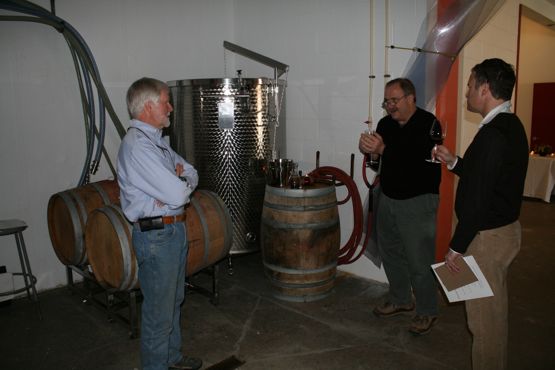
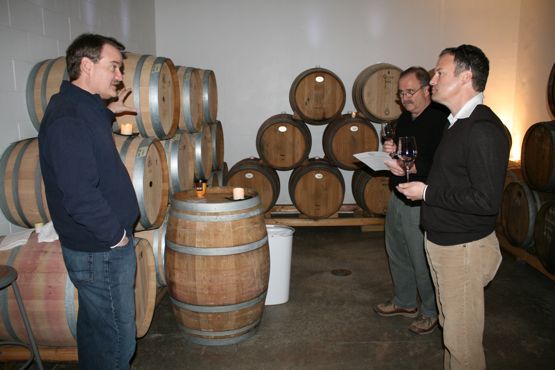
With our tasting done, Jim then invited us to the tank room where he gave us other sneak samples that included an upcoming apple wine, a knockout Tannat, and a Petit Verdot that wowed Paul. We also got to see the small tanks of Petit limon that gave testimony to Jim’s expert zesting skills; another tank of orange zest suggested another experimental blend that may include Traminette as a base. We also witnessed an immaculate barrel room with state of the art control systems to insure proper temperatures and humidity. Though Jim appeared to be the wizard of winemaking at Corcoran Vineyards, he constantly credited his wife Lori for producing Corcoran’s solid line up of wines. We concluded that both Jim and Lori bring their considerable talents to all of these efforts, and it is without doubt that success will continue for Corcoran Vineyards.

With our tastings done, we stocked up on our favorite Corcoran wines, and we know that we will return for a sample of new releases. In the meantime, stop by Corcoran Vineyards (or their sister site, Hunters Run) for a tasting, and let Jim and Lori Corcoran know that Virginia Wine Time sent you.