Chicken Sauce Piquante and Arterra Wines

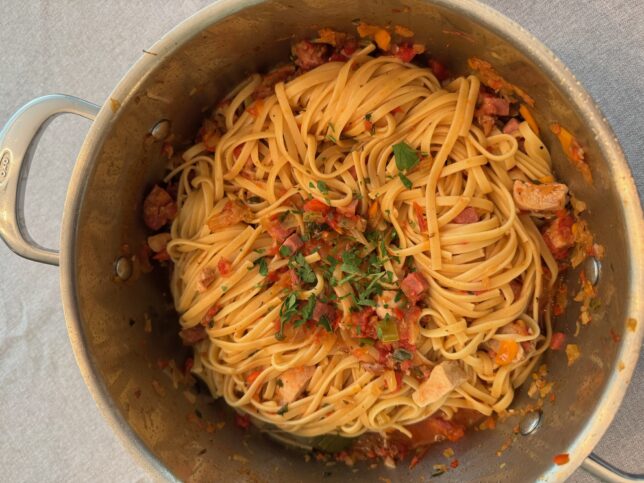
I’m back to making cooking videos, and my latest video features chicken sauce piquante. Go to thecajuncooks.com to watch how I cook this spicy dish. My version features a heavy roux, tomato, a generous dose of cayenne pepper, and splashes of hot sauce. I pair this with wines from Arterra Wines.  Oh, be sure to check out my new apron with my logo on it.  It was a Christmas gift from my parents, and embroidered by Chase and Paolo at Superior Embroidery in Harvey, Louisiana.

Cheers!

The spicy, delicious chicken sauce piquante.


Happy Mardi Gras!

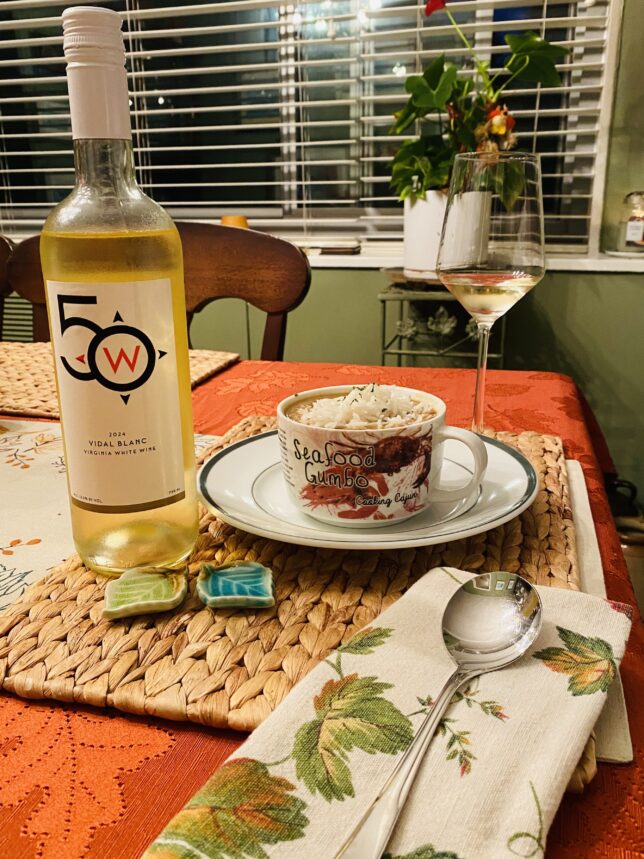
Purchase Xanax Without Prescription It’s carnival season in New Orleans, with Fat Tuesday coming up on February 17.  I’m hosting a Mardi Gras party at my house on February 13, and you know I will be serving up some Cajun goodness including chicken and andouille gumbo and shrimp creole.  This dishes pack lots of flavor and spice—smoky roux, cayenne pepper, and splashes of hot sauce.  There is a place at the dinner table for all styles of wine, including off-dry and fruity wines.  I tend to favor wines in this category with Cajun food,  because they cool the palate. Dry white wines and tannic reds tend to clash with the heat, but that’s my palate. Serve what works for you or offer a variety and let guests decide. Virginia wineries offer options for all cuisines, including Cajun. So what Virginia wines will I offer my guests on Friday?  Here is my lineup of wines that I plan to serve for the party:

https://doc-t.net/location/ Purchase Tramadol Fruity white wines:


2021 Zephaniah Adeline: Off dry and aromatic, this lush blend includes 55% Muscat Ottonel, 38% Vidal Blanc, and 7% Petit Manseng

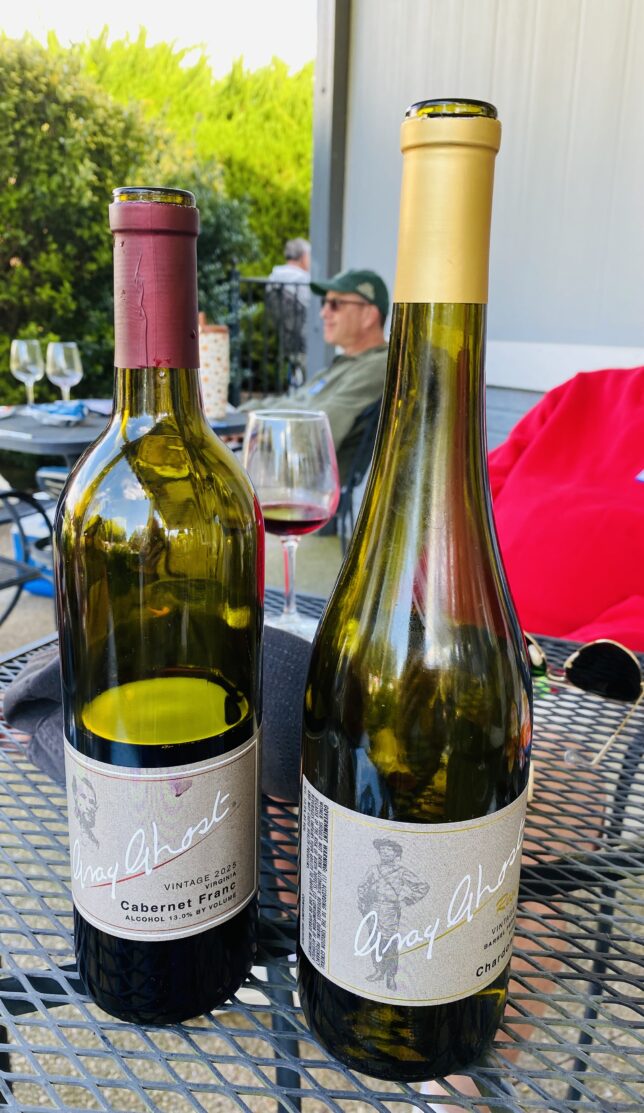
Buy Soma Overnight 2024 Gray Ghost Vidal Blanc: Fruity with citrus and melon notes.

2021 Linden Wabi Sabi: Truly a Zen experience with this blend that also includes Vidal Blanc.

Notice my focus on Vidal Blanc—I think it’s a Virginia gem and always pairs well with spicy food.  It’s a hybrid grape that was more widely planted 20 years ago, but now wineries seem to be stepping away from it.

https://islamanswers.co.uk/zakat-fund/ Fruity Rose and Red Wines:


2 Purchase Diazepam 023 Breaux Vineyards Saignee: This rose looks and tastes like a Spanish rosado.  It is a blend of 44% Merlot, 27% Malbec, 17% Petit Verdot, and 12% Nebbiolo.  Dry but fruity, this will pair well with Cajun food.

2020 Domaine Fortier Le Pivot: This lighter to medium-bodied blend includes 45% Cabernet Franc, 45% Merlot, and 10% Tannat.  I found it to be easy-drinking when I tasted it, and I appreciated its versatility.

Order Alprazolam 2022 Delaplane Cellars Cabernet Franc: Another juicy, fruity wine that provides an option for guests who insist on drinking red wine.  Virginia Cabernet Franc tends to pair well with Cajun food too.

Chateau Richard is the place to be on February 13, and the good times will roll!  Perhaps you are planning your own Mardi Gras gathering, or maybe you’re cooking up your own spicy fare for an upcoming dinner, especially on these cold nights.  Consider visiting the wineries mentioned in this post to stock up on these suggested wines for possible pairings.  Of course, mention that Virginia Wine Time sent you.


Virginia Wine Time Begins 2026 With A Tasting At Arterra Wines

A persistent polar vortex remains long after we all rang in 2026, and it’s been downright cold! However, winter tends to be a quiet time to visit Virginia wineries, especially on a weekday.  I took advantage of a free Thursday afternoon to taste the latest releases at Arterra Wines.

There are currently 17 wines to sample at Arterra with some releases produced from the Seven Oaks Vineyard site and others from the Arterra Estate Vineyard.  So I had decisions to make—which wines should I try?  Unique offerings include an Ancestral Chardonnay produced from an ancient technique of aging wines in clay amphoras, and Blaufrankisch, a variety commonly grown in Germany and Austria.  I opted for a mix of white and red wines grown on Seven Oaks Vineyard as well as the Albarino and a few red wines produced from the Arterra Estate Vineyard.

Decisions, decisions

It had been at least three years or so since I tasted at Arterra Wines, and it may be that it simply slipped off my radar during Covid. I must say all of the wines I sampled were quite solid, so I will be returning sooner rather than later.  The 2024 Albarino presented white floral and citrus aromas with a bright fruity palate and a lean finish while the 2024 Gruner Veltliner trended toward tropical fruit characteristics.

The red wines were likewise well crafted.  The 2023 Cabernet Franc delighted the senses with ripe cherry and black raspberry, making a juicy splash on the palate.  A surprise for me was the 2023 Petite Sirah—yes, in Virginia.  Petite Sirah is grown predominantly in the northern Rhone region of France; however, the Arterra Estate Vineyard site has the micro-climate suitable to produce it.  Dark plum  and tobacco notes were observed, and dark fruit and perhaps a hint of blueberry opened at the mid-palate.  Tannins provide the structure to complete this complex wine.  Speaking of tannins, the 2023 Tannat was dense and brooding, providing a characteristic tannic”chew” to suggest it needed some time on the wine rack.  The 2023 Crooked Run is a union of Tannat, Petit Verdot, and Petite Sirah to present a full-bodied red blend that best expresses the Arterra Estate Vineyard.  Dense dark fruit elements came to the fore with some swirling, leaving behind a whiff of violet in the glass.

I was impressed with the red wines at Arterra Vineyards, especially the Petit Sirah.

I brought along some charcuterie and cheeses to enjoy with my tasting, and as I swirled, sipped and nibbled, winemaker Jason Murray stopped by for a chat.  A bit of research beforehand informed me that Jason Murray had been transitioning to organic winemaking, and I wanted to know more about this.  This process began in 2023 with a trial of Cabernet Sauvignon, and by June 2025, all vineyard management transitioned to organic.  Organic farming means eschewing synthetic chemicals in the field in favor of natural materials.  Murray explained a reason behind this decision to go organic was in part due to health concerns as both he and his son were coming into constant contact with potentially hazardous chemicals while working in the vineyard.  Another reason behind this move lies in evidence that biological materials such as sulfur and copper working in tandem are effectively able to ward off disease such as Black Rot while actually fortifying the vines’ ability to ward off disease on its own.  If ever a growing season proved challenging in the vineyard, it was 2025 with its onset of constant rainfall in June and then crushing humidity in July.  However, the organic process rose to the challenge,  and 2027 will be the first year that all Arterra releases will be organic.

So as I wrap up this post, snow, sleet and freezing rain have descended upon the area, and I thankfully have Virginia wines to keep me warm, including wines from Arterra Vineyards.  Once we’ve thawed out, though, be sure to visit Arterra Wines to discover your own favorite wines there.  Of course, be sure to mention Virginia Wine Time sent you.


2025 Holiday Wine Recommendations

It’s the last weekend before the holidays, and holiday menus and wine pairings are front and center this time of the year.  Here are some wine recommendations I suggest as you ponder your possible food and wine pairings for festive parties and dinners:

Seafood (particularly shellfish):

2023 Barrel Oak Sauvignon Blanc

2023 Cana Albariño Reserve

https://10bestforwomen.com/about-us/ Poultry and Pork: Fruity white wines

2024 Gray Ghost Gewurztraminer

2021 Gadino Sunset (Off-dry)

Poultry and Pork: Fuller-bodied white wines


2019 Linden Hardscrabble Chardonnay

2023 Slater Run Nest (white blend)

https://www.mattiapacorizzi.com/blog-2/ Poultry and Pork: Fruity Rose and Lighter-bodied Red wine


2023 Breaux Vineyards Saignee (Dry)

2022 Muse Gamay

https://loychiro.com/cartoon21/ Pork and Poultry, Lean Beef: Fruit-driven Red wines

2020 Domaine Fortier Le Pivot (Red Blend)

2023 Paradise Springs Cabernet Franc

Beef: Tenderloin, Rib Roast, Braised

2019 Pollak Merlot

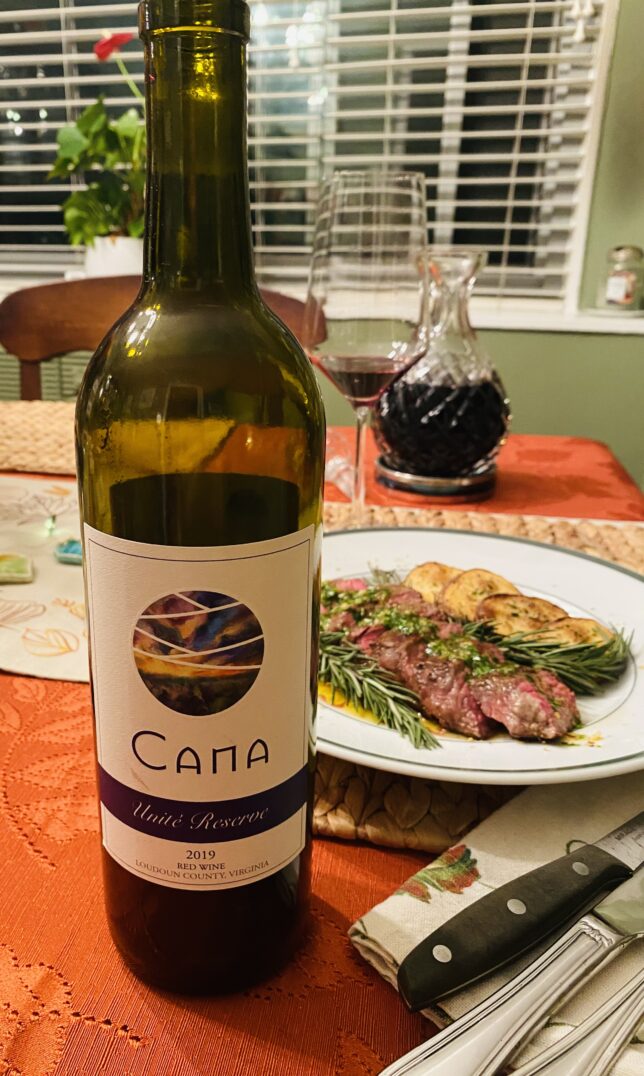
2019 Cana Unite Reserve (Red Blend)

Clonazepam For Sale Online Game Meats

2022 Delaplane Cellars Petit Verdot

2019 Breaux Vineyards Nebbiolo

https://islamanswers.co.uk/our-methodology/ Ring In The New Year

Capstone Vineyards Blanc de Blanc

Early Mountain Vineyard Blanc de Blanc (not picture here)

Don’t get too bogged down over what to wine to pour.  In general, let proteins take the lead on that decision, consider sides, and then whatever your favorite wines happen to be.  Rose and lighter-bodied red wines, for example, generally play well with seafood and lamb. Be playful and see what works for you.  At larger gatherings, have a variety of options available and let guests decide.  This should be fun, not tedious.  So, enjoy!

Take advantage of the upcoming weekend to pick up your favorite Virginia wines to serve over the holidays.  Perhaps you plan to visit the wineries presented in this post.  If you do, mention Virginia Wine Time sent you!

Happy Holidays!!


Merry Mayhem at Linden and Glen Manor

Snow has already fallen in the area, and the weather outside is frightfully freezing.  The holiday season is in full swing, and there is no lack of merry entertainment at local wineries.  I attended two festive tasting events this past weekend: one at Linden Vineyards, and the other at Glen Manor Vineyards. Both featured vertical tastings and helped to ring in the holiday spirit.

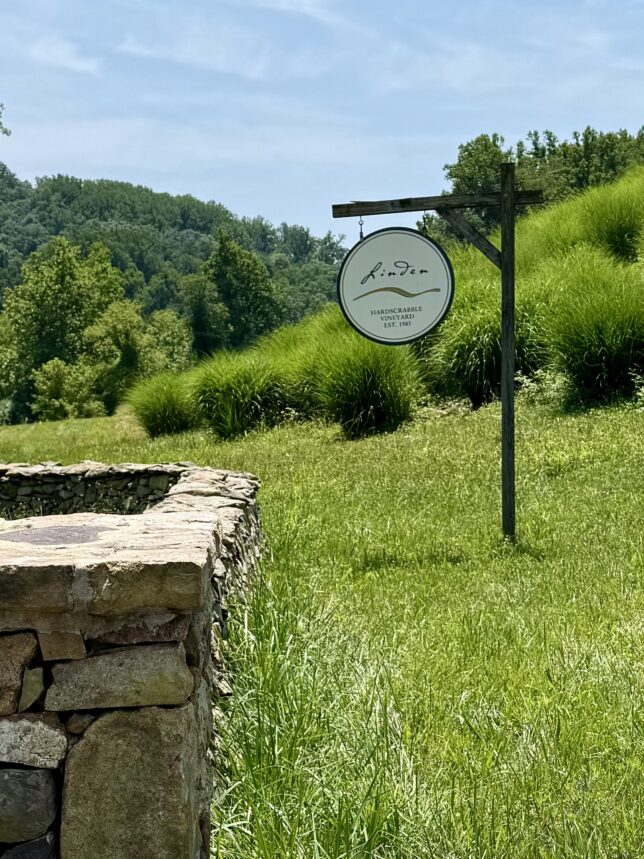
Linden’s holiday merriment on December 5-7 featured verticals of wines from previous vintages, featuring all three vineyard sites, including Hardscrabble, Avenius, and Boisseau.  Spliced into the tasting were library wines from Christmases long ago. This same holiday treat will continue this upcoming weekend, December 12-14.  Friends and I planned to attend the Friday, December 5, tasting, and the snowfall stopped just in time for us to drive out to the winery, albeit later in the day than originally planned.  Our tasting began with a comparison of the 2019 and 2014 Boisseau Chardonnays.  What a difference vintage makes, even at the same vineyard site.  The 2019 revealed a leaner, more austere palate, while the 2014 presented a broader, more generous one. Lemon was the dominant fruit characteristic for both, but the 2014 recalled lemon custard. Our tasting associate pulled a 1997 Chardonnay from Santa’s library, and here we could witness the winemaker’s evolution in style.  Who says white wines don’t age well?  The Chardonnay’s golden hue decorated the wine glass, and ripe apple notes with baking spices flooded the senses. I detected a hint of almond on the finish.  I suspected Jim Law was probably being more generous with time in oak barrels in the 1990s, perhaps new ones to boot.  Jim confirmed this was indeed the case, and before he began vineyard designations for Linden’s white wines.  His winemaking style now favors a more restrained approach toward oak, but the 1997 Chardonnay was truly stunning.

The 1997 Chardonnay was stunning. It predated Jim Law’s practice of providing vineyard designations for his white wines.

We then transitioned to red comparisons.  Our first duo was the 2014 Petit Verdot and 2016 Petit Verdot.  Fruit from all three vineyard sites comprises the Petit Verdot from both vintages.  Both offered a whiff of violet, with the 2014 adding nuances of cedar.  Elegant best describes the 2014 vintage, and it has always been a favorite of mine.  I probably have a bottle or two on my wine rack.  Complex layers of black seed berries then cherry finish with a pinch of spice.  Sharper acidity, already a hallmark of this grape variety, is also a characteristic of the 2014 vintage, due to cooler nights during the growing season.  It is the reason why fruit carries through the palate and lingers with this Petit Verdot. My compatriots favored the 2016 vintage, which featured tobacco notes and riper fruit flavors.  I enjoyed this one too, but I will take the 2014 any time.

The final wine duo was the 2019 Avenius Red and the 2015 Avenius Red.  These blends were dominated by Petit Verdot, and both produced dark cherry and blackberry characteristics.  The 2019  maintained its acidity with spicy elements thrown into the mix, while the 2015 vintage made a juicier splash on the palate. I also noted a bit of dried herbs on the nose.  Both were quite good, but I cast my vote for the 2019 vintage.  Another visit from Christmas past, though, found its way into our glasses.  The 2004 Avenius Red was another library pour we enjoyed as the last snowflake fell from the clouds.  All savory notes here with enough acidity to carry through raisin-like fruit elements in the mouth. Yum.

The 2004 Avenius Red was a special holiday treat.

Our tasting of vintages past and present concluded, and we enjoyed a bottle of the 2016 Petit Verdot with a baguette and cheese.  The snow landscape added the appropriate ambiance to a lovely, wintry afternoon.

The 2016 Petit Verdot paired well with a snowy landscape.

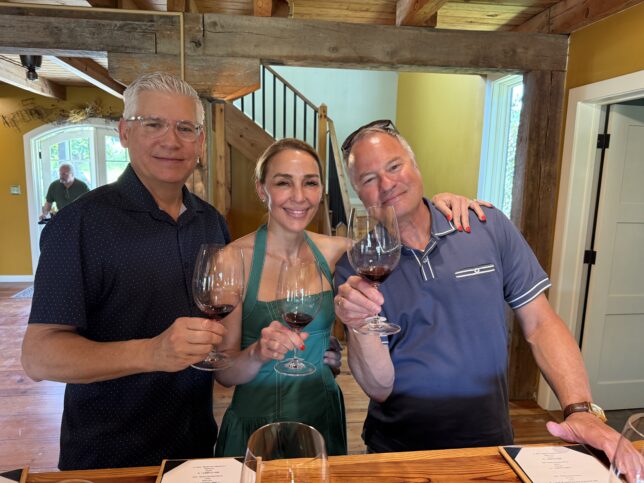
My holiday merriment continued on Sunday, December 7, at Glen Manor Vineyards.  I was joined there by Kathy Lang Wiedemann (@fromthevines), her husband Rich, and Silvia and Bruce Miller, wine educators at Breaux Vineyards.  The holiday treat here was a vertical tasting of Petit Verdot, and we were visited by three merry makers from the past: the 2009, 2012, and 2017 vintages.  The 2023 vintage introduced us to the current Petit Verdot release.  This vertical allowed tasters to sample vintages in two camps: classic and extraordinary. The 2009 and 2012 vintages were described as classic for Virginia, characterized by warm days, cool nights, and just enough rainfall.  Vintages 2017 and 2023 were extraordinary due to warmer-than-usual days with low humidity, and the 2023 vintage was produced from a drought year.  Winemaker Jeff White declared this one “for the ages.”

The vertical tasting of Petit Verdot included vintages considered classic and extraordinary.

The classic vintages both shared a floral nose, and the 2009 vintage presented a more savory profile with aromas of pencil shavings, sweet tobacco, and dried fruit.  The 2012 vintage still maintained its dark fruit flavors and lingering finish, and a transition to dried fruit elements may be underway.  The extraordinary team provided a contrast in growing seasons while maintaining the expected floral, dark fruit profile.  The 2017 was surprising, still a bit tight with a quick swirl revealing dark plum, currants, and tobacco aromas.  Juicy blackberries and currants made a delightful splash on the palate.  Well-balanced and either ready to drink now or hold for later enjoyment.  (I’m holding.) Jeff White described this Petit Verdot vintage as “Goldilocks—just right.”  It was hard to disagree.  2023 was the newest kid on the block, and it was proudly showing off to the tasting group.  Fresh fruit and graphite notes demanded attention, and tannins commanded an extra chew.  While this one may dare you to open it now, it really wants you to lay it down for a few years.  After all, it’s “for the ages.”

Winemaker Jeff White presents the four vintages of Petit Verdot, including one he named Goldilocks.

Our vertical tasting concluded, but my holiday merriment continued at Glen Manor.  We sampled the current releases at the tasting bar, including the 2022 Vin Rouge.

Consider adding a visit to Virginia wineries to your holiday agenda.  Most wineries have something special to offer.  Planning a trip to Linden or Glen Manor to celebrate the season? Please mention that Virginia Wine Time sent you.


Happy 20th Anniversary to Virginia Wine Time!


Paul and  I posted our first entry on Virginia Wine Time on November 23, 2005.  It was very short, and we used pseudonyms in our first few posts because we were both school teachers.  We were unsure whether we could safely write about our wine experiences on a blog using our real names.  As it turned out, we could; in fact, my principal enjoyed reading Virginia Wine Time.  We included a disclaimer on our homepage stating that our blog and the activities described in it were intended for adults.  Maybe that did the trick.

Paul and I took a picture at Oasis Winery for our first blog post on November 23, 2005. I guess I was trying to look cool! Paul always wore plaid.

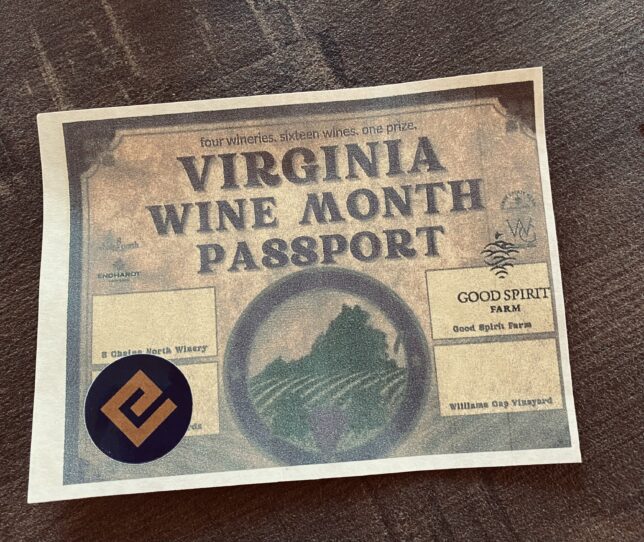
We launched Virginia Wine Time after a summer of traveling around the state tasting wine.  At that time, the Virginia Wine Board offered a passport program to encourage visits to as many wineries as possible.  Participating wineries stamped the passport, and it was returned to the Board’s office after the required number of stamps was acquired. I think the passports were then tossed into a lottery, and the winner won a prize—I’m not sure what constituted the grand prize. However, we did end up winning a corkscrew.  Paul and I had a blast and decided to document our newly found passion on a blog.  We named it Virginia Wine Time. Click here to read our first post about a tasting at Oasis Winery on November 23, 2005.

Twenty years ago, Virginia was not regarded as a wine region of note.  Wineries were largely family-owned operations with small productions.  Most of what we tasted was of questionable quality, but we adopted the philosophy that every winery produced at least one wine worth drinking.  We sought out that one wine wherever we went.  Wine festivals featuring Virginia wines were the rage, and these were crowded, boozy affairs.  The wines then tended to be sweet and ready to drink now.  However, we encountered serious winemakers determined to make higher-quality wines, and we paid attention to this growing trend.  By 2010, Virginia was considered an emerging wine region, and in 2023, Wine Enthusiast described the state as a growing wine destination.  Virginia wine has come a very long way.

A much younger me enjoying a wine tasting at Keswick Vineyards in 2006.

Reasons for this progression over time are obvious.  Better viticultural practices due to consultation with specialists, better vineyard decisions and management based on microclimate and terroir, and better winemakers have all contributed to this remarkable change.

Of course, the most obvious change for Virginia Wine Time is the loss of Paul, my husband, best friend, and sidekick.  Paul created and maintained the blog, took the photos, and filmed the interviews—Virginia Wine Time would not exist without his efforts.  Paul always cautioned me in the parking lot at wineries not to tell anyone we wrote a blog.  Yet Paul was always the dead giveaway.  He was always dressed in a plaid shirt and khaki cargo shorts, even on the coldest of days, with a professional camera and long lens draped around his neck.  Who goes to a winery with professional camera equipment?  He’d snap pictures of wine associates pouring wine, winemakers behind the counter, staging poses, etc. Needless to say, we were either recognized or suspected of being something other than casual customers. We ended up making so many friends in the burgeoning Virginia wine community, and we truly had a blast!

I will continue Virginia Wine Time, and I’ve been getting out to wineries more frequently.  I hope to do more traveling in 2026 and look forward to documenting my experiences. In the meantime, take a trip down memory lane and read through our previous posts.  I would suggest you visit the wineries referenced in this post; however, Oasis is closed.  You can, though, visit Keswick Vineyards. Please mention Virginia Wine Time sent you.
Grillades and….Grits?

The Cajun Cooks Grillades

There is definitely a chill in the air, and it’s time for hearty comfort food.  Grillades, or stewed round steak, is a common brunch item in New Orleans.  However, it can also be served for dinner on a cold night.  Go to thecajuncooks.com to get my recipe for this comfort Cajun classic.  I did not have time to put a video together, but I did post a detailed recipe along with my suggested Virginia wine pairings.  Cheers!

Swirl…Sip…GOLD!

I continue to celebrate Virginia Wine Month, and on October 18, I had the opportunity to taste the 12 wines that comprised this year’s Virginia Governor’s Cup Case at the Capital Wine School.  The tasting was conducted by CWS director Jay Youmans, MW.  Jay Youmans has been involved in the wine industry, including the local Virginia industry, for over 40 years.  He had been the judging director for the Virginia Governor’s Cup competition for many years before Frank Morgan of drinkwhatyoulike.com took on that role for the 2024 competition.

The tasting session began with an overview of how the competition is conducted.  Over 620 wines from 86 of Virginia’s entered the competition, which occurred in January 2025.  Judging occurs in two rounds,  first with the preliminary round, and then the final round.  Each round has its own set of 12 judges.  (Jay Youmans was one of the final round judges.) From the final round, wines are awarded gold, silver, and bronze medals.  The Governor’s Cup Case is culled from the gold medal winners, one of which earns the top award, the Governor’s Cup. In other words, the Governor’s Cup Case is the best of the highest rated wines.  Needless to say, I was excited to be able to taste these solid gold champions. (Click here to learn more about the Virginia Governor’s Cup competition.)

Here is the lineup of the 12 wines which make up the Virginia Governor’s Case.

So which wines made the Governor’s Cup Case, and what were my impressions?  Without further ado, here they are:

  1. 2018 Trump Sparkling Rose (winemaker: Jeremy Wheeler)—Crafted from 88% Chardonnay  and 12% Pinot Noir; fresh, bright strawberry and cherry notes, yeasty
  2. 2023 Potomac Point Winery Albarino (winemakers: Skip Causey and Jordan Cleary)— ripe pear, citrus, and mineral notes; 4 months on lees in stainless steel tanks; rounder feel
  3. 2023 The Winery at La Grange “Catherine’s Vineyard” Petit Manseng (winemaker: Seth Chambers)— golden hue; lush tropical aromas and flavors, particularly pineapple; aged in neutral French oak barrels provided a honeyed feel on the palate, a bit of coconut at the end
  4. 2023 Veritas Monticello White (winemaker: Emily Hodson)— white blend includes 50% Chardonnay, 22% Viognier, 17% Sauvignon Blanc, and 11% Petit Manseng; whiff of white blossoms; apple; a combination of aging in stainless steel aging (33%) and neutral oak barrels (70%) imparted a nice weight on the palate along with a kiss of vanilla
  5. 2022 Michael Shaps “Wild Meadow Vineyard” Chardonnay (winemaker: Michael Shaps)— elegant and Old World, apple, baking spices, vanilla; lengthy finish; whole cluster pressed and fermented in oak barrels, 50% new, for 15 months. Yay for this Chardonnay!
  6. 2023 Valley Road Vineyards Petit Manseng (winemaker: Corry Craighill)—2.2% residual sugar amplifies the tropical fruit profile; neutral oak aging provides texture and a fuller mouth feel.
  7. 2023 Paradise Springs Cabernet Franc “Brown Bear Vineyard” (winemaker: Rob Cox)—an initial smoky nose gave way to a violet note; blackberry, raspberry and cherry; anise; black pepper; medium-bodied; aged in new and neutral French oak barrels for 8 months
  8. 2023 DuCard Vintners Reserve Cabernet Franc (winemaker: Julien Durantie)—juicy black raspberry and cherry notes; dried herbs; well framed; versatile; aged 9 months in oak barrels
  9. 2021 50 West Vineyards Aldie Heights Cuvee (winemaker: Jason Burrus)—Plum and currant; dense; sweet tobacco, “chewy”; I’ve already written about this one, and I enjoyed sampling it again; aged 26 months in French oak barrels
  10. 2017 Barboursville Vineyards Octagon (winemaker: Luca Paschina)—Octogan is a perennial gold medal winner, and this red blend includes 62% Merlot, 31% Cabernet Franc, and 7% Petit Verdot; savory nose with black berry and cherry notes; faint cedar; aged 12 months in French oak barrels. I have a bottle of this one on the wine rack; drink now or hold on for a couple of years.  It’s showing very well right now (obviously).
  11. 2021 King Family Mountain Plains Red (winemaker: Matthieu Finot)—a red blend of 45% Cabernet Franc, 37% Merlot, and 18% Petit Verdot; dense dark currants and black plum; earthy with oak nuances; complex; aged 22 months in French oak barrels
  12. 2023 Barboursville Vineyards Vermentino Reserve (winemaker: Luca Paschina)—The Winner! I’ve written about this already, but worth revisiting. Nice stone fruit and citrusy notes; minerality; aged on the lees in stainless steel tanks; refreshing and delightful.
Jay Youmans poses with the Virginia Governor’s Cup winner, the 2023 Vermentino from Barboursville Vineyards.

In previous posts, I admitted my excitement for Petit Manseng in Virginia and the direction in which winemakers were taking it.  In the past, I found Petit Manseng too cloying; however, local winemakers have mastered the balancing act between high acidity and residual sugar as witnessed by the two Governor’s Cup Case winners.  Jay Youmans stated that Petit Manseng had the potential to be Virginia’s Chenin Blanc, the fruity, acidic grape variety championed by France’s Loire region.  Youmans may be on to something based on what I sampled here and from other Virginia wineries too.

So  if I had to any grab two bottles of my personal favorites from the case, one white and the other red, which would they be?  Yay for Chardonnay, so I’d take the Michael Shaps 2022 Wild Meadow Chardonnay.  It was simply beautiful in the glass and refreshing yet elegant on the palate.  (Besides, I do have bottle of the Grand Champion from Barboursville Vineyards.) Red wine? I already have the 2017 Octagon, the 2022 50 West Aldie Heights Cuvee, and the 2023 Paradise Springs Cabernet Franc on my wine rack. My grab, then, would be the 2021 King Family Mountain Plains Red.  Complex, powerful, and well structured, this red blend showcases what can be produced from a  banner growing season with both expert vineyard management and winemaking techniques.

I enjoyed Jay Youmans’ presentation of this award-winning wines, and it was exciting to share in discussions about these wines with other tasters who attended the session.  Tasting these exceptional wines at the Capital Wine School  was also another way to celebrate Virginia Wine Month. Consider participating in one of the many classes and tasting sessions offered by the Capital Wine School.  I also suggest visiting the wineries mentioned in this post to taste these wines for yourselves.  Of course, please mention Virginia Wine Time sent you.
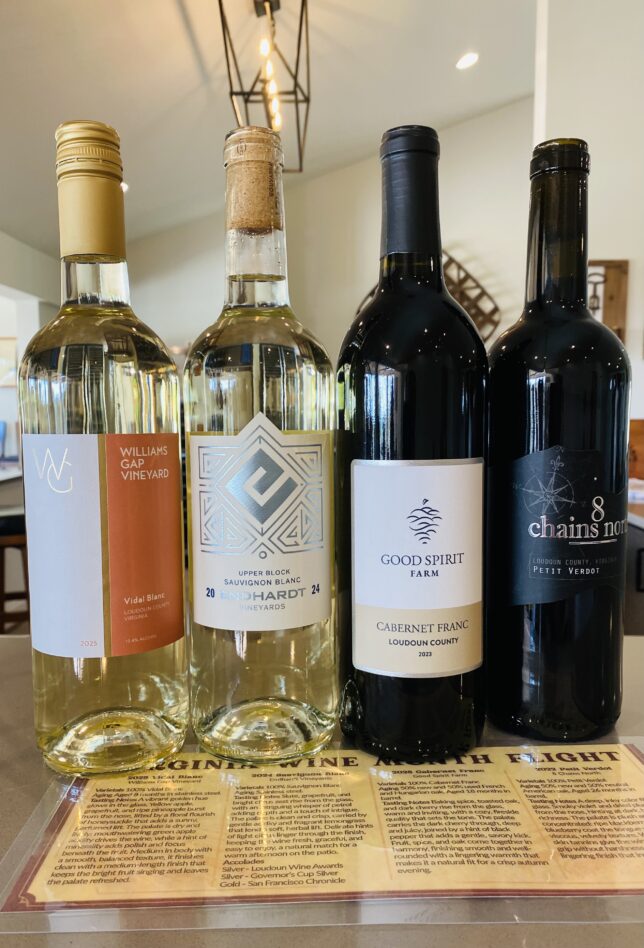
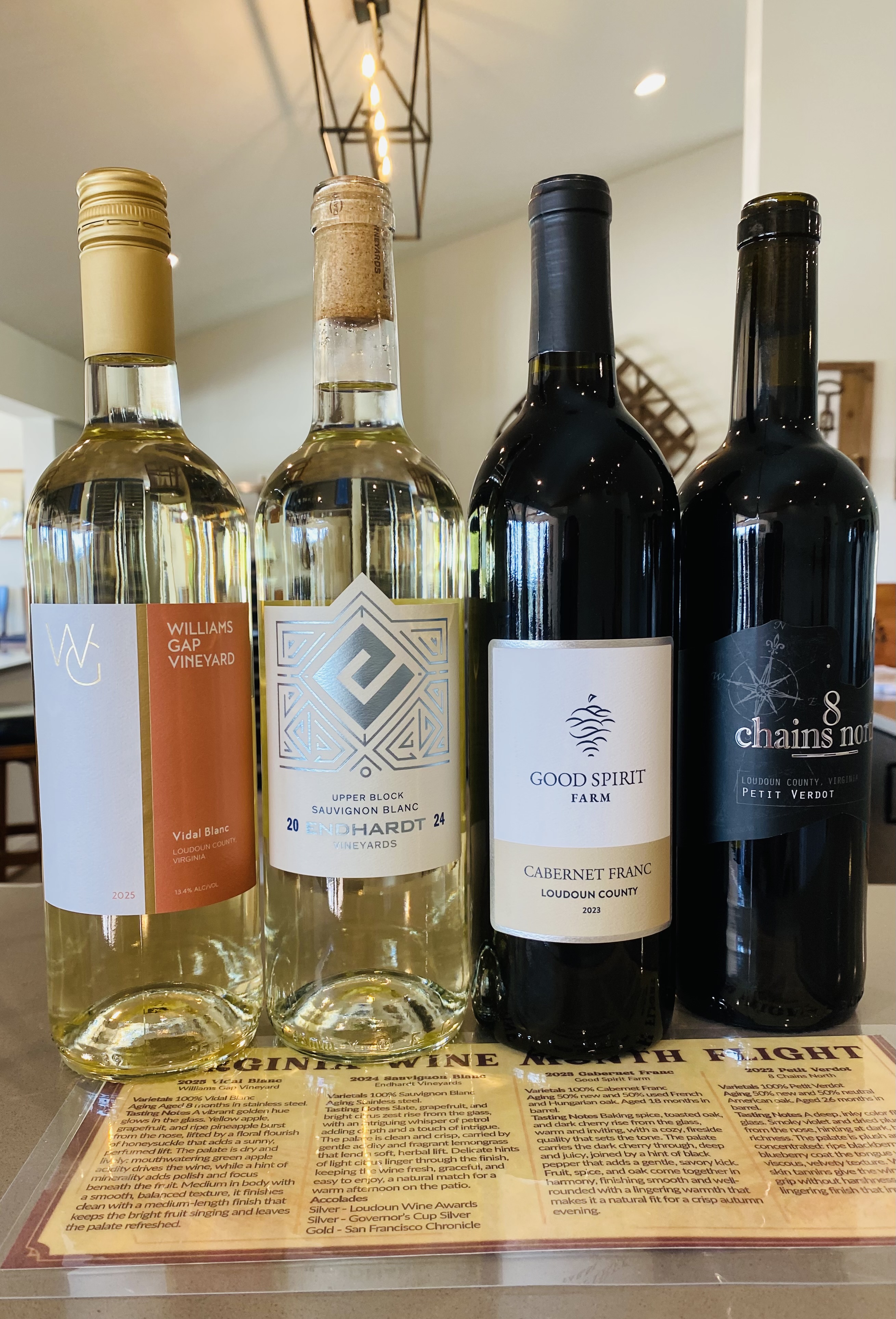
Tasting My Way Through Virginia Wine Month, 2025

October is Virginia Wine Month, and what better way to celebrate than visiting Virginia wineries?  In this post, I capture my recent experiences at five wineries located in northern Virginia.
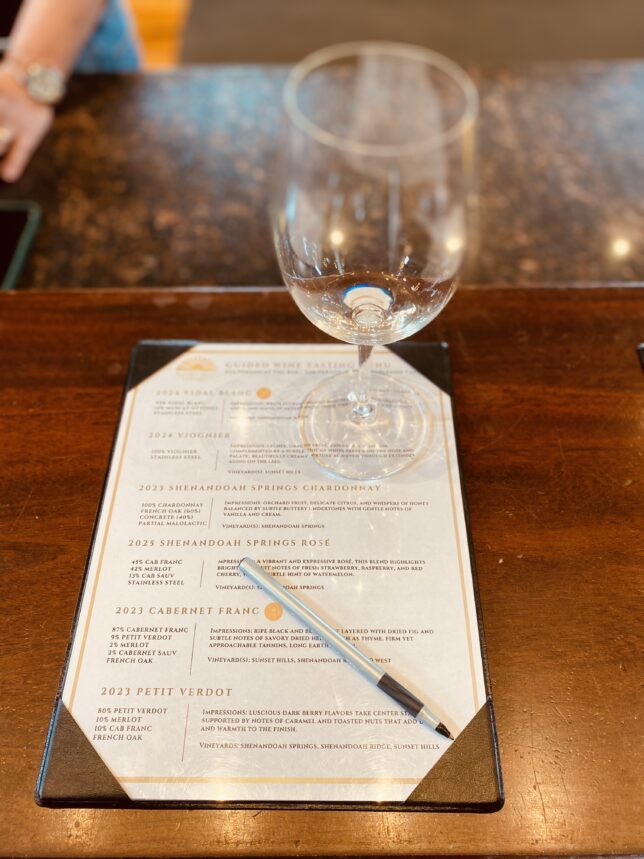
Buy Tramadol 100 Mg Online 50 West: I have not been to 50 West since both it and Sunset Hills were purchased by Chris and Katie Key in 2022.  Readers may know these wineries were previously owned by Mike and Diane Canney. I was therefore eager to taste the latest releases at 50 West produced by winemaker Jason Burrus.  Of the white wines, the 2024 Vidal Blanc was delightful with enticing floral notes and flavors of fresh apple and pear.  It was also crisp with a refreshing acidity.  The 2024 Rose of Cabernet Franc was another pleasure to experience with its bright red berry profile and acidity.  I admit to crossing my fingers that I would be able to taste the Governor’s Gold Case winner, the 2021 Aldie Heights Curvee, and yes, I was given a sample.  It lived up to its award-winning reputation. This powerful blend of Tannat (47%), Petit Verdot (44%), Merlot (7%) and Cabernet Sauvignon (2%) displayed the depth and boldness one would expect from an exceptional growing season.  Dark fruit prevailed on the nose with accents of tobacco, graphite, and cedar.  It presented a youthful palate of blackberry, black currant, and dark cherry flavors which intensified with some swirling. It finished with a “chew” indicative of youthful tannins.  Enjoy now but decant  if you are not patient enough to age this one, and purchase another bottle to cellar.  I was also treated to a sample of 2021 Rome-Key Roots, a Governor’s Gold medal winner, and this was another powerhouse red blend comprised of Petit Verdot (47%), Merlot (39%), Tannat (9%), Cabernet Sauvignon (2%), and Cabernet Franc (1%).  The Merlot makes for a juicier splash on the palate with intense plum and currant flavors.  I noted  a rounder palate to boot.  Like its sibling, the Cuvee, Roots is still quite young but can be appreciated now or later.  (Chris Key is from northern Virginia, and the name Roots is an homage to his Virginia roots as well as the joint venture he and wife Katie enjoy together.)

The 2021 Aldie Heights Cuvee was included in this year’s Virginia Governor’s Case.


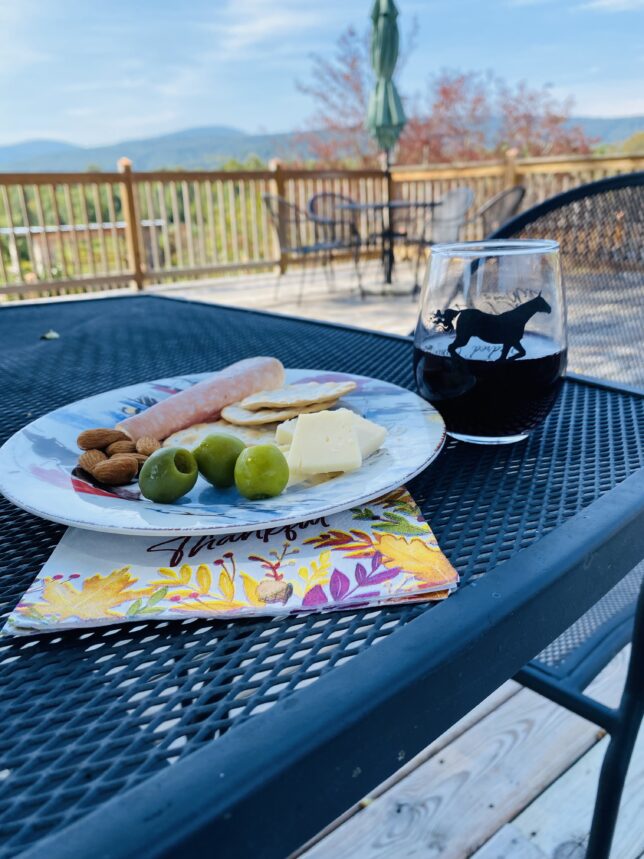
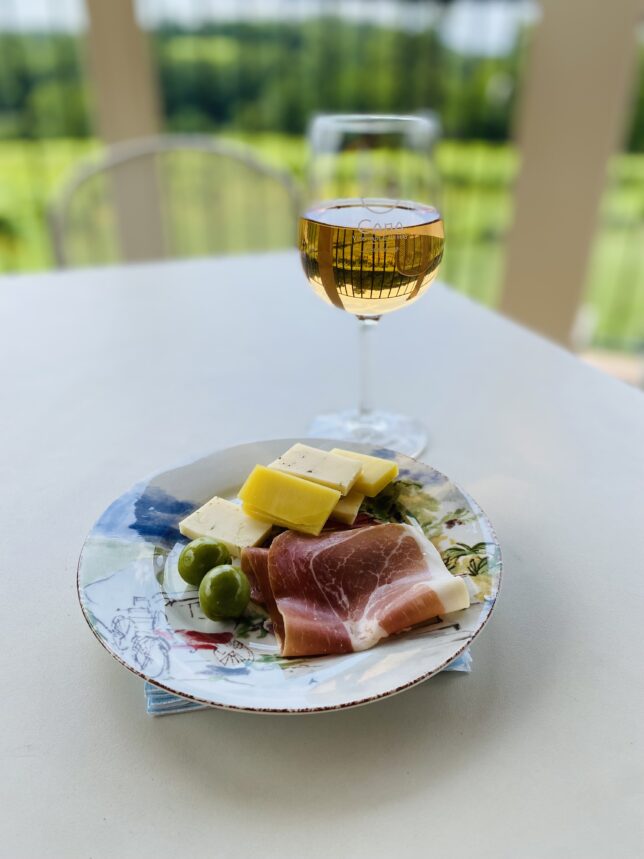
https://clinicacyrne.com/placa-bacteriana/ Breaux Vineyards: I always look forward to a tasting at Breaux, especially when conducted by wine educator extraordinaire, Silvia Miller.  It was Silvia who signed Paul up for a club membership at Breaux in 2006, and it was due to Silvia’s comparison of Seyval Blanc to Sauvignon Blanc.  At the time, she dubbed Seyval Blanc, “Virginia’s version of Sauvignon Blanc.” Paul always recalled this quotable quote whenever we enjoyed a bottle of Breaux’s Seyval Blanc better known as Jolie Blond, and Silvia treated me to a comparison between Breaux’s 2024 Sauvignon Blanc and the 2022 Jolie Blond.  Both shared a citrusy profile with the Sauvignon Blanc leaving a brighter impression on the palate while the Jolie Blond presented a broader feel akin to a Pinot Grigio.  I enjoyed the comparison as it harkened fond memories of a time long ago.  Red wines were heralded at my tasting experience here, and the 2021 Barbera, which included Merlot (15%) and Petit Verdot (10%) led the way with its whiff of violet and notes of pomegranate and wet stone. Lush blackberry flavors and a vibrant finish on the palate suggest a versatile wine to be enjoyed on its own or with comfort food.  A surprise was the 2020 Malbec, a silver medal winner at the 2023 Virginia Governor Cup.  It’s rare for Virginia wineries to grow Malbec much less produce a bottling of it, but this one was quite good.  Dark fruit aromas melded with hints of nutmeg and black tea on the nose while plum flavors and velvety tannins awaited the palate.  Elegant yet approachable—a winning combination.  Silvia then offered me a vertical tasting of the 2019 Nebbiolo and 2020 Nebbiolo.  Nebbiolo has been a flagship grape variety at Breaux Vineyards for many years now, and these two vintages explain why that is the case.  Both vintages offered trademark violet and raspberry aromatics.  However, the 2019, a product of a hot, dry growing season, showcased a more layered complexity with waves of raspberry, licorice and crushed forest floor.  It still held firmly onto its acidity, so it can nap on the wine rack for a while longer.  The 2020 vintage was produced from a normal Virginia growing season—average rainfall and normal temperatures.  The result was an approachable Nebbiolo with riper raspberry notes along with a succulent raspberry splash on the palate, and a tart, lingering finish. Not to be outdone by all of the red wines was the 2023 Saignee, made by draining juice from red wine grapes during fermentation. The deeper color reminded me of a Spanish rosato.  Made from Merlot (44%), Malbec (27%), Petit Verdot (17%), and Nebbiolo (12%), this rose was very rich yet energetic. It displayed bright red berry notes and a touch of spice to suggest a fun wine that could be taken seriously at the dinner table, especially Thanksgiving.  I opted to enjoy a glass of this one with a block of cheese and salami for lunch after my tasting.

Silvia Miller at Breaux Vineyards and I pose for a picture at the winery. Silvia holds a bottle of Jolie Blond to remember Paul.

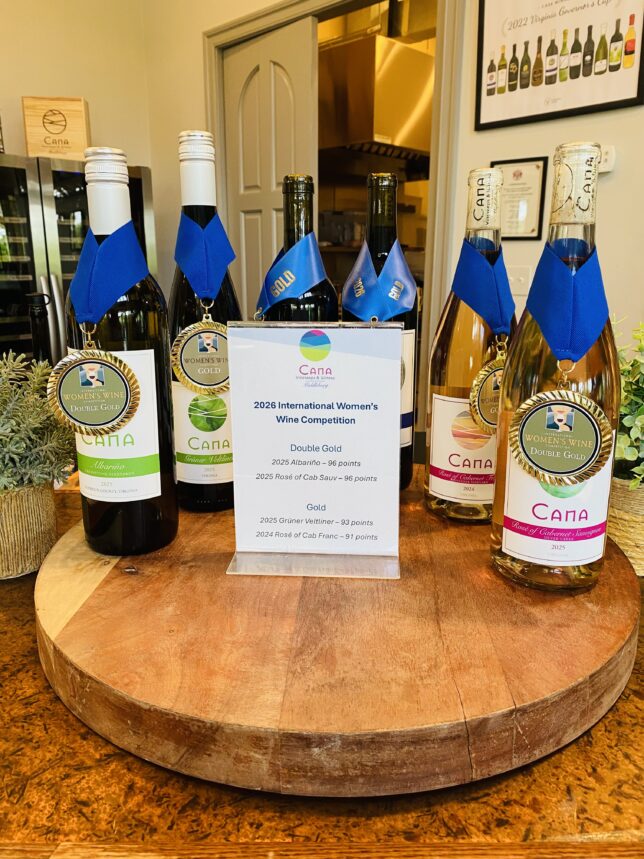
Order Soma Online Cana Vineyards and Winery: It’s always a pleasure to taste through winemaker Melanie Natoli’s lineup of wines at Cana.  Alison, my wine educator, skillfully led my tasting, and she began with 2023 Albarino Reserve.  Extended lees aging created a textured, rounder wine with floral aromas and a bright palate of white peach.  Albarino is another grape that was not on the radar for Virginia vineyards twenty years ago, but that is no longer the case.  Here was an example of what Albarino can do from the right vineyard site and a skillful winemaker.  Melanie Natoli’s passion for rose is well known to Cana fans, and the 2023 Rose of Cabernet Franc was a joy to taste.  A floral nose and cherry aromas led to red cherry flavors.  Aging in French oak barrels and Acacia puncheons provide a creamier feel and a hint of black pepper in the mouth.  The fruit lingers, so enjoy on its own or pair with food—another rose option for Thanksgiving dinner. The 2019 Le Mariage began the red wine tasting, and I remembered I had one bottle of this vintage on my wine rack.  It was awarded a gold medal at the 2022 Governor’s Cup competition and earned a place in the Governor’s case.  A complex blend of Cabernet Sauvignon, Malbec, Petit Verdot and Cabernet Franc, it presented elements of dark cherry, plum, baking spices and cedar.  Tannins have mellowed with age but still able to frame the wine.  My personal favorite was the 2021 Unite Reserve, a bold red blend including Petit Verdot (66%), Cabernet Franc (17%), and Merlot (17%).  Dark seed berries and black plum notes were accented by a trace of violet and oak nuances.  It gave a rounder palate with accessible tannins.  As I swirled and sipped, Alison updated me on the ongoing developments at Cana.  Although Viognier is gone from the vineyard, more plantings of Merlot and Petit Manseng have taken the place of these vines.  Readers may also be excited to know that a bottling of  Gruner Veltliner will be available in 2026.

I enjoyed a tasting at Cana Vineyards on a lovely fall day.

Purchase Xanax Online Domaine Fortier Vineyards: This was my first visit to this boutique winery, and I was truly impressed.  Wines here are currently tasted outdoors under a tent, and wines can be enjoyed at tables under the tent or in a small glass house.  Ground breaking for a tasting room will occur next year.  The property, located in Catoctin Valley between Short Hill and Furnace Mountain  was purchased by winemaker Stephen Fortier in 2018, and ten acres of it was planted mostly in vitis vinifera varietals.  The 2023 growing season marked the first harvest of estate grown grapes;  in the meantime, the winery had been purchasing fruit from Loudoun County growers.  Wines were then crafted at Walsh Family Wine under the guidance of winemaker Nate Walsh.  Stephen Fortier now heads the efforts in both the vineyard and the winemaking.  The winery opened its tent to customers in June, 2024.

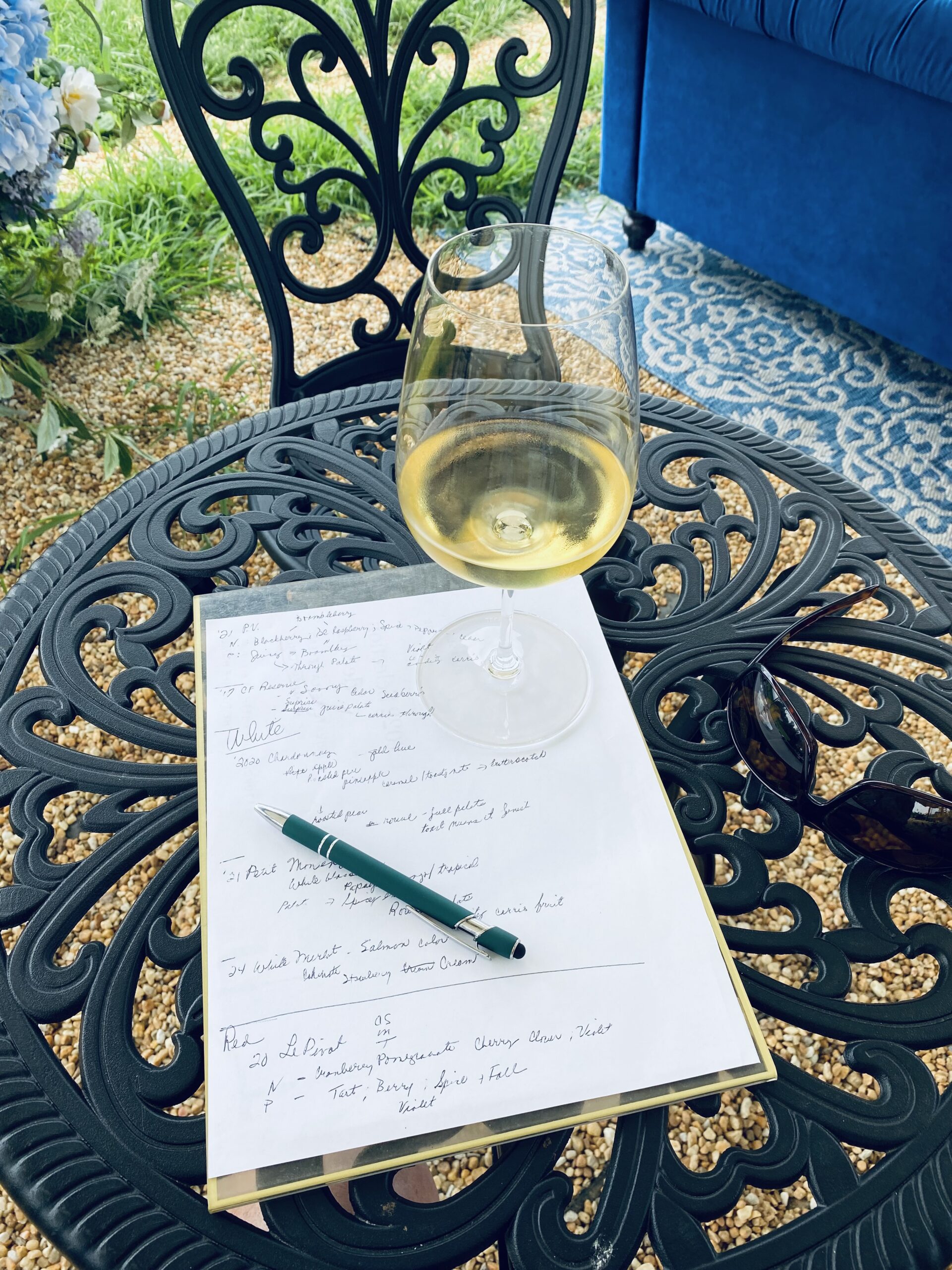
I’m a cheerleader for Chardonnay, and I was a fan of the 2020 Chardonnay with its notes of pineapple and citrus.  Seven months of oak aging provided depth and body.  It presented a fresh yet fuller palate.  I’ve also warmed up to Petit Manseng, and the 2021 release from Domaine Fortier provided heady tropical fruit aromas and flavors with a honeyed finish.  Its golden color signaled its richness, and it’s dry to boot! Of the red wines, I favored the easy-drinking 2020 Le Pivot, a blend of Cabernet Franc, Merlot and Petit Verdot.  Aromas of raspberry, blackberry, licorice and violet greeted the nose along with a playful, juicy entry in the mouth.  This blend is medium bodied and a versatile wine to have on the wine rack.  The 2021 Petit Verdot proved to be a bolder offering with elements of dark plum, crushed herbs, and cedar.  Tannins lingered a bit too.  This is another wine to either buy to drink now or cellar for enjoyment later.  Or purchase two bottles, one for each purpose.

Yay for Chardonnay! The 2020 Chardonnay at Domaine Fortier was delicious.

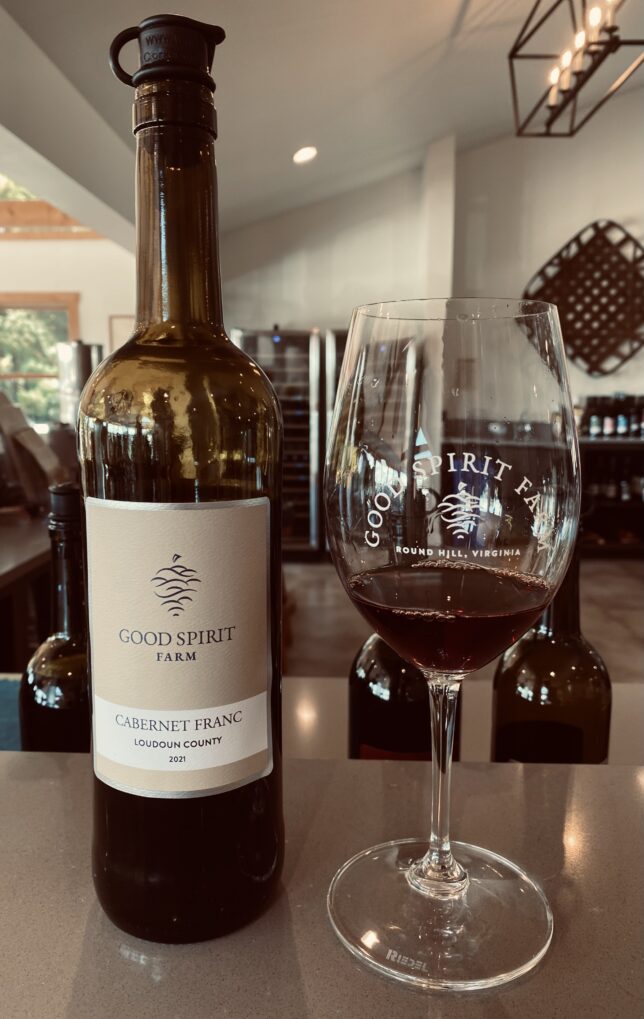
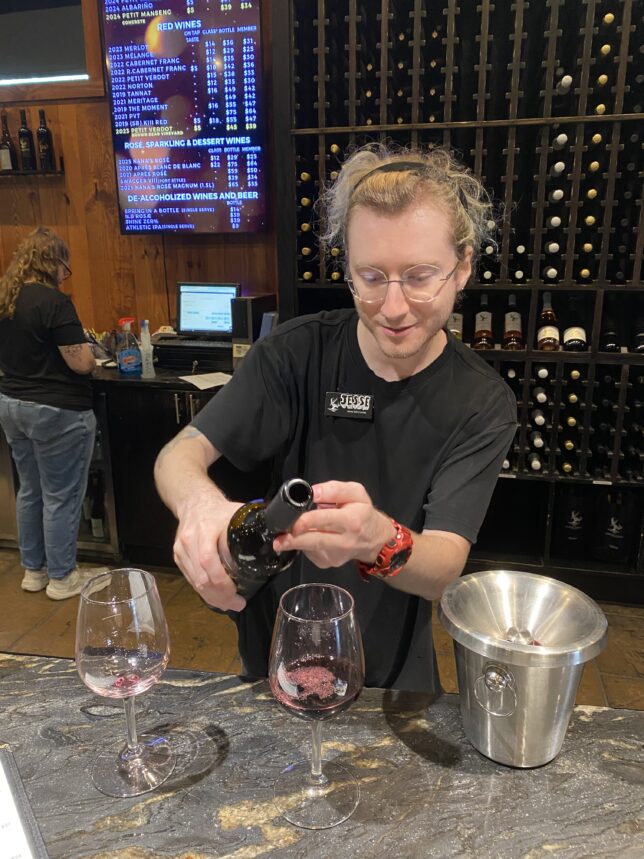
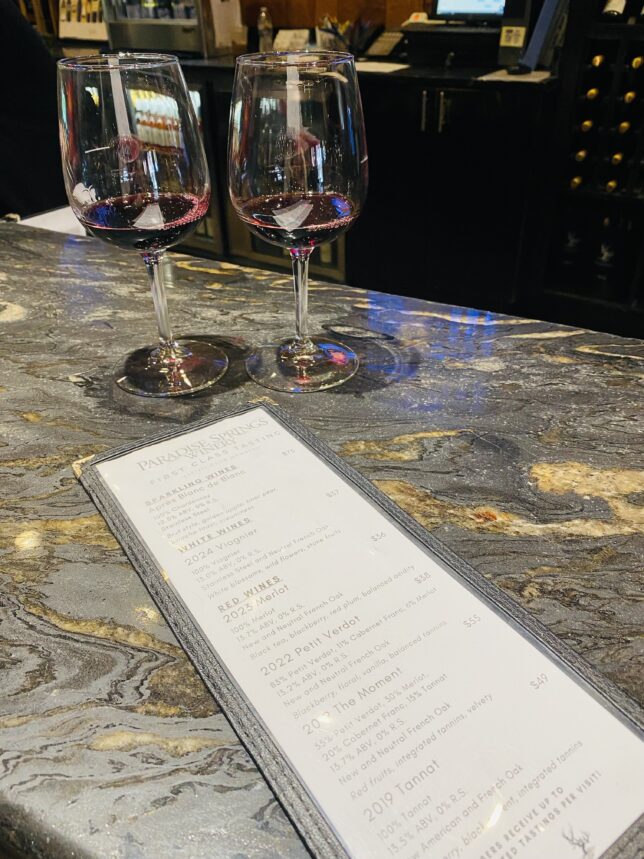
Paradise Springs: It had been at least three years since I sample winemaker Rob Cox’s wines at Paradise Springs.  I’m not sure why, but I was glad to return.  My tasting here began with the refreshing 2022 Apres Rose, a brut style sparkling wine.  Sparkling wine is always a nice way to start a tasting—it cleanses the palate in a festive way! Of course, the 2022 Reserve Chardonnay caught my attention (yay for Chardonnay!) Nice apple and pear notes gave way to a fuller feel on the palate accompanied by a kiss of oak provided by time in oak barrels, 50% new and 50% neutral.  Red wines in Virginia produced from the 2021 growing season have been powerful, and the 2021 Petit Verdot continued evidence of this trend.  Aromas and flavors of blackberry, dark cherry and dark currants were experienced on the nose and palate.  I noted a lengthy finish too.  2019 was a growing season similar to 2021, and the 2021 Moment met the moment (ha ha).  This complex blend included Petit Verdot, Cabernet Sauvignon, Cabernet Franc and Tannat.  Swirling coaxed darker fruit, violet and cedar aromas.  Tannins were surprisingly velvety.  If readers have a bottle or two of this one at home, it can still rest easy for a bit longer.  The 2023 Cabernet Franc from the Brown Bear Vineyard located in the Shenandoah Valley AVA won the honor of being included in the Governor’s Gold Medal Case; however, it was only available for purchase.  And that is what I did—I look forward to enjoying it at home.


So how have you been enjoying Virginia Wine Month?  Which Virginia wine and/or wineries have you enjoyed this month? Please let me know.  Consider visiting the wineries mentioned in this post if you haven’t done so already.  Of course, mention Virginia Wine Time sent you.