You Are The Winemaker

Yes, at Vint Hill Craft Winery you are indeed the winemaker. Rather than try to explain this novel concept to you, I’ll simply cut and paste from the winery’s website:

You are the Winemaker! Choose to make wine with us as it is crafted to your specifications, in your style with your name, a label of your design and of course, your story behind it. Vint Hill Craft Winery provides the opportunity for individuals or small groups to participate alongside our expert winemaking team to ‘Craft’ their own wine at our specially designed, eco-friendly, ‘small lot’ winery. Customers will receive hands-on instruction in every aspect of the process; crafting their own personalized wine, beginning with the selection of your grapes from California, Washington and, of course, Virginia!

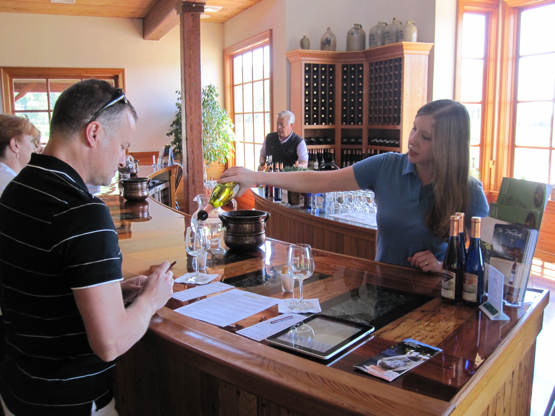
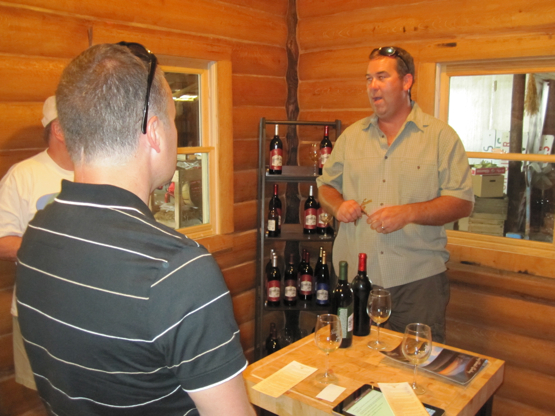
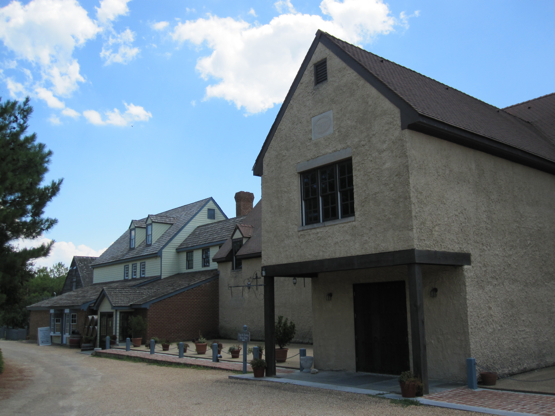
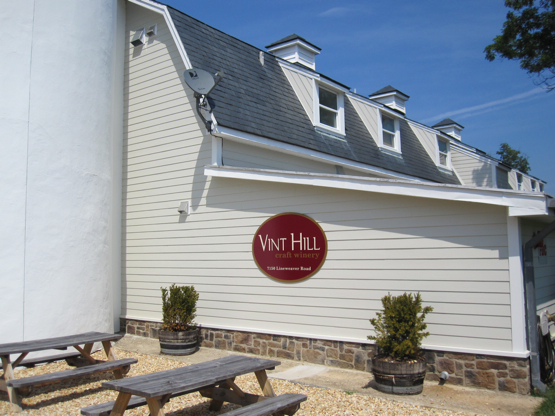
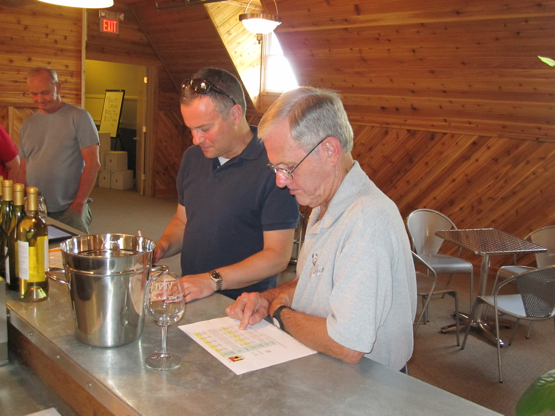
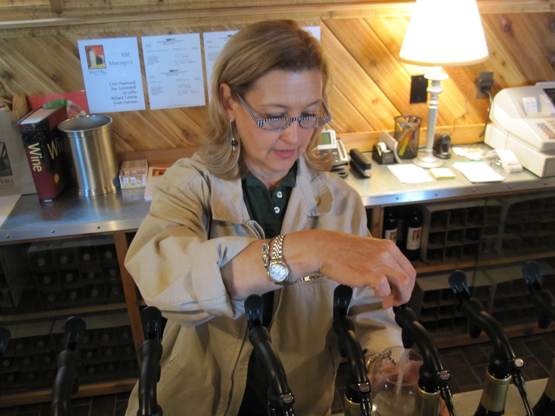
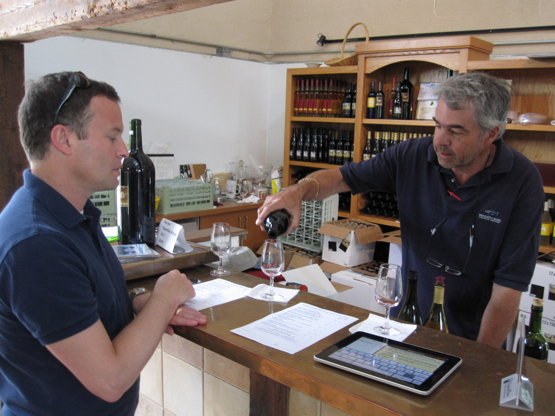
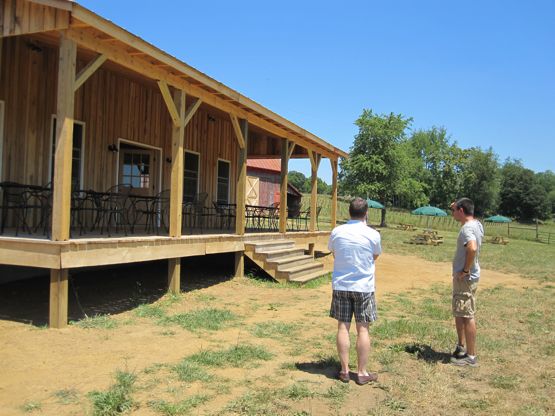
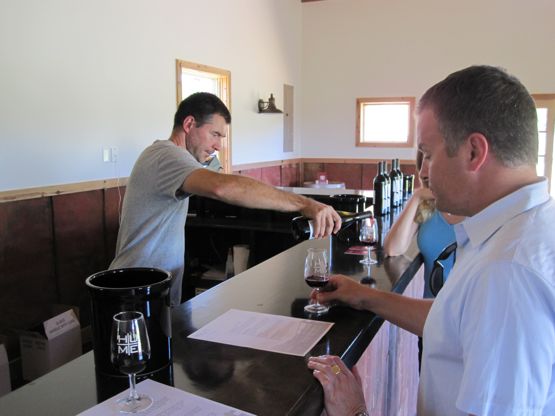
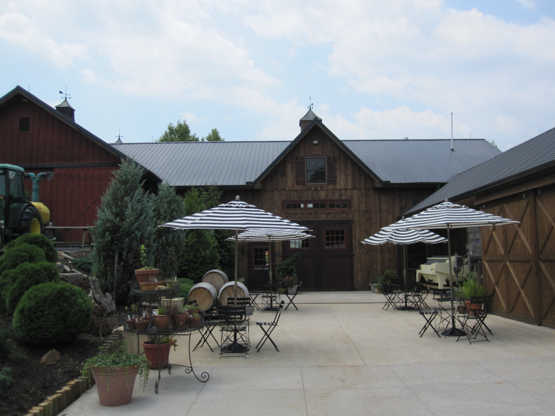
My Dad was in town this past weekend, and we decided to pay a visit to Vint Hill Craft Winery. The winery is off of the beaten wine path, but we did indeed find the winery and tasting room. The facility itself has quite a history, and it was once an intelligence gathering post operated by the US Army. This operation ended in 1997 after 55 years of service; however, the facility received a new life in 2009. Winemaker Chris Pearmund and businessman Ray Summerell opened the Vint Hill Craft Winery for the purpose of providing a facility for aspiring winemakers. As an extension of the process, the tasting room recently opened to allow consumers the opportunity to taste the finished products. The craft winery’s motto? Create, Taste, Learn.

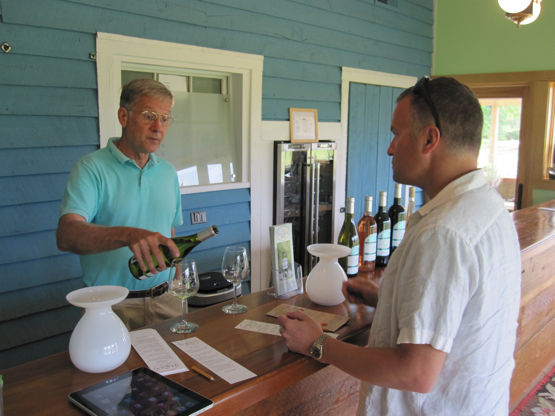
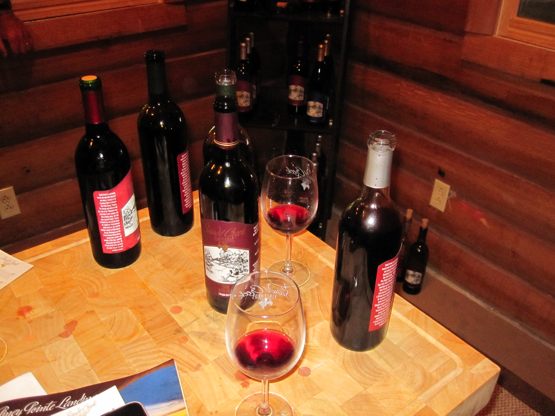
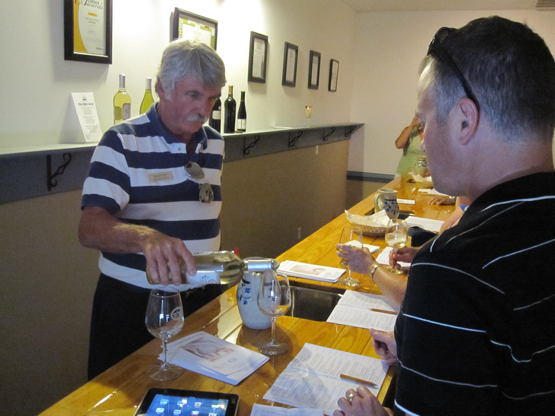
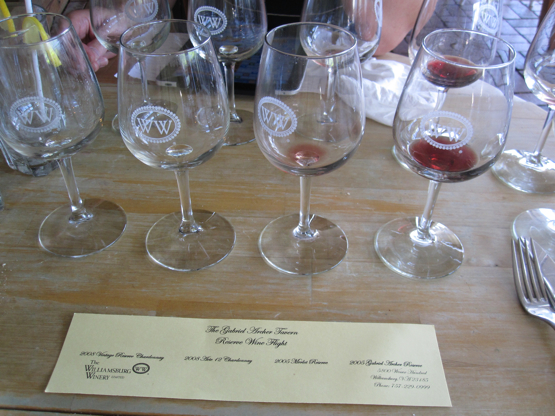
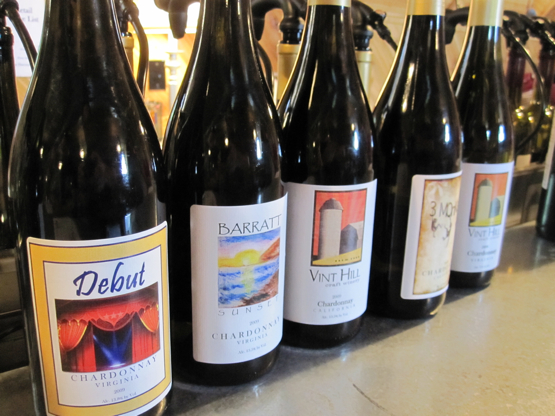
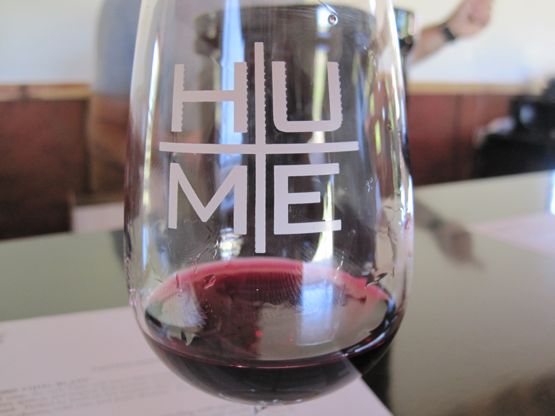
Tasting was certainly on our agenda, and we were offered three flights to sample. Since there were three of us at the tasting bar, we each took a flight. Dad and I opted to sample the Chardonnay flight, Paul made a go of the Viognier flight, and we all tasted the red flight. Of the Chardonnays, Dad and I both concurred that the 2009 Chardonnay VHCW was the winner. Aged in both new and neutral French oak barrels, the pear flavors, and rich, honeyed texture made for an easy sipper or food-friendly pour. The grapes used, though were not grown in Virginia and come from the Russian River Valley of California. For those who favor a more buttery Chardonnay, the 2008 VHCW is the one to try, and the grapes were indeed grown in Virginia at the Broad Run vineyard. Paul weighed in on his favorite Viognier, and he preferred the 2009 VHCW crafted from grapes grown in the Pan d’Or Vineyard of Virginia. The honeysuckle notes were undeniable with characteristic stone fruit flavors in the mouth. Another nice sipper but could complement a shellfish dinner.

We let Dad select the favorite red, and he liked the 2008 VHCW Merlot from the Crown Orchard Vineyard in Virginia. This one was aged in American oak, so we were not surprised by the smoky aromas; I caught a whiff of dried herbs, too. Dark cherry, spice and tobacco were prevalent flavors, and we all noticed a lengthier finish. Dad likes to grill, and he thought this one might go well with grilled fare that featured a dab of barbeque sauce.

With our tasting done, we each purchased a bottle of our favorite wine. On another note, our visit to Vint Hill Craft Winery brings the number of wineries visited by Virginia Wine Time up to 99! Yes, we’re one winery away from #100! Which winery will it be? Well, we haven’t decided yet, so keep tuning in. In the meantime, visit Vint Hill Craft Winery, but mention that Virginia Wine Time sent you.
Cheers To Rappahannock Cellars!

Be sure to check out this month’s edition of Wine Spectator, because wines from Rappahannock Cellars were reviewed and earned excellent scores! I’ll provide the wines and rating here and let you read the reviews for yourselves.

Here are the wines:

2008 Viognier-87 Points
R 2006-86 Points
2006 Cabernet Franc-86 points
2006 Meritage-85 points

Be sure to sample these excellent wines at Rappahannock Cellars, and mention that Virginia Wine Time sent you.
New Releases Continue Renaissance at Piedmont

We’ve chronicled the steady improvements at Piedmont Vineyards since Gerhard von Finck took the helm as winemaker. Gerhard invited us to a weekend gala that celebrated his new releases, and we gladly accepted the offer. We can report that the improvements continue at Piedmont Vineyards, and Gerhard has much to celebrate.

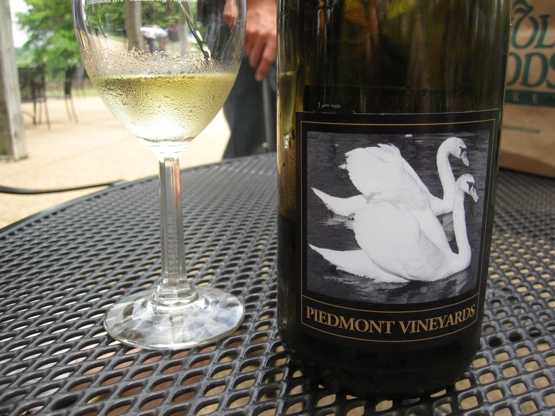
As usual, our tasting began with the white wines, and we samples four wines here. (Although the tasting sheet listed the Hunt Country Chardonnay 2008, we were given a sneak sample of the upcoming 2009.) The official new releases included the Native Yeast Chardonnay 2009 and the Special Reserve Chardonnay 2009. My own favorite was the Native Yeast Chardonnay 2009. As the name suggests it is fermented in native yeasts, and for the wine maker this process can induce a degree of anxiety. Why? It is a non-interventionist approach that depends on the natural fermentation process, and much can go wrong along the way. California’s Frog’s Leap Chardonnay is an example of a wine created in this fashion. Anyway, Gerhard’s version is aged in French oak for nine months and presents aromas of pineapple and honey with similar characteristics in the mouth. A longer finish was noted with some toasted nuts at the end to suggest a more complex wine. Paul preferred the Special Reserve Chardonnay 2009 which was aged for nine months in Hungarian oak. He appreciated its more floral nose and fruitier presentation but did not mind the soft oak at the finish. Now for those who enjoyed the Hunt Country Chardonnay 2008, we can report that the 2009 is also unoaked and as crisp as the 2008 version; however, we observed a sharper fruit focus to the 2009 offering. It should prove to be quite popular upon release!

On to the red wines, and the Hunt Country Red 2008 was first in the glass. This Merlot-based offering was Gerhard’s personal favorite of the red wines, and I enjoyed this one, too. Aged 18 months in oak, this blend also includes 29% Cabernet Sauvignon and can be characterized as a very nice, fruit-driven bistro wine. Nice cherry notes and a smooth feel make for an easy drinker to enjoy with pizza, burgers, beef, or a simple platter of deli meats and cheeses. Paul’s favorite was the Cabernet Franc 2009 which was very similar to its 2008 sibling. Aged ten months in French oak, it offers bright cherry flavors with a spicy edge and silky finish.

As we completed our tasting, we chatted with Gerhard and learned that these new releases were the result of hard work and a determination to learn the winemaker’s craft. To this end, he consulted with other winemakers including Doug Fabbioli; we applauded his efforts, and we look forward to a potential autumn released of the 2009 Cabernet Sauvignon.

So of course we were hungry for lunch, and we opted to enjoy a bottle of the Native Yeast Chardonnay 2009 with cheese, bread, and toasted almonds. In the process we were entertained by the band, Expanded Waistlines. After nibbles and wine, we made certain to purchase bottle of our favorite releases and bid adieu to Gerhard von Finck. Of course, we will return to Piedmont Vineyards soon; be sure to visit Piedmont Vineyards and mention that Virginia Wine Time sent you.
Invisible Glassware?

Yes, the wine glasses are virtually invisible thanks to the latest in glassware technology from Ravenscroft. I sampled their invisible cab/Bordeaux glass this past weekend, and I can testify to the invisible-weight nature of this glass. The lead-free crystal glass allows the aficionado to appreciate the wine to the fullest extent possible without the extra weight of lead-burdened glass. Wine lovers who want to know more about this new development in glass technology should visit Ravenscroft.

Blending Makes Perfect

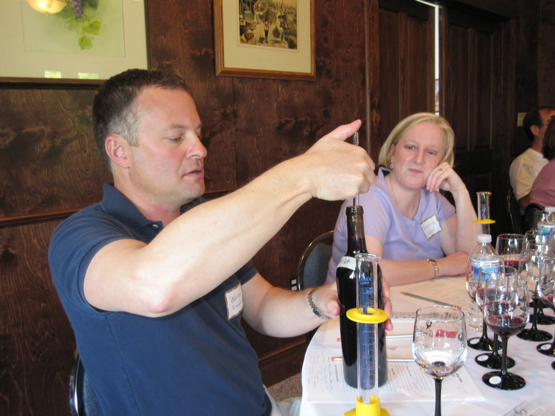
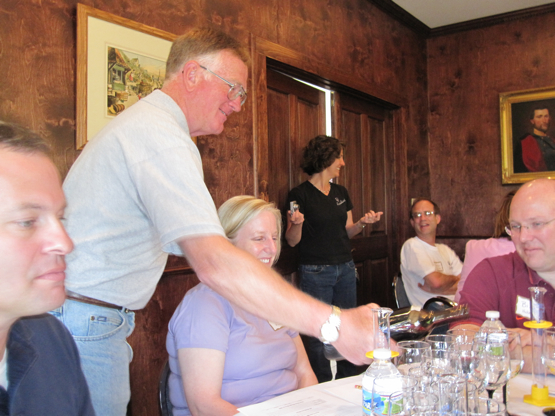
Ever wonder how Virginia wine makers come up with the combinations for their Bordeaux-style blends?  These blends may be recognizable to readers as Meritage blends, but these are indeed Bordeaux-style blends.  To be considered a Meritage (or Bordeaux blend), a wine must consist of a combination of any or all of these varietals: Cabernet Sauvignon, Merlot, Cabernet Franc, Malbec, and Petit Verdot.  No single varietal can make up more than 50% of the blend. Readers may recall that we attempted to blend a Cabernet Franc at Sunset Hills, but this time we decided to test our blending talents at Gray Ghost Vineyards.  Our challenge here was to produce a Bordeaux-style blend that would mimic Gray Ghost Vineyards’ award-winning Ranger Reserve.  Of course, this challenge required tasting, blending, and then more tasting; needless to say, we were eager to participate!

Our session was conducted by winemaker Al Kellert who began the session with a brief history of the Bordeaux varietals.  This was very informative, and I learned that Petit Verdot was the earliest of these varietals to be planted in France. This may have occurred in a time before the contemporary era (or BC for traditionalists).  Also, Al answered the question that many participants may have wanted to ask—why blend?  Wine makers blend for a number of reasons—one good reason may be to hide flaws of certain individual wines especially during poor vintages. However, another reason to blend is to create a “whole that is better than the parts”.  This last reason suggests an artistic component to the process, and it is one that Al Kellert embraces as a winemaker.  In fact, The Gray Ghost Reserve is the end result of at least 15 different blends that are tasted at different intervals in the aging process.  The winning combination is one that has met a predetermined goal—a blend of all five varietals that harmonizes the best qualities of each so that no one varietal dominates over the others.

Our task, then, was to create a blend that met the criteria for a Bordeaux-style wine.  We were not informed of previous blends used by Al to produce the Ranger Reserve, so participants were not pre-disposed to produce a blend that mirrored Al’s previous products.  We began with bottle samples of each Bordeaux varietal, and these samples produced from estate-grown fruit—even the Malbec.  After these individual samplings, we were then charged to create our own blends.  My own favorite of the single varietal samples was the 2008 Merlot with its fruit-driven profile; I decided that this one would be my “headliner.”  However, the 2008 Cabernet Sauvignon provided backbone with its darker fruit characteristics, nice tannic structure and longer finish.  I ultimately decided that this one would be my co-star with the others acting as supporting cast members.  The supports added various degrees of smoke, spice, and berry fruits would complement the mix; so, armed with pipettes and a beaker I blended away!

So what did I create?  I must say that I was quite pleased with my end results.  I actually finished two blends, and both were dominated by the Merlot.  My first blend started with 30% Merlot with equal parts Cabernet Sauvignon and Cabernet Franc, but I opted to kick up the Merlot a notch to 40% in my second blend.  It was my second blend that I preferred. With this one, I also added in more Cabernet Sauvignon, decreased the Cabernet Franc a notch but added more Petit Verdot.  A relative splash of Malbec finished off my second blend.  As a result, I accomplished my goal, and I created a layered, fruit-driven yet complex blend that included dark fruit flavors, earthy/spicy aromas, and a generous finish.  And the color was dense to boot!

Of course, I was not alone at the blending table, and Paul was busy concocting his own vintner’s special.  I’ll let him describe his own process and results.  However, I will close by noting that I was very surprised at the quality of Al Kellert’s  Malbec.  In fact, more than one blender at our table featured the Malbec as the dominant varietal. This is a tough grape to grow in Virginia, and the Gray Ghost Vineyard has very few Malbec vines planted in it.  What little is produced each year is used in the Ranger Reserve, so an individual bottling would not be possible.  (There were requests to plant more Malbec, though!)

What were Paul’s blends?  How did we compare to the ultimate champion, Al Kellert?  I’ll let Paul provide those details.  In the meantime, plan a visit to Gray Ghost Vineyards, and mention that Virginia Wine Time sent you.
Reflections on The Drink Local Conference

Paul certainly captured the spirit of the Drink Local Wine Conference that was held at the Lansdowne Resort this past Sunday. I thought that I would add a few of my own thoughts on the event:

1. We’re on the verge of something really big!
Readers of our blog know that we’ve been heralding Virginia wines for five year now, and the treat for us has been to witness the tremendous growth in the local wine industry. The number of wineries and vineyards in the area has exploded in the past few years; however, the most successful wineries have kept a focus on wine quality. It was fascinating to me to listen to and even interact with successful owners and winemakers such as Mathieu Finot of King Family, Jenni McCloud of Chrysalis, Luca Paschina of Barboursville and Jordan Harris of Tarara. Their quest is to discover what varietals work for Virginia, to experiment and take risks, and to ultimately put Virginia on the map as a region that produces unique yet world-class wines. Which ones will be the flagship grapes? Opinions seem to converge on Viognier, Cabernet Franc, and Petit Verdot with Merlot and Chardonnay in the running. The panel discussions with wine makers and social media experts confirmed what I have known for years now—Virginia is on the verge of something big!

2. Social Media connects consumers to local wines.
Ok—I must admit that I am not a Twitter or Facebook fan. Paul handles all of that for Virginia Wine Time. However, after Sunday’s panel discussion on social media, I am now a fervent believer that Twitter, Facebook, and blogs fill the gap between local wineries and traditional media. Virginia wineries may not be headlining Wine Spectator, but then again most wine drinkers don’t really care. A tweet about a favorite Virginia wine creates a buzz that Wine Spectator could never create. Jenn Breaux Blosser of Breaux Vineyards is by far the most engaged with social media, and she had never been shy about networking via Twitter and Facebook. I do believe the testimonial that she delivered at the conference—social media pulls in customers that she could never reach via traditional media.

There are exceptions, though. I was thrilled to meet Dave McIntyre, wine critic for the Washington Post. Dave’s wine column in Wapo’s food section is one that I never miss, and he has been an active promoter of local wines. I’ll take Dave’s word about wine over Robert Parker’s any day of the week. However, I’d apply the same standard to bloggers and “tweeters” and admit that an expert palate like Dave McIntyre’s certainly trumps mine; so, if Dave recommends a Virginia wine, trust him—it’s really good and worth seeking out!

3. Virginia (and Maryland) makes some excellent wines.
The highlight of the day had to be the wine “Twitter Taste-Off” when we all got to sample the best wines that 21 local wineries had to offer. Paul noted that Breaux Vineyards’s 2002 Reserve Merlot and Chrysalis’ 2008 Albarino took top honors, and those were certainly excellent pours. However, there were a number of outstanding wines that included Michael Shaps’ Viognier (my own personal fave), King Family’s 2008 Meritage (which may give the successful 2007 vintage a run for its money), and Boxwood’s 2007 Topiary. The sleepers of the event had to be the 2005 Petit Verdot from Ingleside and the current Syrah from Maryland’s Black Ankle. (For those who like a fuller-bodied Chardonnay, Maryland’s Elk Run offering may be worth a try, too.)

I was definitely inspired by the day’s events, and now I am even more anxious to hit the wine trails to discover the quality wines that Virginia wineries have to offer. And now I am determined to visit Maryland wineries, too! Of course, another pleasure was to meet other bloggers, and who knew that we would be dubbed the “wine mafia”! Could this be a movie in the making? The Winefather?

Be sure to visit Virginia wineries this spring, and mention that Virginia Wine Time sent you!

Favorites at Rappahannock Cellars

So we continue to blaze the wine trails this spring to present our findings about the latest releases. This includes a recent visit to Rappahannock Cellars located in Huntly, Virginia. Where did our gold stars land on the tasting sheet? Keep reading to find out!

Of the four white wines available for tasting, Paul and I both agreed that the 2008 Viognier should be the gold star recipient. Its honeysuckle and peach notes suggested a fruity palate but a subtle toasted edge and a creamy texture confirmed this to be a fuller-bodied white wine. This Viognier was fermented in stainless steel and then aged briefly in French oak barrels. The 2008 Noblesse Viognier should prove to be popular during the spring and summer months. An off-dry offering, the Noblesse Viognier presented citrusy characteristics and a vibrant acidity that would match well with light picnic fare.

On to the red wines, and here we reached a split decision. I favored the 2007 Cabernet Franc with its black berry and dark cherry aromas and flavors. I noted an earthiness to this one, too. Blended with Cabernet Sauvignon, this Cabernet Franc offers more complexity and boldness than is usually associated with the varietal. Paul’s gold star went to the 2007 Meritage; this was my close second. Paul noted dark plum, cherry, and spice characteristics with a noticeable tannic presence. This is definitely one to age! This Meritage includes a blend of Cabernet Sauvignon, Petit Verdot, Merlot and Malbec and is fermented and aged in both French and American oak barrels. Port lovers would be advised to check out the 2007 Port style Red Dessert Wine made from the Norton grape—dark fruits prevail in the mouth, and the 8% residual sugar provide a characteristic sweetness. Pair with blue cheese, dried fruit, and a cigar!

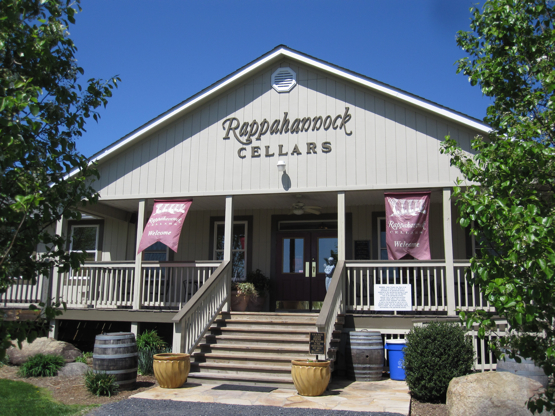
So after our tasting, we shared a glass of the 2007 Meritage with some dark chocolate out on the front porch. Decadence all the way around! We made certain to purchase some of our gold star favorites before we left. Plan a visit to Rappahanock Cellars; of course, mention that Virginia Wine Time sent you!

All Of The Above

That would be the answer to a multiple choice question that reads, “Which Chester Gap wine is your favorite?” On a lovely spring afternoon, we ventured out to visit Bernd Jung at Chester Gap Cellars; in the past, we have trumpeted Bernd’s outstanding winemaking skills, and after today’s tasting, we conclude that Bernd is one of Virginia’s excellent winemakers. So how could we make such a claim? The proof was in the wine glass, and we could only reach conclusions on our gold star rewards after much debate and deliberation. All of the wines that we tasted were well crafted and reflected careful attention to vineyard and barrel room management.

Bernd offers three Viogniers for sampling, and each one presents a different twist. Paul’s favorite was the stainless steel fermented 2008 Viognier with its crisp finish and characteristics of honeysuckle and lemon. I noted a “steeliness” that reflected a refreshing minerality. My own gold star was presented to the 2008 Viognier Reserve which presented a creamier mouth feel. Characteristic floral and peach aromas. Peachy flavors with a nice acidity and a lengthier, toasty finish qualifies this one as a food wine. Lobster? Poultry with cream sauce? Here is the perfect partner. Bernd shared with us that he only uses high-quality French barrels to ages this Viognier; his 2008 Viognier Boisseau Vineyard is aged in French oak barrels used for cognac, and this one was my close “second” for the white wines. Smoky and full-bodied, this Viognier and its Reserve sibling are built to age for a few years.

Bernd currently offers two red wines for tasting and sale. In a rare moment of concurrence, Paul and I both agreed that the 2007 Merlot was superior. I noted blackberry and menthol characteristics; Paul suggested some earthiness to boot. This Merlot is an example of the excellent 2007 vintage in Virginia, and it should age quite well. The tasting notes suggested a pairing with lamb, and I could not have agreed more heartily with this recommendation. Not to be missed is the 2007 Cabernet Franc with its dark cherry flavors and chewier tannins.

In our chat with Bernd, it was clear to us that his focus is wine. His tasting room is utilitarian—nothing fancy at all, but it does offer exquisite views of the Shenandoah mountain range. However, the wines are excellent, and we learned that he plans to plant more vines that may include Merlot. We applaud Bernd’s efforts to produce limited quantities of wine are well-crafted and worthy of accolades that include an inclusion on restaurant wine lists in the local area.

With spring in the air, plan a visit to Chester Gap and mention that Virginia Wine Time sent you!

Winemaker For A Day

Readers may recall that we recently visited Sunset Hills Vineyard, and we were quite impressed with their lineup of wines. We then decided to participate in a subsequent blending session which featured Cabernet Franc as the dominant varietal. How did we do? Well, it was not an easy task, and we had to sample lots of wine to get our blend just right; however, we also had to compete with other amateur winemakers that day. The competition was fierce!

Participants were grouped and then seated at various tables in the tasting room, and each table was given the label of a certain wine producing region. For example, one table was called the “Napa” table; our table was the Virginia table! (Yes, it was purely coincidental.) Anyway, our winemaking partners were Troi and Derick. We all hit it off right away, and we quickly found out that Trois is a fan of local wines from Virginia and Maryland. With introductions completed, we were all eager to sip and blend. Our first samples were four tastings of Cabernet Franc picked from two different lots. An added twist was that the samples from each lot were then aged in different oak barrels—new American oak, French oak, and Hungarian oak. The Virginia table gravitated toward the French oak and Hungarian oak samples. We found these to be more fruit-forward with a softer oak finish. The sample from American oak tended to present more blackberry flavors with a noticeable woodsy character.

As we sipped, we took extensive notes so that we could compliment our favorite Cabernet Franc with an appropriate blend of other wines. Since the final product will be a Cabernet Franc, the blends had to include at least 75% Cabernet Franc. With this in minds, the Virginia table was ready to blend away, and we were presented with four other samples once we were done with our Cabernet Franc. These other samples included two offerings of the ’08 Cabernet Sauvignon from Tranquility Vineyard (each were treated with different yeasts), a 2009 Merlot from Sunset Hill Vineyard, and a 2008 Petit Verdot from Breaux Vineyards. What did we conclude? We all really enjoyed the Cabernet Franc samples and opted to create a 90% blend from the French and Hungarian oak tastings with a greater proportion coming from the French oak product. We then blended in 7% from the 2008 Cabernet Sauvignon (yeast sample #1) and 3% from the jammy, spicy 2008 Petit Verdot. Our final blend presented layers of mixed berries in the mouth with some violet and spice on the nose—the Virginia table was very pleased!

However, the other tables were also madly blending with pipettes and beakers operating at full speed. When all tables were done, we then had to sample all of the final blends and vote on our favorites. Without getting into the tasting notes for each blend, I’ll simply reveal that our particular blend place third out of the ten blends produced. The top-rated blend as well as the second place blend also favored the Cabernet Franc from the French and Hungarian oak barrels but in different proportions; though I was rooting strongly for the Virginia table’s blend, I did have to admit that the winning blend was the indeed the best. In fact, winemaker Nate Walsh revealed that the winning blend was very close to the one currently used to create the award-winning Cabernet Franc Reserve.

So we tried our hand at blending red wines, and we now understand how difficult a task it is to complete. We were intrigued by how different the same varietal, Cabernet Franc, tasted when produced from a different lot and aged in a different oak barrel. Terroir and winemaking methods do indeed make the wine! We also enjoyed meeting new friends Troi and Derick, and we hope to meet up with them on the wine trail soon.

Pay a visit to Sunset Hills Vineyard, and mention that Virginia Wine Time sent you.
Roundup Time

Over the past couple of weekend, we’ve visited a few other wineries, and we wanted to post our reviews of these visits.

Chrysalis Vineyards—It’s always a treat to do a tasting here. Our gold star faves in the white category was the 2008 Viognier, the flagship white wine at Chrysalis Vineyards. We were allowed a “sneak” of the 2008 Albarino—Wow! This would be my double star favorite. Soft peach, a hint of lemon zest, and a noticeable minerality sums up the flavor profile. Of the red wines, my own gold star was presented to the 2005 Locksley Reserve; of course, I was not swayed by the fact that it won gold at the Virginia Governor’s Cup competition. Paul preferred the smoky 2005 Petit Verdot. We can also report that owner Jenni McCloud is making progress with her plans to build an on-site dairy and restaurant. We’ll follow these developments and keep track of latest releases as the spring and summer progresses.

Loudoun Valley Vineyards—The renaissance continues here! Our favorite white continues to be the crisp and refreshing 2008 Pinot Grigio, but the 2008 Vinifera White should prove to be a summertime crowd pleaser. The red wines produced another split decision. Paul favored the 2005 Cabernet Franc with its blackberry and spicy notes. My own preference was the 2005 Dynasty Reserve, and I noted dark berry, plum, and spice characteristics with some vanilla to boot. A more complex and “layered” pour, I opted to enjoy a glass of this one after our tasting.

Piedmont Vineyards—New releases planned in late May, and these include a Hunt Country Chardonnay and a Native Yeast Chardonnay. We were given “sneaks” of the Native Yeast, and for lovers of an oak-aged Chardonnay, this one should be popular. The current Hunt Country is still available and was Paul’s gold star winner. He favors the stainless steel Chardonnays, and this one is still crisp and refreshing. We both concurred on the Cabernet Franc with its raspberry and spice flavors. This one is limited in quantities, so buy now for future enjoyment.

Plan springtime visits to these wineries soon, and be sure to mention that Virginia Wine Time sent you.