Busy Day on the Monticello Wine Trail

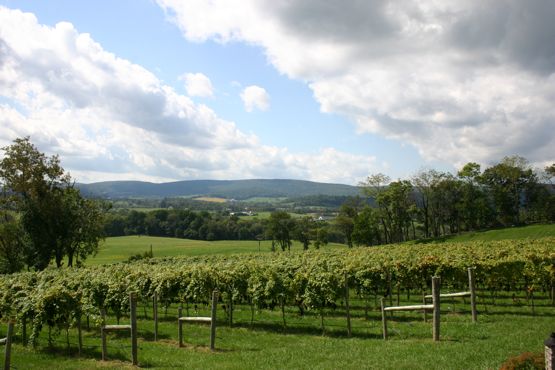
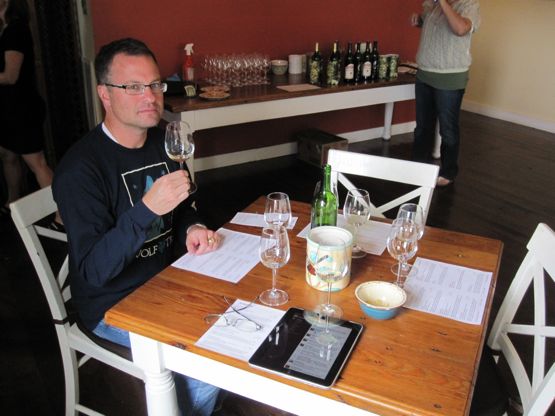
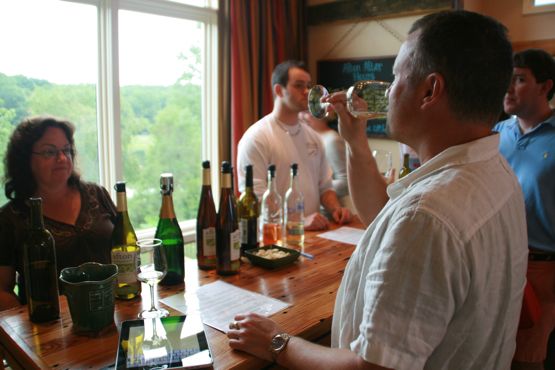
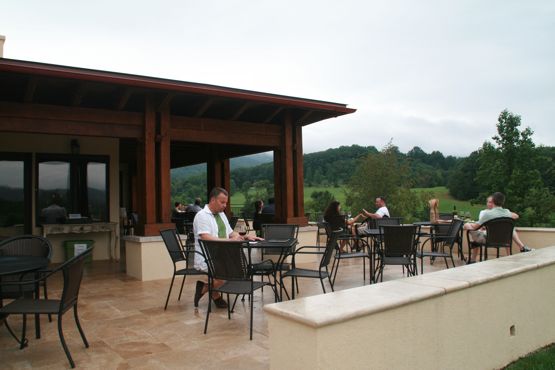
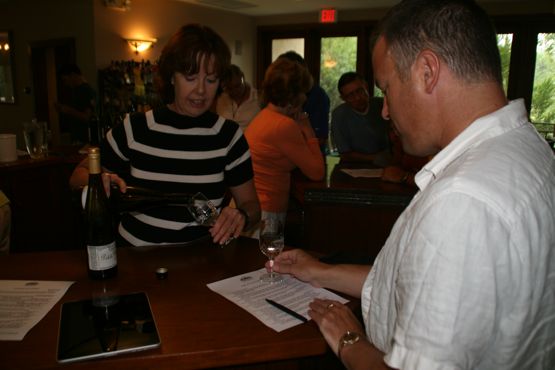
We took advantage of the close clustering of wineries on the Monticello Wine Trail and planned an aggressive agenda for yesterday’s wine tastings. We’ll comment on each tasting by providing our gold star favorites and share other important revelations such as upcoming releases and the outlook for the 2010 harvest.

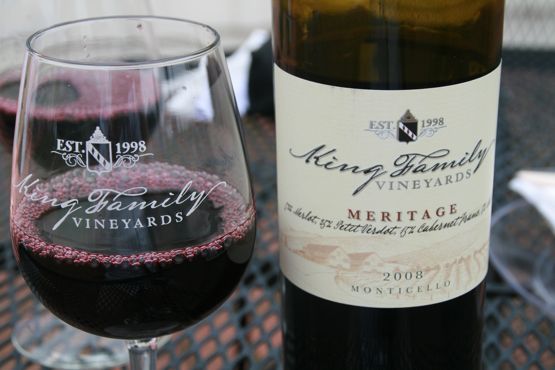
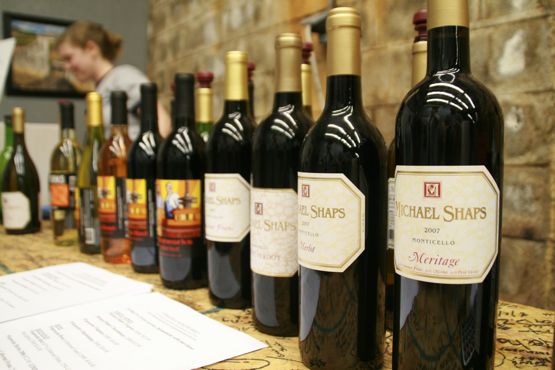
Jefferson Vineyards: Wines here are always well-crafted. Today’s tasting provided us with samples of a few new pours. My favorite white wine was the floral-nosed 2009 Viognier with its apricot flavors and weightier texture. Paul gave the nod to the 2009 Pinot Gris; he appreciated its crisp acidity and citrus characteristics. Of the red wines, my gold star was awarded to the 2007 Meritage, a gold medal winner in the 2010 San Diego International. I noted layers of dark fruit with complements of mocha and dried herbs. Quite complex, and a good candidate for aging, too! Paul favored the 2008 Petit Verdot with its notes of spice and tobacco.

Blenheim Vineyards: We’re always fans of Kirsty Harmon’s wines, and we were eager to sample the latest at Blenheim Vineyards. Mitzi conducted our tasting today; of course, we started with the white wines. Paul’s gold-star fave was the crisp 2009 Blenheim Farms Chardonnay which is a blend of wines from stainless steel tanks and oak barrels. Pear flavors with a slight lime edge make this one a refreshing pour. My own favorite was the heavier-bodied 2008 Blenheim Chardonnay with its pear flavors and toasted almond finish. This Chardonnay is actually the result of careful blending from American, French, and Hungarian oak barrels to present a more food-friendly wine. (I also enjoyed the dry 2009 Rose with its flavors of melon and strawberry.) Mitzi skillfully moved us on to the red wines, and we started with the light-bodied and accessible Red Table Wine. Candy bar aficionado Paul made note of Mitzi’s creative pairing with this one—a Snickers bar! He’ll be sure to give it a try, too. Anyway, as we began to sample the reds, we were joined by Kirsty Harmon who provided testimony to the fact that the 2010 harvest will be an earlier one than usual with white varieties coming in from the vineyard as we spoke. She also brought along two upcoming releases, the 2009 Cabernet Franc and the 2009 Merlot. The fruity 2009 Cabernet Franc ended up being our gold-star favorite. Bright cherry and raspberry flavors were noted with some characteristic spice notes, too. It should be the perfect partner for Thanksgiving dinner, too. The 2009 Seven Oaks Merlot was still a bit tight and revealed itself after a few swirls; however, we noted the dark cherry and earthy characteristics that will prevail with this one.

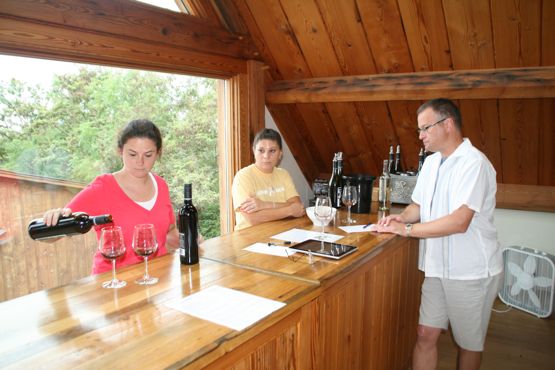
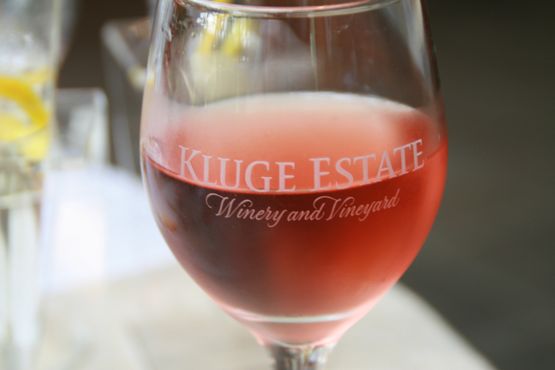
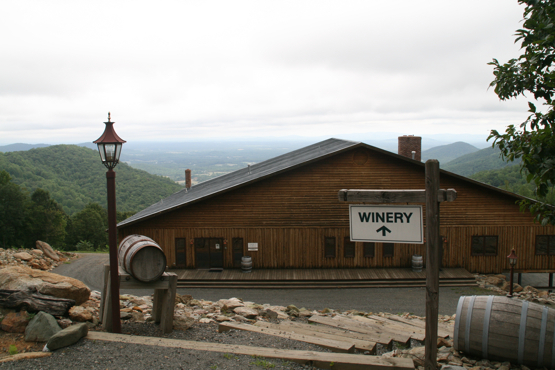
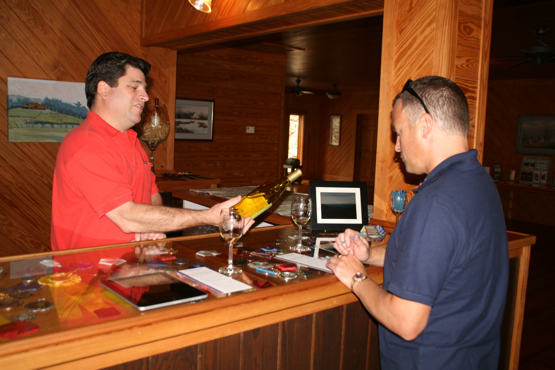
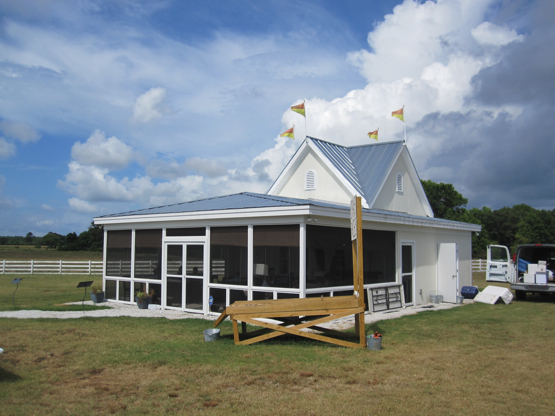
Kluge Estate: Tasting room manager Tammy warmly greeted as we entered the cottage that serves as the tasting room. We were very hungry, too; Tammy took our orders for food and wine tasting as we made our way to a table. Two flights are offered for tasting: a) the Albemarle flight, and b) the Kluge flight. The Kluge flight featured the sparkling wines, and it was this flight that we opted to enjoy with our lunch. We’re not fans of the tasting “test tubes”, though, and Tammy kindly obliged our request for wine glasses along with our rack of tasting tubes. We simply poured the contents from the tube into the glass, and all was made better. Lunch arrived in time for us to pair our sparkling wines with food which included crab cakes and cheeses. Our gold star favorite was the Kluge Estate SP Rose 2007; we’re going to review this one in an upcoming ‘back to school” post, so more on this sparkling wine later on. I will say that made for a perfect marriage with the crabcakes! With the harder cheeses, we both concurred that the Kluge Estate New World 2002 was the winner. Blackberry, dark cherry, tobacco, and mocha were noted characteristics. Tammy joined us for banter about the wines, and her sense of humor made for some lively conversation! We shared with her that in summer months, we like to make note of summer sippers, and Tammy provided us with samples of the classic Albemarle Rose 2009. Dry and crisp with bright berry and melon notes, it did indeed qualify as a quality summer sipper!

I’ll wrap up this post here, but we did manage to complete tastings at First Colony and Virginia Wine Works. Stay tuned for my next post about those wineries. In the meantime, visit the wineries presented in this article; of course, mention that Virginia Wine Time sent you.
New (To Us) and Newer

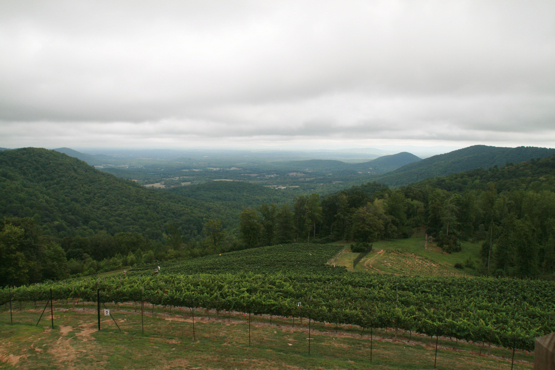
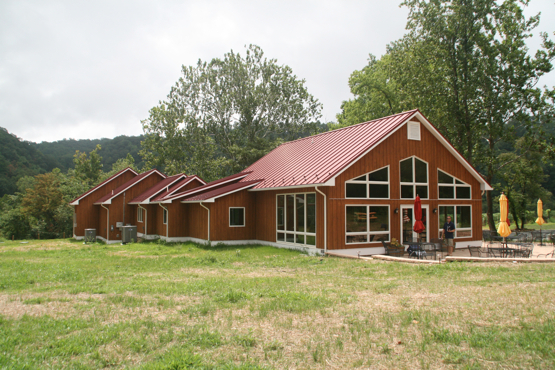
Today we visited two new wineries in the Monicello AVA area. One winery, Stone Mountain Vineyards, has been in business since 1998; however, we have never visited the tasting room. The other winery, DuCard Vineyards, just opened it’s tasting room to the public last weekend. Therefore Stone Mountain Vineyards, although it is an established winery, was a new experience for us, but DuCard is the newer winery and probably new to our readers, too!

Chris Breiner, owner and winemaker at Stone Mountain Vineyards, conducted our tasting. The tasting room at Stone Mountain Vineyards is situated at least 1700 feet atop the Blue Ridge Mountains in Greene Country. Of the white wines we both favored the 2008 Pinot Grigio with its floral aromas and melon flavors; it was crisp and refreshing on a hot summer day. Of the reds we both preferred the bolder 2007 Petit Verdot which was aged for 22 months in French oak. It presented characteristics of dark fruit and spice with an obvious earthy element. Buy now but age on the rack for a bit longer. It should pair well with prime rib.

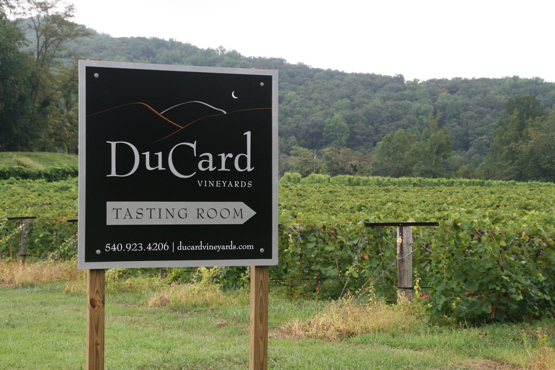
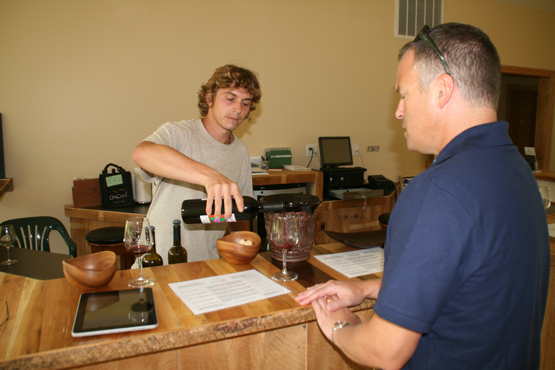
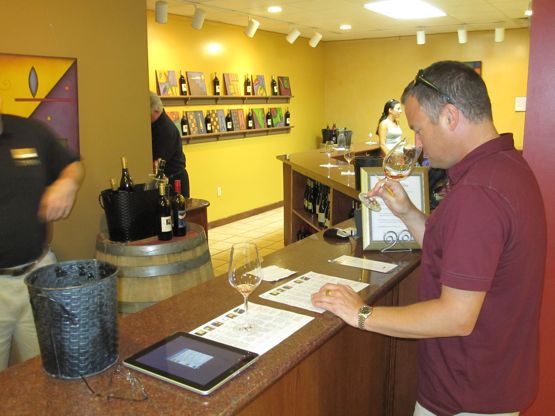
A newer kid on the block is DuCard Vineyards. Vineyard manager Julien, native of Brodeaux, conducted our tasting. We sampled all five wines on the tasting menu at DuCard Vineyards. Of the whites we favored the 2009 Signature Viognier which presented elements of honeysuckle and peach. It should pair well with shell fish or poultry. The 2008 Popham Run Cabernet Franc offers a lighter bodied red wine with a fruitier nose and flavors that include cherry, raspberry, and pepper. Paul noted that this one makes for a bistro style wine best served with pizza or burgers. Norton lovers should sample the 2008 Virginia Native Norton with its violet notes and darker fruit flavors. It might pair well with duck and it certainly partnered well with the dark chocolates offered to us by Julien. Julien shared with us that DuCard Vineyards plans to produce up to 2000 cases by 2012. In the meantime upcoming releases include a Petit Verdot, a bolder Cabernet Franc and a port style Norton. DuCard should be commended for using solar power to produce the power needed to run their entire facility.

We’ll return to both Stone Mountain Vineyards and DuCard Vineyards in the future. If you visit either of them, please mention Virginia Wine Time sent you!

New Releases at Gray Ghost Vineyards

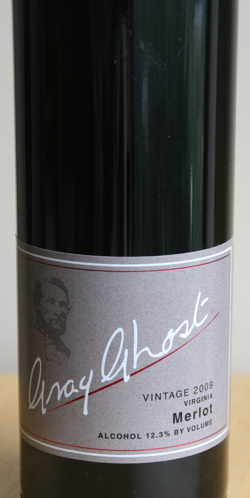
Gray Ghost Vineyards has released several new wines, and this gave us the perfect excuse to pay the Kellerts a visit. Recent releases include the 2009 Cabernet Franc, the 2009 Seyval Blanc, and the 2009 Merlot.

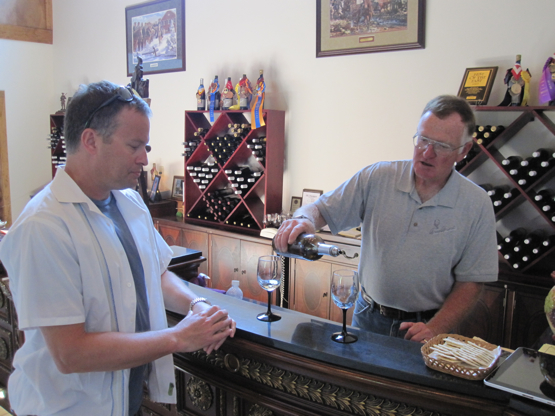
Winemaker Al Kellert conducted our tasting, and that gave us the opportunity to catch up with Al about the latest happenings at Gray Ghost Vineyards. Of course, the newest releases were our chief interest, and the 2009 Seyval Blanc was the first to be poured into our glasses. Fermented for a short time in Hungarian oak, it resembled a California-style Fume blanc with a very faint smokiness and citrus characteristics. Perfect for summer, this Seyval Blanc should pair nicely with anything that would partner favorably with a Sauvignon Blanc.

The 2009 Cabernet Franc was the latest red to be released on the day of our visit. Gray Ghost Vineyards produces a stand-alone Cabernet Franc that is not blended with any other variety, and it presents qualities more akin to a Chinon-style Cabernet Franc. Aged ten months in French oak barrels, vibrant cherry and raspberry aromas and flavors abound with a characteristic spicy edge. I’d consider this one for fall menus, especially Thanksgiving dinner. Now what about the 2009 Merlot? Paul reserved a case of it in March when we participated in the barrel tasting; based on this sneak preview, he went ahead and ordered a case. However, on the day of our visit, the Merlot was not yet released and therefore not available for tasting. Not to worry, though, because Paul picked up his case while we were at the winery, and we had a bottle with dinner that evening! We decanted it first, and we noted a deep garnet color. After swirls, sniffs, and sips the word, “deep” came to mind for both of us. Rich, dark cherry and black berry characteristics prevailed with some vanilla at the finish. We enjoyed it that evening with filet mignon, and it was the perfect pairing.

As we sipped away at the tasting bar, Al Kellert revealed to us that all of the 2009 releases were produced from 100% estate grown fruit. This had been a goal of his for quite some time, and for the Kellerts, it represents a statement about quality. Anyone who has visited Gray Ghost Vineyards can attest to the immaculate state of the vineyards, and careful maintenance and management of the vineyards have allowed the Kellerts to achieve this milestone. We were also curious about the 2010 season and what appears to be an early veraison in the vineyards. Al acknowledged that the extreme heat that has been characteristic of the 2010 spring and summer led to early developments in the vineyards; however, he was confident that the upcoming harvest has the potential to produce complex and robust red wines. (Of course, that assumes no extreme circumstances like hurricanes!)

With our tasting done, we decided to enjoy a glass of the 2009 Seyval Blanc out on the veranda with a hunk of goat cheese and bread. We will return to Gray Ghost Vineyards soon, and readers should visit even sooner—just mention that Virginia Wine Time sent you.
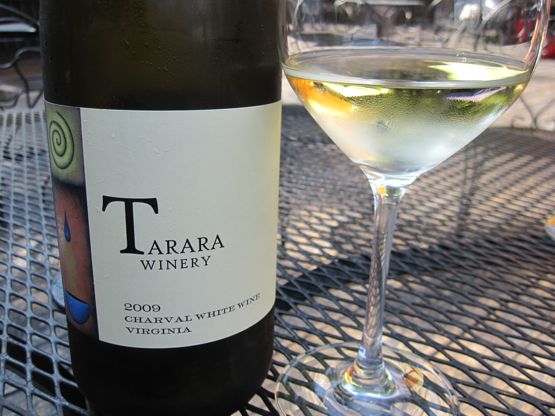
Tasting at Sunset Hills Vineyards

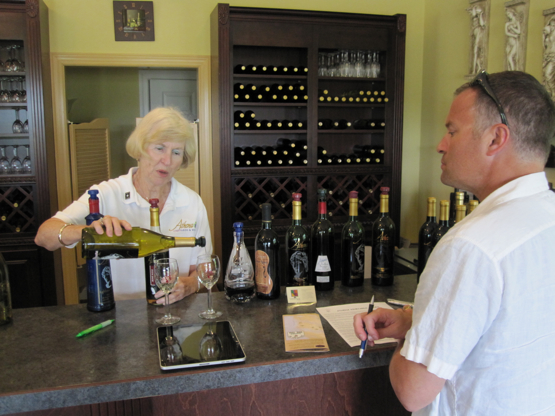
Readers may recall that the last time we were at Sunset Hills Vineyards, we found ourselves blending away at a wine-blending session with winemaker Nate Walsh.  This time around we resumed our familiar roles as bloggers at the tasting bar with gold stars at the ready.

Of the white wines, our favorite was the 2009 Viognier which was done in stainless steel; however, it possesses a heavier mouth feel that some tasters might associate with light treatment on oak.  It presented a lovely nose of honeysuckle and peach.  Flavors of peach and honey prevailed, too.  Those who favor Burgundian-style Chardonnays might prefer the buttery 2008 Reserve Chardonnay with its pear and almond notes.

We reached a split decision on the red wines.  I presented my gold star to the 2008 Cabernet Franc with its rich dark berry and black pepper flavors.  Tannins were certainly noticeable, too.  Aged in both American and French oak for two years, this Cabernet Franc has enough body to pair with heavier steak meals.  Paul’s award went to the 2008 Merlot with its layers of dark cherries, plums and spice.  It’s blended with a small amount of Cabernet Sauvignon which accounts for the complexity and tannic presence. 

With the record-breaking heat we’ve experienced this summer, light sippers might be more popular than fuller-bodied wines.  The fruity 009 Sunset White with its floral nose might fit the bill as well as the crisp 2009 Sunset Rose with its strawberry aromas.  It’s quite dry and should be a versatile pour, too.  Pair this one with anything from picnic fare to barbeque. 

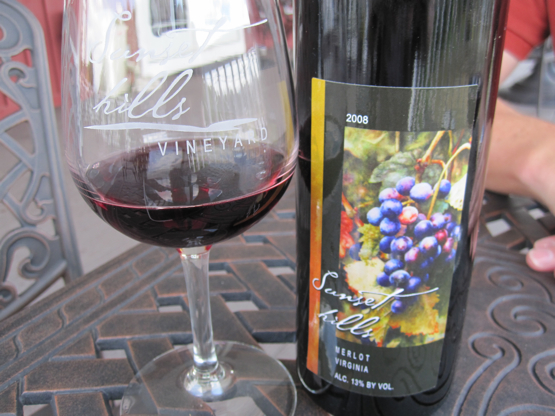
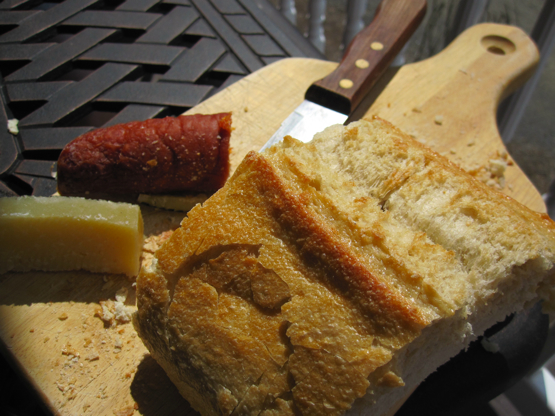
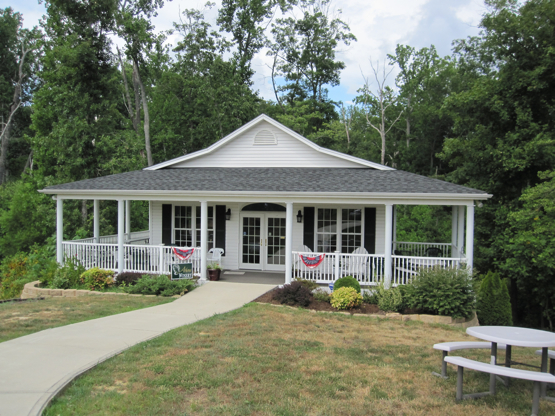
Of course, we were hungry after our tasting, and we availed ourselves to the gourmet food basket that included French bread, a cheese selection, and Italian meats.  I let Paul select the wine, and I was not surprised when he opted for the 2008 Merlot. We sipped away out on the shady veranda and observed butterflies, dragonflies, cardinals, and blue jays as the fluttered about the grounds. 

With lunch consumed and bottles purchased, we bid our farewells to Sunset Hills Vineyard with promises to return.  Check out the current offerings at Sunset Hills Vineyard, and mention that Virginia Wine Time sent you.
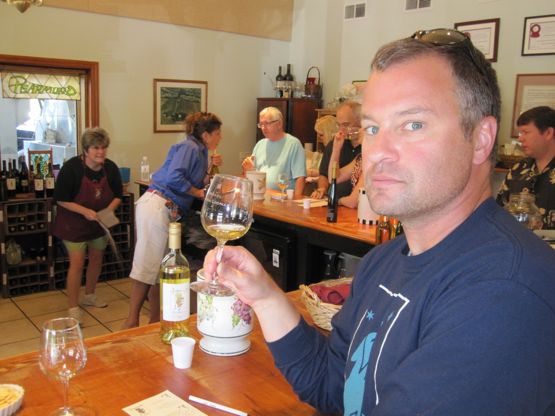
Chesapeake Bay Wine Trail Continues

In addition to our new visits, we also sneaked in some re-visits to other wineries on the Chesapeake Bay Wine Trail.  Here are the reviews:

Athena Vineyards:  The favorite here was the Nightingale Chardonnay which was fermented in stainless steel tanks.  Crisp with pear aromas and flavors noted with this Chardonnay, and it should be prove to be a popular summer wine especially if served with shellfish.  Dessert wine lovers might enjoy Mellow Notes which is a fortified Vignoles.  Floral aromas, pear flavors and an almond finish make for a distinctive pour.  (Mellow Notes comes in a unique bottle that is shaped like a saxophone.)

Oak Crest Vineyards and Winery:  The Symphony wines continue to be the strongest offerings here, and this hybrid grape produces an Alsatian-style white wine. Symphony Dry has no residual sugar and presents a floral nose, pear flavors, and a crisp feel.  Moonlight Sonata is another wine produced from the Symphony grape but includes 3% residual sugar. 

White Fences: The Meteor Glow was our summer sipper favorite here.  Made from Chardonnay grapes, this lightly oaked (9 months) white wine offered lingering pear flavors and a subtle toasty edge.  Of course, the Blue Jimmy wines won our Michael Tyler designation; readers may recall that our friend Michael prefers sweeter wines.  Blue Jimmy Red is made from Chambourcin and aged in French oak barrels to produce lingering rich berry flavors with a sugar level of five percent.  Blue Jimmy White is produced from the Chardonel grape and is done in stainless steel with similar sugar levels as the red. We noted melon and apple flavors.

Planning a trip to any of these wineries? Be sure to mention that Virginia Wine Time sent you.
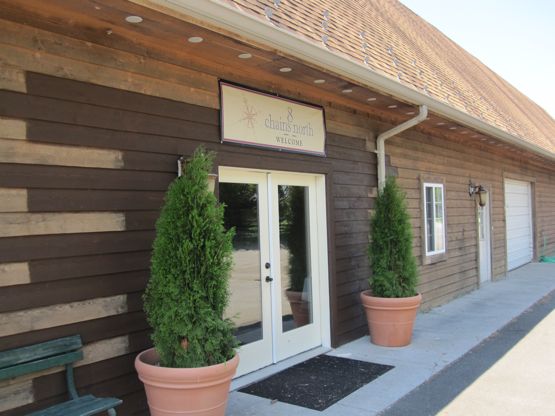
New Visits On The Northern Neck

Paul and I completed a four-day swing through the Northern Neck wine country (The Chesapeake Bay Wine Trail), and we managed to add four more wineries to the “visited” list. I’ll compile a list and brief review of each winery in this post.

The Hague Winery: This is a newer winery, and it offers a very solid lineup of wines. Steve Madey is the owner, and renowned winemaker Michael Shaps makes the wines at The Hague Winery. All five wines here were well-crafted and reflect an Old World style. For summer sipping, the Rose was an instant favorite. Done in the Provence style, this Rose is bone dry with strawberry and melon characteristics. Our gold-starred was the 2008 Cabernet Franc which is blended with 10% Merlot. Rich cherry nose with earthy characteristics were noted along with a lengthier finish. We also enjoyed the Cynthia Dessert made from Muscat grapes. Its heady floral nose and peach flavors finished clean in the mouth—quite lovely! We enjoyed our tasting at The Hague so much that we returned the next day with our friends, Bob and Jackie Worthy.

New Kent Winery: We finally made it out to New Kent Winery, and the facility is incredible. Golfers and equestrians should feel at home here as the New Kent facility includes a gold course and equestrian center. We left our golf clubs and riding boots at home, but we were eager to sample wines in the spacious tasting room. The vineyards here are eight years in age, and winemaker Tom Payette is producing some very nice pours. Paul’s favorite was the crisp and fruity 2008 Chardonnay which spends very little time in oak barrels. I appreciated the Burgundian-style 2008 Chardonnay Reserve with its creamy mouth feel; however, I was more intrigued with the White Merlot. Yes, it is a white wine made from Merlot! Needless to say, this is only possible if the grape juice has almost no contact with the red skins, and we detected only a hint of color when our glasses were held up to the light and closely inspected. The result is a Riesling-style wine with pineapple and citrus flavors. Three percent residual sugar enhances the fruit flavors without a cloying mouth-feel. Our Gold-starred red? We both agreed on the 2008 Meritage with its darker fruit and black pepper qualities; we noted a velvety finish, too.

Saude Creek Vineyards: These wines are currently being sold at a temporary facility until the tasting room is officially opened this fall. Owner Jason Knight was very kind enough to provide us with a tasting although the tasting room was closed when we arrived on Sunday. Jason works with partner James Batterson of James River Winery to produce some clean, well-crafted wines. The most interesting pour was the Saude Creek White made from summer apples, and it’s a crisp, clean wine with obvious apple notes and flavors. Sip during the summer or serve with an herb-crusted pork loin for an interesting pairing. A favorite summer wine should be the Chardonnay that is done in stainless steel and possesses pear and apple flavors with a nice acidity. Our favorite red wine was the Merlot. Aged 12 months in older American oak barrels, we noted cherry and plum flavors and approachable tannins. We’ll provide details of Saude Creek Vineyards’ official opening date as the fall approaches.

Williamsburg Winery: By far the largest producer/bottler of wine in Virginia! We started off here with the regular tasting which included a sample of six wines. My favorite white wine here was the Barrel-aged Seyval Blanc, and this is actually a blend of seyval blanc from stainless steel and oak barrels. I noted subtle smoke and hay notes with pear and citrus flavors, and it should pair well with shellfish. Paul preferred the blended James River White which may have reminded him of the California pour called Conundrum. Done in stainless steel, it is a blend of Seyval Blanc, Chardonnay, Riesling, Traminette, and Vidal Blanc to present a fruity wine that is perfect to serve before dinner. Our preferred red? Though we tasted red wines in the course of our regular tasting, we opted to sample some of the reserve wines; here is where we found our gold-star red wine. We both favored the 2005 Merlot Reserve with its concentrated dark fruit flavors and tobacco/earthy aromas. A lengthy finish makes for a food-friendly wine that may include a mixed grill. Williamsburg Winery produces/bottles at least 65,000 cases of wine, so there is certain to be something here for every wine lover.

At this rate, we’ll be approaching 110 wineries visited! However, with new wineries opening every month, we may never visit all of them. We will certainly return to the wineries reviewed here, but readers may want to visit them sooner; however, remember to mention that Virginia Wine Time sent you.
Hume Vineyards’ Debut

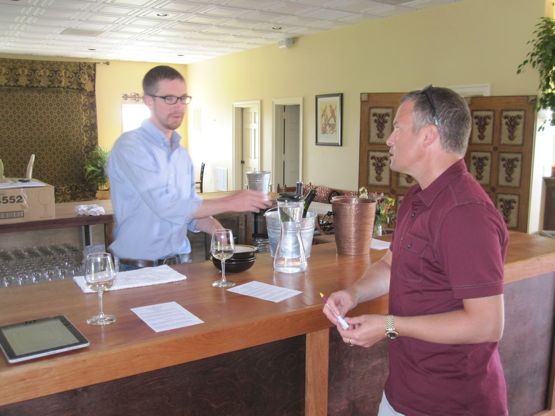
The Virginia wine industry seems to expand with every year, and now we can add Hume Vineyards to the list of newbies. Paul and I were invited by owner and winemaker Stephane Baldi and his wife, Andrea to visit their tasting room. We accepted the offer and visited Hume Vineyards on July 4. The grand opening is Saturday, July 10th.

It was a very hot afternoon on the day that we visited Hume Vineyards, and we were warmly greeted by Stephane who escorted us to the tasting room. We must admit here that the actual opening of Hume Vineyards will occur on July 10; so, the tasting room was still in the finishing stages. In fact, Stephane explained to us that materials from an old barn on the property were used to construct the rustic tasting room. Remnants from an old tin roof provided a half-covering for the walls and lent an antique charm to the space. Of course, our mission was to taste wine, and we were drawn to a simple tasting bar where the current offerings were lined up for sampling. Andrea joined us for the tour and tasting, and before long we were sipping away. In the process, we learned more about Stephane and his mission as a winemaker in Virginia.

Hume Vineyards offers four wines for tasting, and all were rather impressive. Vidal Blanc produces wines that are destined for enjoyment on a hot summer day, so we were not disappointed with the 2009 Vidal Blanc. My first impression was kiwi with a delicate floral aroma. Paul noted peach flavors, too, and the 1% residual sugar makes for a classic summer sipper without the cloying sweetness. However, summer is also grilling season, and the 2009 Chambourcin should pair well with any barbequed fare. Fruit-forward with a smoky nose with some anise to boot, I appreciated its plum flavors and peppery finish. Aging in neutral American oak barrels for six months provides structure, too.

Heavier reds finished our tasting. The 2008 Detour proved to be my favorite of the two bolder offerings. The tasting notes describe Detour as “tight”, and I could not agree more. Do not be afraid to swirl and swirl and swirl before sniffing and sipping. Dark fruits characteristics will emerge along with an earthiness to suggest an age-worthy, complex wine. I noticed some cedar notes, and we both noted chewier tannins. The 2008 Detour is the result of a blend which includes 85% Cabernet Sauvignon and 15% Merlot. Drink now but decant first; I opt for aging. Anyway, Paul’s preference was for the 2008 Cabernet Sauvignon. More accessible than the Detour, it displayed a dark cherry nose and flavors with smoky/leathery aromas. Five percent Cabernet Franc provides some spicy characteristics, too.

As we sipped and savored, we learned that Stephane is from France, and he was surrounded by vineyards and wines; therefore, he always had an interest in winemaking. In fact, he grew up drinking wines from the Loire valley. So why Virginia? Stephane explained that he wanted to be a part of something big, and for him that could only be Virginia which shares the Old World climates and challenges. His vineyards are still fairly new with plans to plant more vines which may include Grenache. Therefore, current wines were produced from grapes grown from local vineyards; however, the Chambourcin does include grapes grown on the Hume estate. The ultimate goal for Stephane is to produce all wines from estate grown fruit, and these will include Merlot, Viognier, and Petit Verdot. Stephane worked very closely with Dave Collins of Breaux Vineyards to produce the current lineup of quality wines. He also credits neighbor s Brian Roeder of Barrel Oak Vineyards and Philip Strother of Philip Carter Winery for providing advice and word-of-mouth marketing.

When they are not building a tasting room, tending vineyards and making wine, Stephane and Andrea work as researchers; therefore, they have an intense appreciation for the history of their property. The property and its facilities date back to the 1800s, and they have discovered the original deed to the property which was dated in 1862. They intend, then, to preserve the historic charm of the property while producing wines with an Old-World, Rhone-style appeal. With this mission in mind, it’s easy to see that Stephane and Andrea will succeed.

Make a plan to visit Hume Vineyards to celebrate the opening on July 10. Be sure to mention to Stephane and Andrea that Virginia Wine Time sent you.
#100: Vintage Ridge

Yes, we’ve reached that important milestone—winery #100!  For such a special occasion we, visited a winery that has been on our radar for quite some time; however, we never seemed to make it out to Vintage Ridge.  We then had two goals: 1) to hit #100, and 2) to taste the current offerings at Vintage Ridge.  Both were accomplished on this past Sunday.

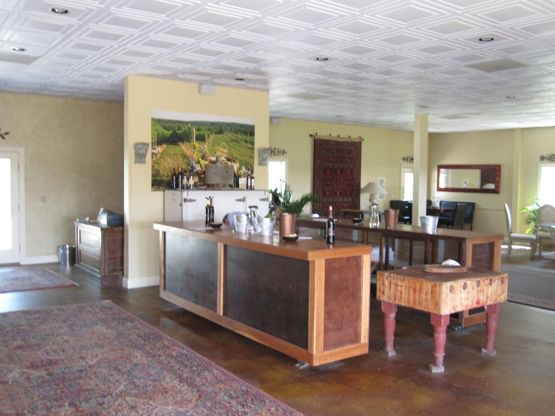
We entered the tasting room at Vintage Ridge and were impressed by the well-appointed furnishings.  In fact, we thought we had entered a quaint café.  Tastings are done at tables and conducted by tasting associates/wait staff.  Indoor and outdoor seating is available; however, on a day that hit 99 degrees, we opted for an indoor table.  Scott was our tasting associate, and he provided us with a tasting menu that included food pairings.  Some of these pairings, though, were menu items to be served during the course of the tasting.  This interesting twist allowed us to observe how the wines complimented certain foods and seasonings. 

So plates of food were brought to our table, and Scott commenced with our tastings.  In the meantime, we prepared our gold stars for placement next to our favorites.  Of the white wines, the Maiden Voyage 2008 was our unanimous favorite.  This one was poured as an aperitif and was offered before the food trays appeared.  However, this blend of Vidal Blanc, Mouvedre (no kidding) and Pinot Grigio was an excellent way to start our session.  Mango and peach flavors were noted with a crisp finish; though nice as an aperitif, I’d be tempted to pour it with either picnic fare or even a crab cake.

The reds were all well-crafted, and our gold-starred fave was the 2007 Petit Verdot.  We both noted layers of dark berries (black berry was prominent for me), plums, mocha, and cedar at the finish.  This one was the perfect partner with the smoked turkey served atop stilton mayo and chutney on a thin baguette slice.  A spicy arugula leaf capped the mini-sandwich.  Though it was a hot summer day, I did not have a hard time imagining a slab of prime rib with this one.  Fans of lighter-bodied reds may prefer the 2006 Syrah.  Its nose of violets and dried herbs gave way to cherry flavors in the mouth to present a bistro-style wine that would pair with light grilled fare, burgers or pizza.

Of course, we always keep sweeter wines in mind for our friend and guest blogger, Michael Tyler.  We place an “MT” next to these wines, and the 2008 Summer Night earned this designation.  This is a slightly sweet Vidal Blanc offering that presented flavors of pineapple and coconut, and it paired quite well with the crostini with mango chutney, ham and manchego cheese. 

These wines and their food pairings were skillfully presented and explained by tasting associate, Scott.  With our session completed, we opted to enjoy a glass of wine while we compared our notes.  Paul was persuaded by the heat to enjoy the refreshing 2008 Maiden Voyage; similar conditions persuaded me to imbibe the lighter-bodied 2006 Syrah rather than the bolder 2007 Petit Verdot. 

Time seemed to fly at Vintage Ridge, and I made certain to purchase a bottle of the 2007 Petit Verdot to enjoy with a heavier fall or winter menu.  We also thanked Scott for providing us with an informative tasting session, and we know that we will return to Vintage Ridge soon.  In the meantime, be certain to pay a visit to Vintage Ridge for a food and wine tasting, and mention that Virginia Wine Time sent you.
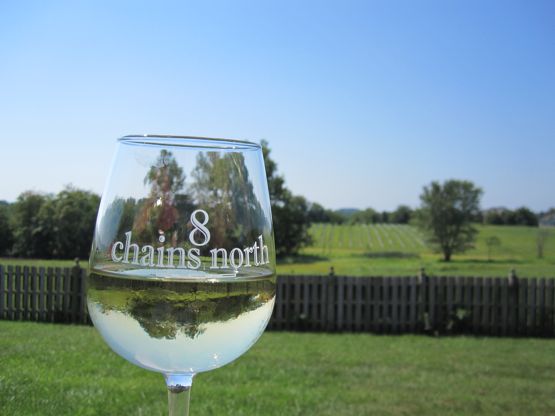
(No—balloons did not fall from the ceiling, and we did not win luxury prizes for our achievement.  In fact, we reminded ourselves that there are probably 50 more wineries to visit!)

Wines of Lombardy

I felt very privileged to be invited to a wine tasting that featured wines from the Lombardy region of Italy. This was a media event, and we were thrilled to receive an invite from Tiffany van Gorder, general manager of Balzac Communications and Marketing.

The event was held at the Palomar Hotel in Washington, D.C., and a luncheon was included in this exclusive tasting event. The wines were outstanding, and the Italian tasting associates were friendly and knowledgeable. (They were also quite conversant in the English language.) I will present to you my personal favorites from the event, but I will say that all of the wines that I sampled were quite good; alas, only a few will receive the coveted gold stars.

Before I list my favs, I must provide a brief description of the region. Lombardy is located in the northern part of Italy, and vineyards there belong to tightly regulated consortiums. Grape varieties grown in this region can date as far back as the Roman Empire! However, I will spare readers the history lecture on this matter and declare that some of the varieties grown in Lombardy are unique to the region and have ancient roots. What I did discover is that most wineries in Lombardy are similar to local wineries/vineyards in that they are small producers and therefore overlooked in the grander scheme. For example, most wine drinkers may associate Italian wines with southern Italy or (regrettably) with the more generic offerings. found in straw-covered bottles—the pizzeria wines. However, the wines that I sampled were as terrior-focused as any French wine on the market. Tasting associates described soils that were optimal for the grape varieties grown in particular vineyards, and they emphasized the premium placed on limited yields that then maximized wine profiles. In short, the wines offered were those that were produced from well-managed vineyards. The result? Well-crafted wines, of course.

I should also describe how these wines were tasted. Guests were able to pre-sample wines that were going to be poured at the luncheon; once this tasting event was completed, tasters and tasting associates were seated for lunch. Given the number of wineries that participated, the dining tables were organized so that a cluster of Lombardy wineries could be represented at each table. I was seated at a table which featured such wineries as Sorsasso Winery and San Michele ai Pianoni . Tasting representatives were seated at these tables, and we, the tasters, were all able to interact with the reps as food and wine were served. After the luncheon, another tasting was available which featured wines not poured at the luncheon event. (Did I mention that coffee was offered, too?)

Ok—what were my favorites?

Cantina Cooperativa Villa Bianzone Valtellina Superiore DOCG Incontri 2003: 95% Nebbiolo, 5% local varieties—characteristic red-brick color with dark fruit, tobacco, and spice. Age worthy!

Sorsasso Terre Lariane Bianco Vigne del Largo 2008: blend of Verdesa and Sauvignon Blanc. Pear and stone fruit characteristics with minerality to boot. Best pairing with the smoked salmon that was served at the luncheon. Crisp and refreshing. Summer wine to sip on its own or with food. Did I mention smoked salmon?

Calvi Oltrepo Pavese DOC Barbera Tre 2006: 100% Barbera. Bramble berries and a peppery nose; violet notes, too. Favorite pasta dish with this one.

San Michele ai Pianoni Oltrepo Pavese DOC Pinot Nero Riserva Pynos 2004: 100% Pinot Noir. Yes, Pinot Noir from Italy but produced from vineyards located 350-380 meters above sea level. At the tasting,I thought this one needed decanting. By lunch time, it was ready to be served with both the salmon and the steak. (Filet mignon followed the fish course.) Dark currants and anise were noted here with a longer finish.

Lantierie Franciacorta DOCG Rose Arcadia 2006: 60% Pinot Noir and 40% Chardonnay. Nice pink color. “Bready” with vibrant fruit notes.

Civielle Garda Classico DOC Chiaretto Pergola: 2008 Rose—My ultimate favorite. (It was 98 degrees outside!) Made from Groppello, Marzemino, Sangiovese, and Barbera. Lovely pink color with strawberry and melon characteristics. Yum!!! Again, the smoked salmon? Yes!

Torti Oltrepo Pavese DOC Ponot Nero Poker di Vino Re di Denari 2006: 100% Pinot Noir—Young, fresh and fruity. Drink now or later. Lovely!

So what up with the DOCG/DOC? DOCG means Denomination of Controlled and Guaranteed Origin, and DOC means Denomination of Controlled Origin.

In search of unique wines from Lombardy? Inquire about these wines at your local wine shop to find out how they can be purchased. Mention that you read about them on Virginia Wine Time.

Manassas Wine and Jazz Festival

This past Sunday, we attended the Manassas Wine & Jazz Festival. At least 21 wineries were on hand to offer samples of their wares, and our quest was to find the best summer wines. These would be wines that complement a hot, balmy summer day and do not require food. They simply need to be well-chilled—a wine glass and shade tree, of course, are demanded! I’ll list our favorite summer wines that we sampled at the festival:

Delfosse Vineyard and Winery: 2008 Reserve d’Oriane (always a favorite of mine)

First Colony: 2008 Chardonnay; sweeter wine lovers like our friend Michael Tyler might prefer the Sweet Shanando

Kluge Estate Winery and Vineyard: 2009 Albemarle Rose

The Winery at La Grange: 2008 Cuvee Blanc

Paradise Springs—Vidal Blanc

Philip Carter Winery: Governor Fauquier 2008 (although the newly released 2009 Chardonnay was our favorite of the festival)

White Fences: Meteor Firefly (off-dry rose)

Willowcroft Farm Vineyards: split decision here—I voted for the Riesling Muscat-Ottonel; Paul favored the 2009 Chardonnay Stainless Steel

We tend to avoid festivals, but I must admit that the Manassas Wine & Jazz Festival was a class act. We sampled artisan cheeses, appreciated local crafts, and tuned in to some fine jazz. In fact, we grabbed some crab cake sandwiches along a glass of wine and found a shady spot near the stage. It wasn’t long before Paul was bopping to the jazz beat of Marcus Johnson who performed a jazz arrangement of Nirvana’s Smells Like Teen Spirit. Quite an unusual take on the grunge classic, but we (and the crowd) enjoyed it. So what about the glass of wine? Did we pick from our favorite summer sippers list? Not quite—we both went for the Philip Carter 2009 Chardonnay.

Looking for that refreshing deck sipper or that favorite Wolftrap wine? Visit the wineries listed here to find the perfect pour for you. Be sure to mention that Virginia Wine Time sent you.