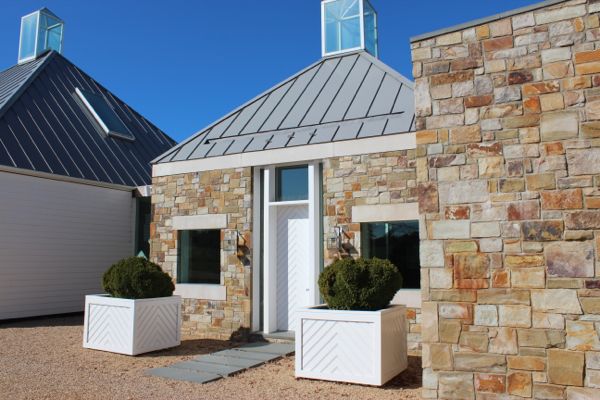
That is my response to those who are ready to dismiss the upcoming 2011 vintage. We hope to do a more comprehensive post on the 2011 harvest in the coming weeks; however, Boxwood Winery did offer a glimmer of the season’s potential. Executive Vice President Rachel Martin invited us out to the winery to sample some barrel samples of developing red wines from the 2011 harvest, and we were indeed quite impressed with what we tasted.
Readers may know that the 2011 grape growing season started with all of the potential of the heralded 2007 and 2010 seasons; however, Hurricane Irene ushered in weeks of rain throughout the state that gave vineyard managers and winemakers nightmares. Rain around harvest time is not usually appreciated in the vineyards, and this past September it came down in torrents. However, some areas of the state received more rain than others; lighter rainfall and diligent vineyard practices may have saved the grapes in many parts of Virginia.
This was clearly the case at Boxwood Vineyard. On a crisp, sunny fall day we visited Rachel Martin to sample some of the 2011 wines from the barrel. For their vineyard sites, September rainfall and little sunshine raised concerns of botrytis and sour rot; therefore, she opted for selective harvesting this season. Clusters that contained over 50% rot were not collected, and salvageable clusters were sorted berry by berry. “Painstaking” was the term used by Rachel to describe the process that consumed endless hours on harvest days. The result? Lower yields but clean fruit.
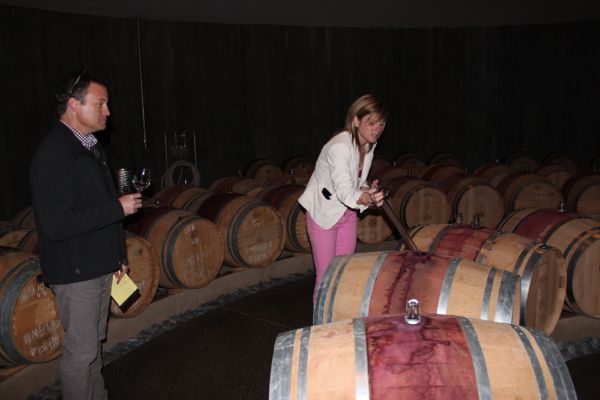
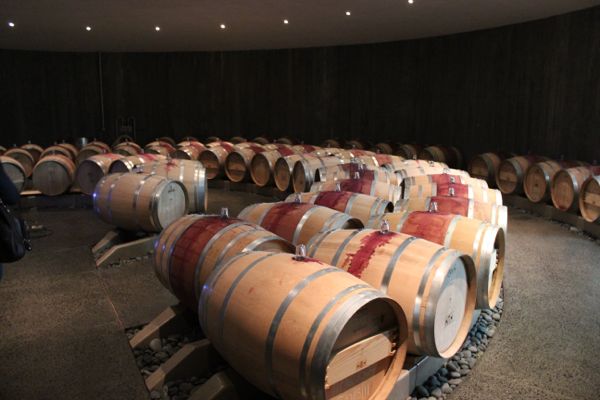
Rachel guided us to the barrel cave where we were treated to barrel samples from recently harvested 2011 grapes; in fact, the wines were at malolactic fermentation. The Merlot presented a deep hue in the glass to suggest good extraction with excellent fruit on the nose; likewise, the Cabernet Franc was clean with characteristic pepper notes. The Petit Verdot, though, was by far the star of the afternoon. Inky with concentrated plum flavors, it seems destined to shine in future releases. Nothing that we sampled suggested diluted colors or flavors, and we detected no vegetal notes to indicate lack of ripening.
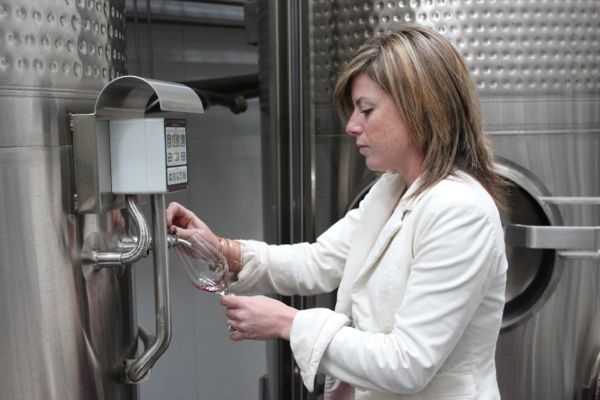
Our time at Boxwood Winery concluded with samples of the upcoming 2010 releases now in tanks. The 2010 Topiary will be a blend of Cabernet Franc and Merlot; aromas of pepper and dried herbs dominated along with notes of raspberry and cherry to suggest an earthier blend. The 2010 Cabernet Sauvignon will be not be blended; I noted characteristics of black fruit and tobacco with a pleasant whiff of violet. An addition to the Boxwood lineup will be the Trellis, a fruit forward table wine that blends Merlot and Malbec. This one should be prove to be popular as we both found it to be accessible and easy to drink either alone or with a meal.
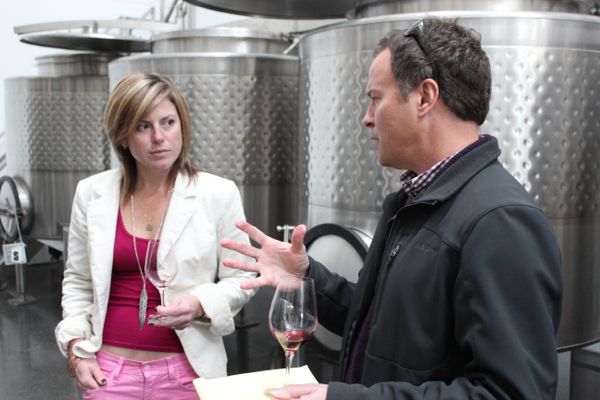
So do not accept blanket dismissals of the 2011 harvest as fact for the entire state. We’ll do our best to keep readers posted. In the meantime, plan a visit to Boxwood Winery, and mention that Virginia Wine Time sent you!
Author: Warren
Yelper Helper
This place was completely terrible…as others mentioned families are relegated to a fenced in “pen.” I get that it is private property, your business, etc. but please mention your lame rules before I drive a mile down your crappy unpaved road.
The whole process felt a little like an assembly line for me, although we did come in with a big group without reservations. On the plus side, they did squeeze in our group of 14.
Her reasoning was that if she gave me a cup, I might pour my wine in it and give it to some underage minor who would sneak around the corner and drink some.
There were 6 couples plus kids. The owner was unhappy with our kids playing soccer during the picnic in a tiny field next to the parking lot. He was also unhappy we set up a sun cover over a picnic table and several other things.
 I lifted these comments from Yelp, the popular online review service that allows customers to rant and rave about any and all establishments that provide goods or services to the public. Disgruntled tasters left these particular comments on Yelp in regard to several Virginia wineries, but rest assured that virtually every Virginia winery has been negatively Yelped at least once. Some Yelpers do keep their comments focused on the wines and their impressions of them; however, others, like the ones presented above, follow a similar pattern and center on poor customer service due to _____(fill in the blank:. Large party of tasters, toddlers on board, Fido gets the boot.) And oh—the wines suck. So there! There is certainly no excuse for poor treatment at a winery, and customers have every right to speak up on the matter. However, I do think that customers owe winery owners, their harried tasting room staffs, and other customers some basic courtesies. Here are my tips to make certain that your winery visits are pleasant ones.
1. Here Comes the Bride: Most wineries consider groups of more than six to be large, and their ability to accommodate large groups can be rather limited especially if the group arrives during peak hours. It therefore makes sense that the winery would appreciate some notice before your large group arrives. The most notorious violators of this common sense rule are the bridal parties. Nothing throws a tasting room staff into a panic more than the sight of the unannounced limo dropping off a bride to be and her tipsy band of bridesmaids at 3 o’clock in the afternoon. Yes, some wineries will be more than happy to help you share your special moment and may even provide you and your guests with a private tasting. However, do not expect deluxe treatment if you suddenly pop in as part of an afternoon winery crawl. Therefore, make your plans early and contact the winery well in advance of your trip. Be sure to provide as many details as possible, and have at least an estimate of your party’s size. Will you all be travelling in a limo? If so, the limo or bus may take up too much parking lot space; perhaps special parking arrangements can be made. (A limo or bus might be a great idea since no one in your party needs to worry about drinking and driving.) Therefore, call ahead! I’ll repeat that one more time. Call ahead! The same advice holds true for any large group (party of more than six) that is planning a visit to any Virginia winery. Call ahead! Trust me, this basic courtesy is greatly appreciated by the winery staff.
2. Kids in the car: Remember that wine tasting is really an adult activity, and children cannot be anywhere near the tasting bar. Most Virginia wineries do maintain a kid friendly environment; however, some may prefer to maintain an adults-only atmosphere. Therefore, call ahead to find out. Please be aware, though, that many tasting rooms do have small gift areas with breakable items that may be attractive to curious toddlers. And I cannot tell you how many times we’ve seen little ones at food tables helping themselves to snacks with their own tiny hands while mom and dad are sipping at the bar. Teens on board? Again they cannot be near the tasting bar, and even if your well-mannered teen is somewhere outside waiting for the adults to finish their tasting, I would advise informing the tasting associate that you’ve brought a minor along on the trip. ABC agents do not announce themselves when they visit wineries, and their mission is to be sure that rules are being followed. If they suspect that minors have access to alcohol at the winery, the consequences could be severe for the owner. Keep an eye on the kids, and the tasting staff will be glad that you did!
3. Fido the Wino: Dogs—I love dogs. However, I am not certain that I like dogs at a winery. At one recent winery visit, Paul and I attempted to share wine and conversation at an outdoor table when we were treated to a nearby barking duet between Fido and Fluffy as they sang sweet love songs to each other. Our conversation ended when we could not hear a word we were saying to each other. However, I do understand why some tasters would want to bring their dogs to wineries, because I am sure that even Fluffy would appreciate the mountain views that many Virginia wineries offer. However, rather than risk being told to keep Rover in the car, call ahead to find out if he can come along for the trip. Also, while Rover may be friendly to you, he is still an animal and other customers may not want to find out just how friendly he can be. And there is a liability issue to consider. Fido’s bad day may cost someone a trip to the doctor, but who’s responsible? Does Barney sometimes take a nip? Open wine bottles and bar snacks may not look or taste too appealing to others once he has been allowed a sniff, sip or nibble. (Yes, we’ve seen this happen.) I attended a recent tasting where the owner, despite toothpicks in clear view, grabbed cheese squares with his hand and fed them to his dog as it then voraciously lapped at the tasty morsels. Owner then took his slobber-covered hand and used it to take more cheese squares from the same bowl. (I’m not kidding.) As in tip #2, if indeed you can bring your dog, be mindful of the dog’s (and your own) behavior.
4. Time Is On My Side: Not really. Tasting rooms get really crowded in the afternoon, and you will have to wait for service. Most Virginia wineries and their tasting rooms are small, because most Virginia wineries are small agricultural businesses. In fact, the guy behind the counter who will be pouring your wine may also be the winemaker. The cashier? Probably his wife. So why not hire more help, you ask with your ears steaming? Because wine making is an expensive operation, and the staff that you see behind the counter is probably all that the owner can afford to maintain and still stay in business. In fact, some tasting room associates work for wine in lieu of pay. So know your patience level before making that late afternoon trip to the winery. For example, if you avoid the supermarket at three o’clock on a Saturday afternoon because you hate standing in long lines, then do not make a visit to a tasting room at that time either. We hit the trails early in the day for that very reason. And that way, you really can have that intimate chat with the winemaker and ask as many questions as you’d like—just like we do!
5. Stay Focused: Virginia winemakers have a focus—to pour their passions for winemaking into the vineyard and then into a bottle for you to enjoy. Party halls? Kiddie Korners? Dog parks? Probably not part of the vision for most winemakers. Therefore, remember why it is that you want to visit Virginia wineries in the first place—to taste passion in a bottle. Winemaking starts in the vineyard and getting the grapes into the bottle is a difficult, expensive, and time-consuming task. Therefore, do the winemaker a favor and maintain your own focus—on the wine. If your priority is to really just to have a party or to give Rover some exercise, then find wineries that offer those perks. How can you be sure that any particular winery will meet satisfy your own agenda? Plan ahead and call ahead!
6. Respect: This last tip is probably the most important. We’re rather spoiled in this area. Virginia offers outstanding wines while providing tasters with nature’s own spectacular views. Most area wineries will allow you to stay and picnic while appreciating a bottle of favorite wine with your meal. Napa? Bordeaux? The expectation at most wineries in other regions is that you will taste, purchase and leave. In fact, most regulars on the Virginia wine trails may have noticed that more wineries are adopting a “no picnic” rule these days. Why? Stories of facilities being trashed by inconsiderate visitors, guests bringing in outside alcoholic beverages (this is illegal by the way), and other tales of rudeness have become more frequent in our chats with winery staff. Remember, the tasting room that you are visiting is part of the owner’s personal property and in some cases is a room in the house. The vineyard? His/her backyard. So think twice before loading up the van with all of the kids’ favorite toys, your own lawn furniture, and that secret six-pack in case you opt for a brew instead of a chardonnay after the tasting.
So still want to rant on Yelp? Reflect on these tips before you pound the keyboard, and ask yourself how you might react from the other side of the tasting bar. Some planning and preparation as well as a large dose of common courtesy will go a long way to ensure that you, the winery staff, and fellow customers can all have an enjoyable and memorable experience.
Spooky Tastings at Paradise Springs
So our planned adventures for Saturday got canned due to the historic Halloween snow event. Halloween and snow—who knew such a thing would ever happen in this part of the country! Anyway, we decided to make the most of our afternoon by donning our Halloween costumes for a haunted experience at nearby Paradise Springs.
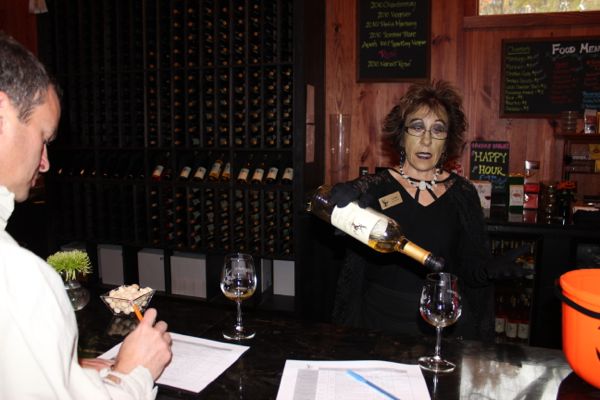
Nothing new had been released since our last tasting this past spring, but our tasting associate, Linda, bewitched us into taking advantage of the two for one Halloween tasting special. Two tasters received wine tasting for the price of one if at least one was dressed in a costume. Of course, I was the dressed up one, and I looked quite dashing in my Renaissance garb. Linda served up the potions, and we sipped and swirled away.
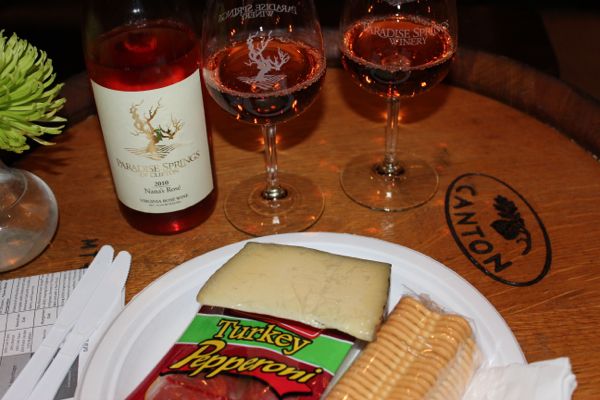
Our preferences remained the same. The 2010 Chardonnay, Nana’s Rose and the 2009 Meritage were our standouts on the list. After our tasting, we decided to enjoy block of Manchego cheese and turkey pepperoni with a bottle of the Rose; before we were done, we noticed that the tasting room was getting more crowded. We also observed heavy snowflakes beginning to fall!
Before we left, we took advantage of the 10% discount offered to costumed costumers and bought a couple of bottles of our favorites. When we walked outside, we were amazed at the stark contrast presented before us—trees in full autumn finery decorated with snow. I’m sure that this is one of those once in a lifetime experiences, and Paul made certain to record the event with his camera. It’s hard to see the snowflakes in the picture but they were really coming down.
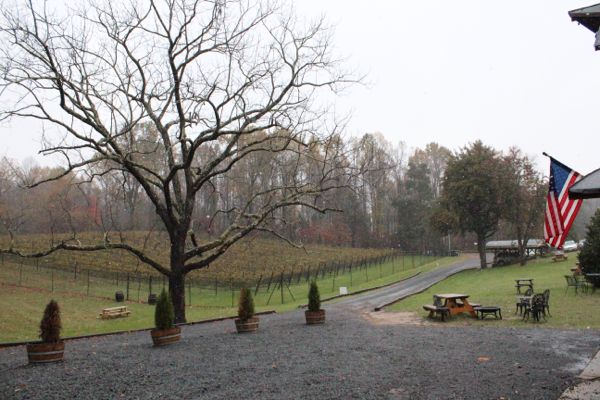
No doubt cooler weather is on its way, so make sure to visit Paradise Springs for a tasting. Enjoy a glass of wine by the outdoor fireplace promises to take the chill off, but please mention that Virginia Wine Time sent you!
Virginia Wines Before Dinner
We had friends over for dinner this past Saturday, and we decided to pour Virginia wines as aperitifs. After all, it is Virginia Wine month! Guests were greeted with the Governor Fauquier from Philip Carter Winery and Sarah’s Patio White from Chrysalis Vineyards. Both were off-dry wines and produced from the Vidal Blanc grape, a Riesling-like hybrid that grows very well in Virginia. Like Riesling, Vidal Blanc is very fruity and refreshing, so some of the appetizers that I served with these wines were a bit spicy. Some of these dishes were captured by Paul, the cameraman.
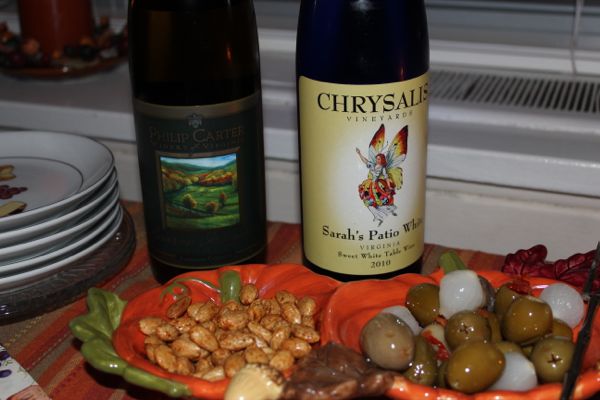
Cheeses: Brie topped with hot peach chutney, or for the faint of stomach, plain brie and red grapes.
Nuts: Chili-lime flavored almonds; plain almonds for the wimps. Not sure if olives pair with these wines, but the gourmet olives were stuffed with sun-dried tomatoes and were absolutely delicious!
Meats: Smoked salmon
So what was on tap for the rest of the evening? I did splice in a couple of Napa wines from Clos Pegase winery; one was a Sauvignon Blanc that I sampled at a wine tasting and thought it was unique—tropical fruit flavors (as opposed to cat pee/grapefruit) with a refreshing acidity that seemed a perfect match with an acidic tomato dish. The other was a Cabernet Sauvignon that has been resting on the wine rack for several years, but according to the wine mags, needed to be appreciated now. And indeed it was appreciated! It was quite good with the beef; however, the fruitier Virginia offering was very well-received by my dinner guests. A number of Virginia meritage blends would have paired quite nicely with my beef dish; however, I went with the Gray Ghost option based on my experience at the Gadsby’s Tavern winemaker dinner which featured the Ranger Reserve with a very similar beef dish. Empty wine bottles indicated that the Virginia option was as popular as the California one.
Anyway, here was the menu:
Fresh tomato soup paired with Clos Pegase Sauvignon Blanc 2009
Garlic-herb crusted beef tenderloin with roasted potatoes and squash paired with Clos Pegase Cabernet Sauvignon 2005; Gray Ghost Ranger Reserve 2008
Pumpkin bundt cake served with Gray Ghost Adieu 2006
Community Brand Coffee and Chicory (found only in New Orleans)
The Hague Continues to Impress
A visit to The Hague Winery was on our itinerary during a recent trip to the Northern Neck of Virginia. We posted our favorable impressions of the Hague Winery last year, and we were curious to see if our return visit would confirm our initial impressions. In short, the answer is yes!
Owner Stephen Mady was on hand to conduct our tasting, and he guided us through our sampling of seven wines. Our favorite pour a year ago was the dry 2008 Rose, and the 2009 Rose was likewise dry but darker with strawberry and raspberry notes with a whiff of dried herbs. While I preferred the lighter-colored 2008, I did enjoy the 2009 bottling which was aged briefly in oak barrels.
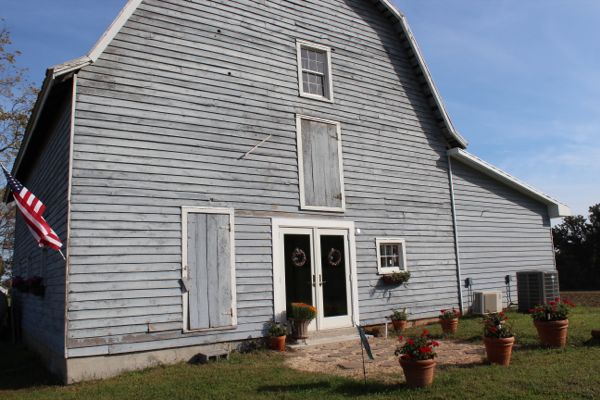
Mady does seem to concentrate on red wines, and my favorite of the current offerings was the complex 2008 Meritage Reserve, a blend of all Bordeaux varieties except for Malbec. Brambleberry, sweet tobacco and cedar aromas were complemented by similar berry flavors with a spicy edge. This was quite an elegant wine. Paul’s favorite and my close second was the 2009 Cabernet Franc with its classic characteristics of raspberry, eucalyptus and pepper. We were able to sample the upcoming 2010 Petit Verdot. Paul is collecting quite a library of Petit Verdot from Virginia, and this bottling from what promises to be a stellar vintage was still very, very young. However, there was no mistaking the dense color; lots of swirling did release aromatics of dark plums, blackberry, and menthol. Tannins were still quite firm. Paul predicts that a year of aging will result in a stellar wine; I’d age this one even longer and serve with a hearty beef dish.
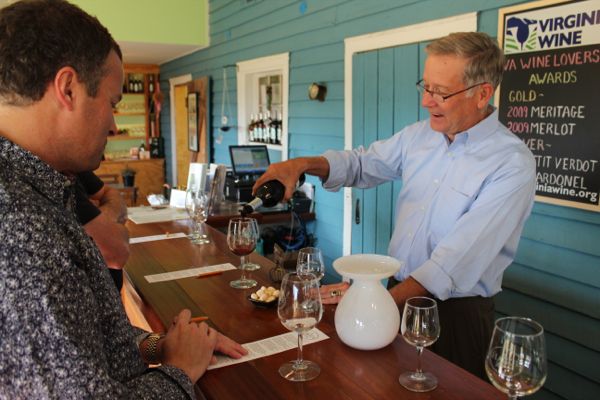
The Hague Winery does offer a white wine, the 2009 Chardonel. This is a crisp offering with nice pear notes. The 2009 Cynthia Dessert, though, is by far the most delightfully aromatic wine on the list. This sweet Muscat wine is rich in tropical fruit flavors, but it is the aromas of orange blossoms and peach skins that intoxicate!
Stephen Mady did confirm that Michael Shaps remains the winemaker for The Hague Winery. Production levels will remain small with a concentration on quality wines. Of course, Mady looks forward to the bottling and release of the 2010 wines as these promise to rival heralded 2007 vintage.
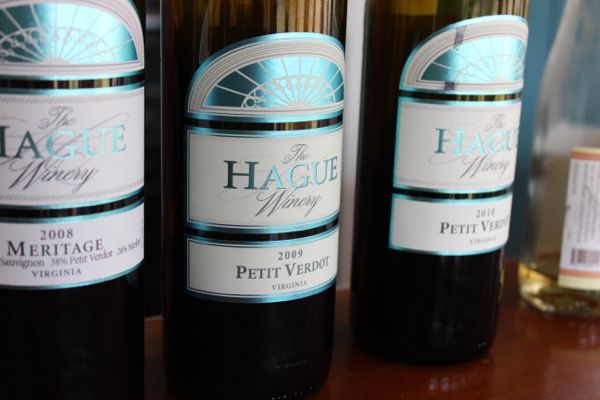
With our tasting done, we purchased several bottles of our favorite wines. With fall firmly underway, plan a weekend visit to the Northern Neck to enjoy fall colors. Along the way, sample the current releases at The Hague Winery. Please mention that Virginia Wine Time sent you.
Northern Neck Weekend
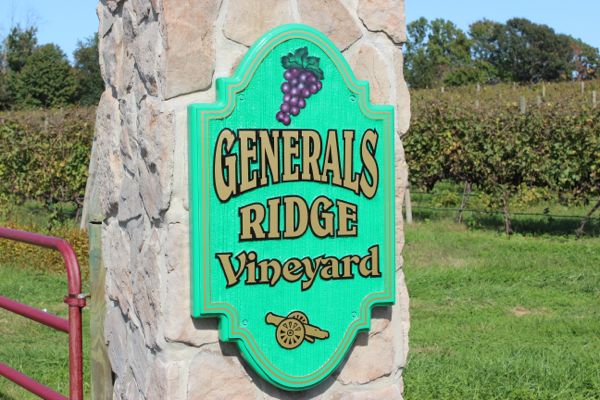
We spent the Columbus Day weekend on the Northern Neck visiting our friends, Bob and Jackie. They have a lovely home there, and we always make a point to visit them at least once a year. Along the way, of course, we stopped off at a few wineries to sample the latest pours. And we added to our list of new wineries visited. We visited General’s Ridge which was our 137th winery!
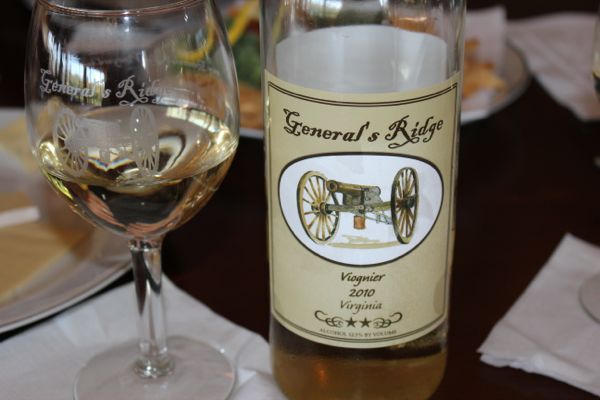
General’s Ridge Vineyard and Winery: Owners Rick and Linda Phillips operated the General’s Ridge Vineyard for several years to sell the grapes to local wine makers; however, they recently decided to open a winery to sell wines that bear their own label. The GRV White, a stainless steel fermented blend of Chardonel and Traminette, was a refreshing pour that presented tropical fruit notes. It is slightly sweet at 1%% residual sugar. We favored the GRV Viogner 2010 with its floral aromas and apricot flavors. Chambourcin lovers may wish to try the GRV Red, a blend of Chambourcin and Merlot. It resembled a bistro wine that could be served with pasta and red sauce, pizza, or burgers. Rick Philips was on hand to greet us, and though he is excited with GRV’s lineup of wines, he still does plan to sell at least 90% of his fruit to local winemakers. Michael Shaps is now the winemaker at GRV, and we look forward to more good things from General’s Ridge Winery.
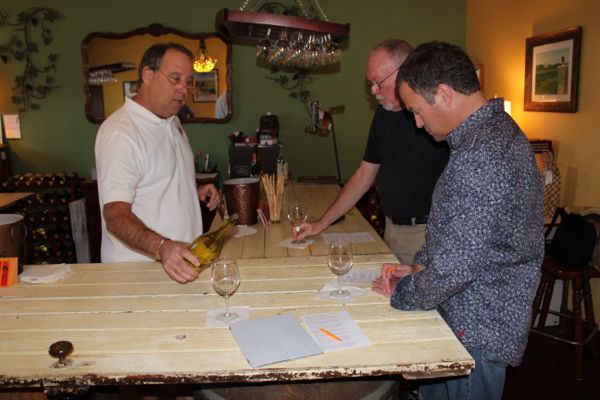
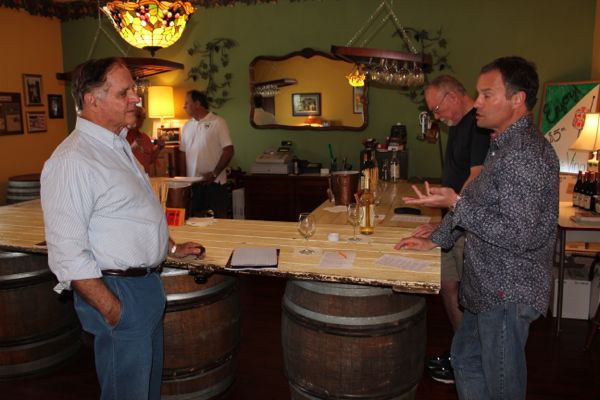
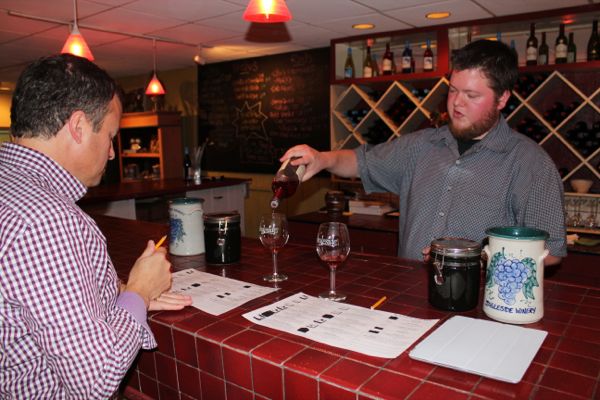
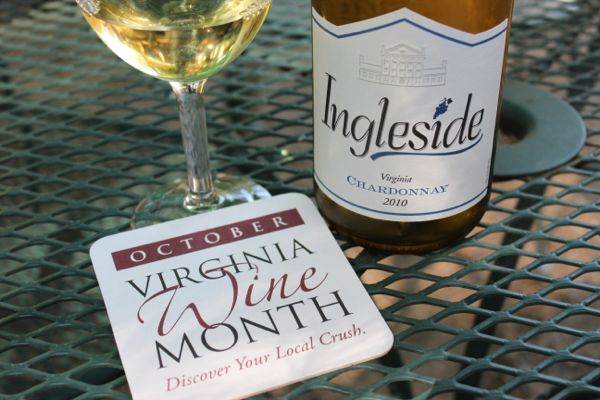
Ingleside Vineyards: One of the oldest wineries in the state and certainly the oldest winery on the Northern Neck, Ingleside is always a favorite to visit. Favorite wines this time around included the Rosato de Sangiovese 2009 with its strawberry and cherry flavors and crisp finish. Paul and I both enjoyed the Petit Verdot from the outstanding 2007 vintage. A smoky nose gave way to aromas of dried fruit and tobacco; similar fruit flavors gave way to a spicy finish. Drink now but should age well. Paul was also enamored with the Merlot 2006 and noted dark cherry and blackberry flavors with a firm tannic presence. Winemaker Bill Swain is now adding Charbono, a varietal grown in California, to some of his red blends, and this Merlot does indeed include 6% Charbono along with 11% Petit Verdot and 7% Cabernet Franc.
Vault Field Vineyards: This small, family-owned winery continues to make some very nice wines. I enjoyed the 2008 Chardonnay that is aged in French oak barrels for nine months. Nice pear flavors and a honeyed mouth feel make for a fuller-bodied white wine that would pair well with poultry and fish especially if sauces are served. Of the red wines, we reached a split decision, and I preferred the complex 2007 Red Estate Bottled that is a blend of Merlot and Syrah. Owner and winemaker Dan Meenan does indeed grow the Syrah that in included in the Red, and the result is a nose of brambleberries, cherries, and spice with similar flavors in the mouth. With winter stews and roasted meats about to make the cold weather menus, this wine should pair well with these heartier dishes. Paul liked the fruitier 2008 Red Estate Bottled that is more of a Bordeaux-style blend. The 2008 vintage was produced in a more classic Virginia environment than its 2007 sibling—cooler nights and less intense heat with a bit more rainfall. The result is a more accessible red wine that is ready to drink now. The 2008 Reserve Red has yet to be released but we were able to both sample it and bring a bottle home!
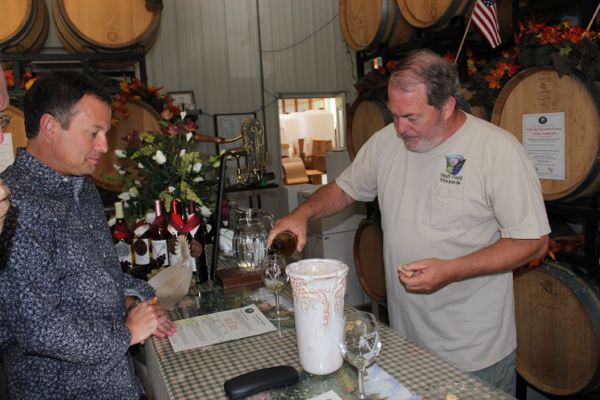
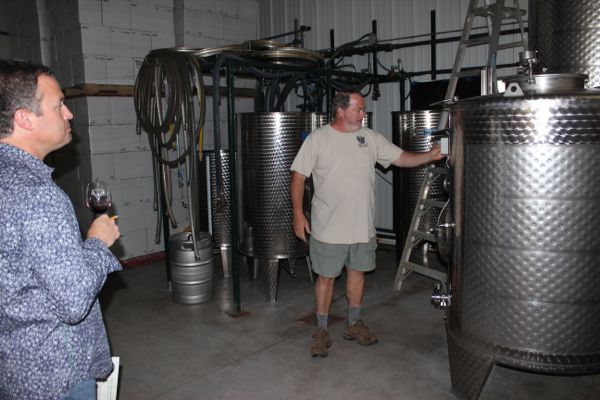
With fall colors about to explode, a trip to the Northern Neck should be part of the weekend plans for the autumn season. Be sure to include a trip to these wineries, but be certain to mention that Virginia Wine Time sent you.
Bring Viognier to the Watershed!
This is exactly what chef Todd Gray accomplished this past Tuesday. I attended a dinner at the acclaimed Todd Gray’s Watershed in Washington, D.C. that featured pairings of seafood with Virginia’s official grape, Viognier. In fact, Virginia Viogniers were the only wines served at the wine dinner except for a surprise red wine poured with the fourth course. Vintages from Tarara Winery, Delaplane Cellars, and Veritas Winery were poured at the wine dinner, and winemaker Jordan Harris and Veritas owner Andrew Pelton were on hand to introduce the wines.
The evening started with a sample of the aromatic 2010 Viogner from Tarara Winery paired with light starters that included fried clams on toast points. Four courses were then served alongside pairings of Viogniers and Viognier blends from the 2008, 2009 and 2010 vintages. The courses were stunning, and I only wish that chef Gray could cook for me every night. The wines were quite nice too, and it was interesting to observe which vintages were the favorites of my tablemates. I will list the courses here and vintages here with a nod toward my particular favorites:
First Course: Curried Pumpkin and Butternut Squash Bisque with Littleneck Clams, Celery Root and Toasted Pumpkin Seeds served with:
Delaplane Cellars Viognier “Maggie’s Vineyard” 2008 and “Honah Lee” 2009
This dish was absolutely divine and my favorite of the evening! The creamy texture of the “Maggie’s” seemed a perfect match for the lush squash soup.
Second Course: Marland Jumbo Lump Crab Cake with Hand Rolled Orechette Pasta with Little Tomatoes and Basil Pesto Butter served with:
Tarara Winery “Nevaeh White” 2009 and 2010
Succulent! That is the only word to describe the crab cake. The tomatoes and their characteristic acidity matched well with both vintages, but I’m a Chardonnay fan and the 2010 vintage presented a blend of 55% Viognier and 45% Chardonnay. The older sibling comprised 70% Viognier and 30% Chardonnay. Guess which one I preferred? (To be honest, I finished both samples!)
Third Course: Pan Roasted East Coast Halibut on Wild Rice Pilaf, Rock Shrimp, Mango and Cilantro Crème Fraiche served with:
Tarara Winery Viognier 2010
Halibut is my favorite white fish, and served atop the wild rice was an extra treat. The 2010 offering from Tarara was classic Virginia—floral aromatics and rich tropical fruit flavors. Perfect with white fish.
Fourth Course: Maple Balsamic Glazed Breast of Mennonite Chicken with Italian Sausage Bread Pudding, String Beans and Black Pepper Chicken Gravy served with:
Tarara Winery Syrah 2007
WOW! More of this from Jordan Harris, please. What a hidden gem! Concentrated dark fruit flavors with spicy elements demanded that I request a second sample. This Syrah will not be for sale to the general public but may serve notice that winemaker Jordan Harris is a serious Rhone ranger! Harris revealed to me his belief that the Virginia climate can be conducive to growing Rhone varieties that include not only Viognier but also Syrah and Mouvedre. Therefore, look for Rhone-style white and red wines at Tarara in the future.
Dessert Course: Warm Sticky Toffee Cake with Coconut Ice Cream and Armagnac Toffee Sauce served with:
Veritas Winery Viognier 2010
A nice way to end the evening. Less than 1% residual sugar makes this Viognier quite versatile. Toffee, caramel, spice—just in time for fall. Also consider this Veritas offering with Thanksgiving turkey.
The lovely evening of food, wine and conversation came to an end. I would like to remind readers that October is Virginia Wine Month, and Todd Gray’s Watershed does feature Virginia wines on the wine list. I hope that he continues this practice and expands the list to include other Virginia wineries. In the meantime, dine at Watershed and request a Virginia wine with your meal. Of course, I encourage readers to visit the wineries mentioned in this post, but please mention that Virginia Wine Time sent you.
Women and Wine
Check out our new feature, Women and Wine. Click on the tab above to read about some amazing women in the Virginia wine industry. Our first post features Diane Flynt from Foggy Ridge Cider.
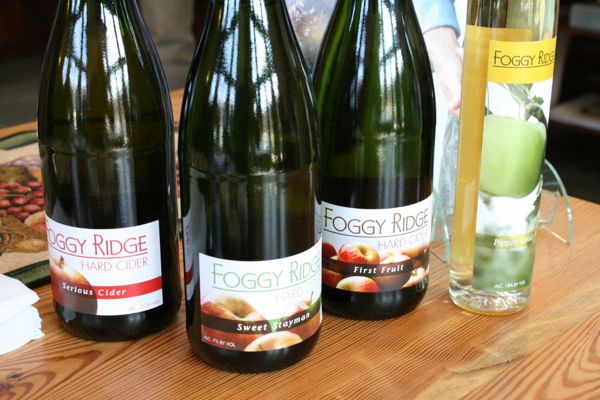
Final Roundup: Southern Virginia
This post will wrap up our reviews of wineries in the southern portion of the state.
Molliver Vineyards and Winery: The winery opened a year ago and currently has 10 acres planted in vines. Twelve wines were available for tasting including a vin chocolat. Our tasting occurred on a hot August day, so we were in the mood for chilled wines; our favorite, then, was the Traminette with its tropical fruit and ginger spice notes. In fact, we shared a glass after our tasting. The Vin Chocolat would certainly make for an interesting dessert offering if served with fresh berries.
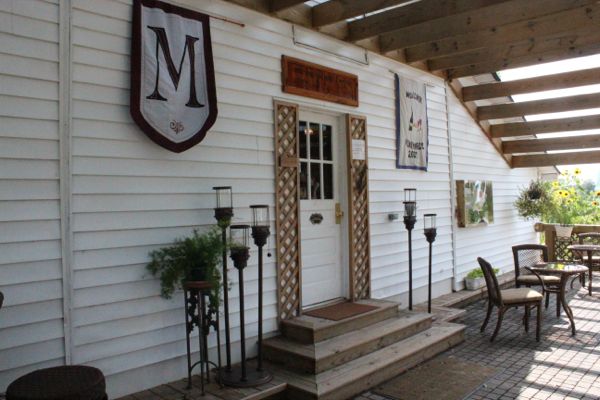
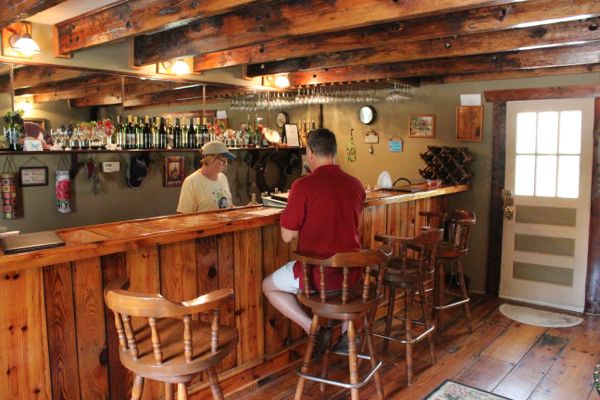
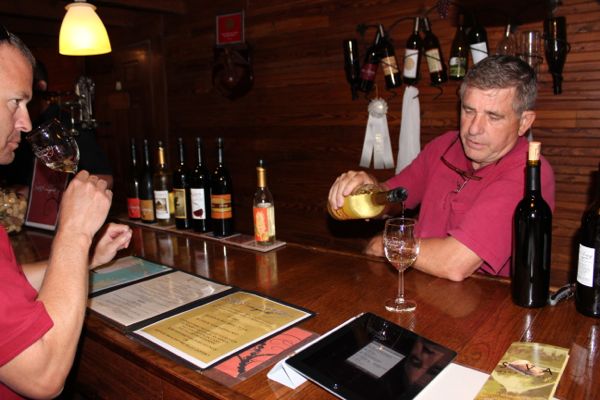
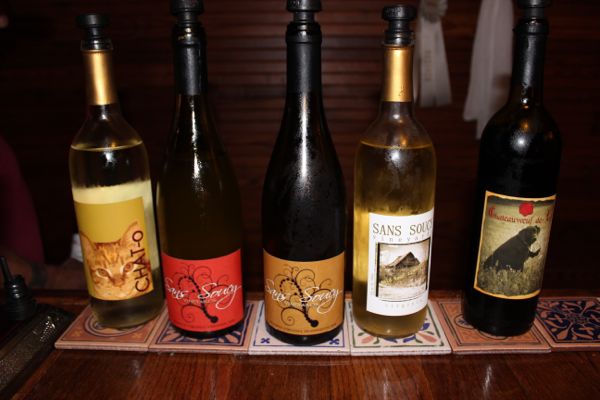
Sans Soucy Vineyard: Sans Soucy Vineyards began to sell its own wine in 2008, but before then, it had been selling its grapes to other wineries. Six acres are currently in vines, and this includes the only tempranillo vines in the state! Paul was a fan of the Chat-o, a fruity Viognier with lots of peach and mango flavors. We both enjoyed the 2008 Cabernet Franc with its notes of raspberry and anise. Aged in French oak barrels for 18 months, it finished with a bit of vanilla. Lovers of Legacy, a blend of Chambourcin, Tempranillo and Cabernet Franc grapes, will be pleased to know that the 2009 vintage of this complex reserve wine will soon be released.
Villa Appalachia Winery: I was a big fan of the Simpatico back in 2007, and I remain a fan today. Its floral nose and tropical fruit flavors make for an easy sipper that does well on its own or with spicy food. Simpatico is a blend of Vidal Blanc, Malvasia, and Pinot Grigio. We were also able to sample the Rustico Reserve made from 50% dried Corvina grapes. It presented a raisiny nose with dried plum, anise and tobacco aromas. Since our last visit, the winery added a 2008 bottling of Aglianico and will soon release a barrel-fermented Trebbiano. After our tasting, we enjoyed a glass of Simpatico (of course!)
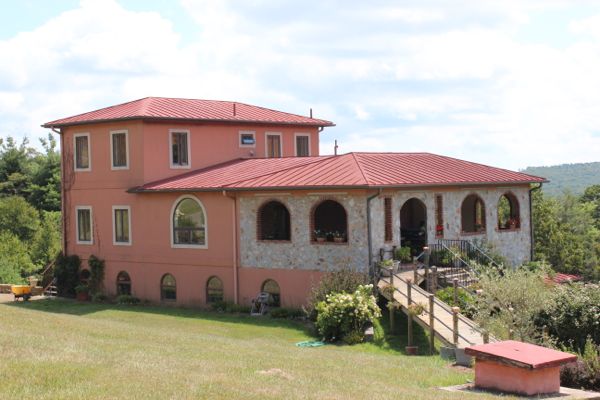
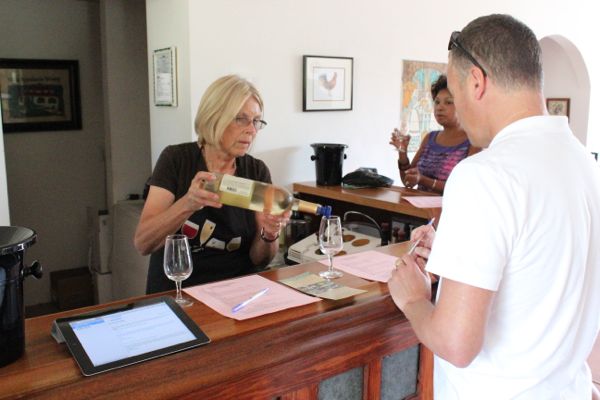
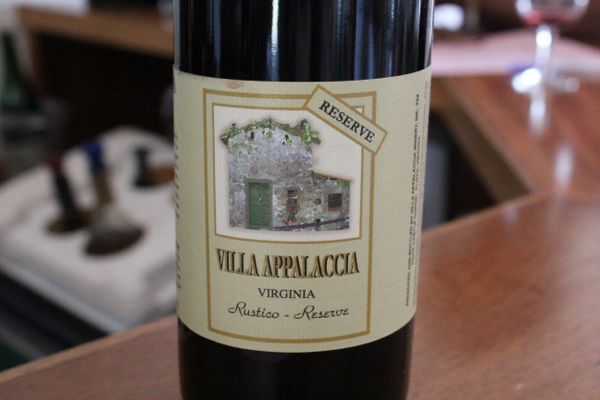
We hope to return to these more distant wineries in the future. In the meantime, plan a visit to these wineries, and mention that Virginia Wine Time sent you.
29 Vines Grand Opening
The latest addition to the growing list of Loudoun County wineries will host its grand opening this weekend. 29 Vines will officially open its tasting room located in Purcellville on Saturday. Paul and I visited the tasting room before the official grand opening just to get a sneak preview of what tasters can expect.
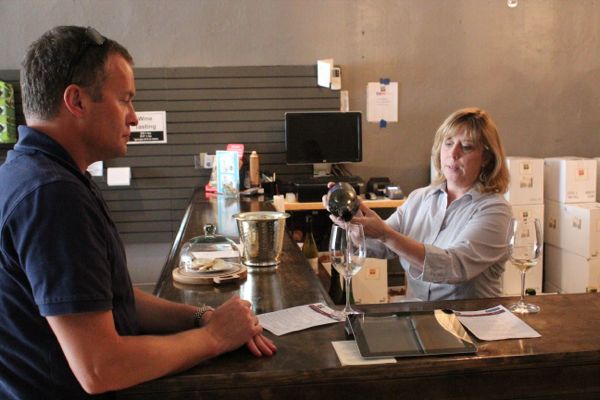
Owners Matt and Mary Beth Barbagallo describe 29 Vines as a “micro-winery…dedicated to delivering wine education, excellent customer service and unpretentious wines.” Matt Barbagallo is also the winemaker, and he studied under local guru, Jim Law, to learn winemaking skills. He produced his first vintage of Chambourcin, Cabernet Franc and Merlot in 2009. Mary Beth is operations manager and also designed the tasting room’s interior to create a contemporary yet classic feel that blends in with the local area’s historic surroundings. In keeping with the stated goal to deliver wine education, the Barbagallos pour wines from other Loudoun County wines in addition to their own. These include pours from Tarara Winery and Fabbioli Cellars. Wines that bear the 29 Vines label are produced from the couple’s 29 grapes vines located in their own vineyard as well as grapes grown in other Virginia vineyards.
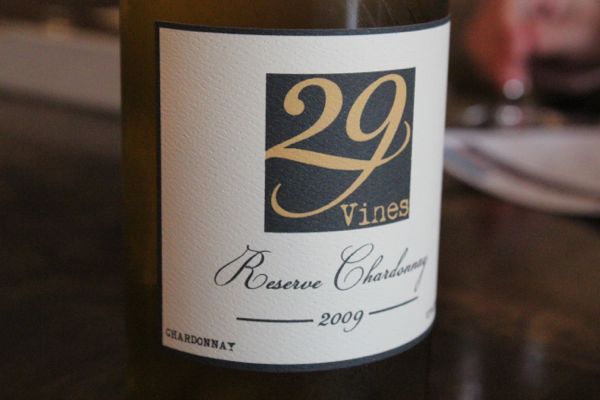
The samplings from Tarara Winery present some of the best from Tarara winemaker Jordan Harris. These include the crisp 2009 Tarara Viognier, 2009 Tarara 3 Vineyards Chardonnay (one of my faves), 2008 Cabernet Franc, and the 2008 Long Bomb Edition 2. Fans of Fabbioli Cellars Raspberry Merlot will be also pleased to try this luscious dessert wine in the 29 Vines tasting room. Offerings from the 29 Vines production include barrel-aged 2009 29 Vines Reserve Chardonnay, the 2010 29 Vines Sweet Rebecca Lynn, 2010 29 Vines White Chambourcin, and the 2009 29 Vines Karma. The 2010 Sweet Rebecca Lynn is a blend of Traminette and Seyval Blanc and is actually not that sweet; at .5% residual sugar, it’s an off-dry pour with floral notes and tropical fruit and citrus flavors. A food-friendly crowd pleaser, it could also be enjoyed on its own. The Bordeaux-style Karma is a Merlot-based blend with wild berry/cherry characteristics that should open up nicely after some time on the wine rack.
Another unique twist offered by 29 Vines is the tasting room hours—Friday through Monday from 12 PM to 10 PM. From classy happy hours to late evening wine gatherings with friends, 29 Vines can accommodate and educate!
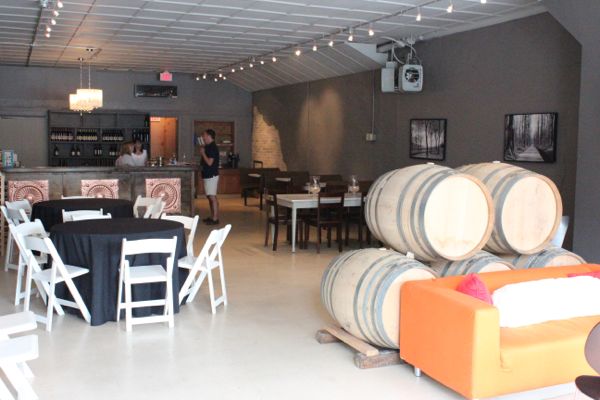
With our tasting done, I enjoyed a glass of the Reserve Chardonnay while Paul sipped a glass of the Sweet Rebecca Lynn. We also admired the tastefully appointed tasting room that included elegant chandeliers and lighting fixtures. These created a soft, unpretentious atmosphere that invited tasters to stay a bit longer. However, we did eventually have to leave, and we thanked Mary Beth for guiding us through our tasting. Please plan to attend the grand opening of 29 Vines in Purcellville, and mention that Virginia Wine Time sent you.