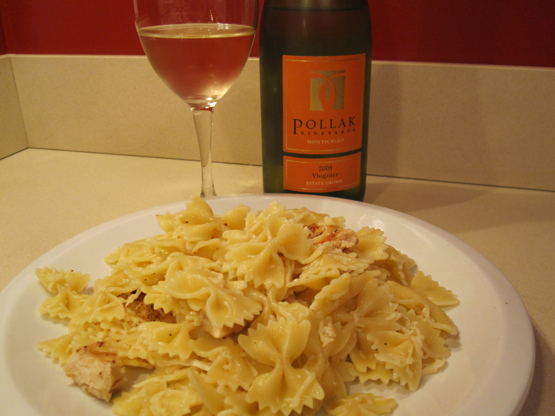
Order Soma 350Mg Online We’ve posted about it before but I had the 2008 Pollak Viognier with parmesan and chicken pasta for dinner. It was a great compliment to my pasta. It has lots of fruit on the nose and palate with a crisp long finish. A great way to enjoy Christmas eve dinner.
Holiday Wines
Private Reserve White
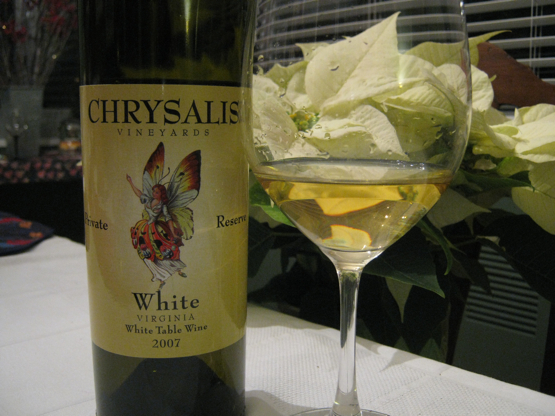
Yet another evening snowed in in DC. We decided to enjoy a white wine from Chrysalis Vineyards. It was the 2007 Private Reserve White, which is only available to VIP Club members.
It’s a fuller bodied, blended wine from (we’re guessing) petit manseng and chardonnay. We noted some pear and subtle almond on the nose with a honey texture on the palate followed by a long finish.
Chrysalis describes the private reserves:
Each vintage Chrysalis Vineyards produces two unique wines – a white, and red, exclusively for the enjoyment of our VIP Club members. We use this opportunity to indulge in creative winemaking unfettered by normal production restrictions. We are free to use any wines from that vintage, vinified however the fruit may inspire us, blended as we wish, to create something of unusual quality, interest, and rarity. We do this to thank our Club members with a wine that no one else can obtain, at any price.
Glad Tidings and Gadino Cellars
After we enjoyed holiday nibbles and wines at Gray Ghost Vineyards, we decided to pay a visit to Gadino Cellars for a tasting. It had been quite a while since our last tasting there, and we were eager to see if any new offerings were now available on the tasting menu.
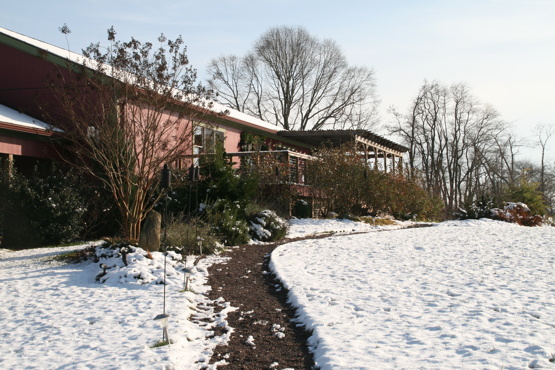
So on a very cold afternoon, we were warmly greeted by Stephanie, assistant wine maker and daughter of owners Bill and Aleta Gadino. As always, we started with the white wines. Our favorite? The 2007 Viognier with its floral nose and peach flavors. Treatment in Hungarian oak provides a softer oak finish. Paul was disappointed to learn that his favorite, the Pinot Grigio was sold out. This was one of our summer favorites, and we await its return next year!
The red wines were then offered for tasting, and we both agreed that the 2007 Cabernet Franc Reserve was the gold star winner. In the mouth, mixed berry flavors ended with vanilla on the finish. Cabernet Franc is known for its spicy characteristic, and this vintage is no exception. Already a gold medal winner, this Cabernet Franc should be quite popular with holiday fare especially if roasted meats are on the menu. Paul was quite pleased that Merlot was back on the menu, and we were able to sample the 2005 Merlot Reserve. What a treat! All we needed was a cigar. Nice blackberry and dark cherry aromas with some tobacco to boot! Of course, Paul had already opened his 2005 Merlot Reserve a long time ago, but he was tempted to purchase another bottle.
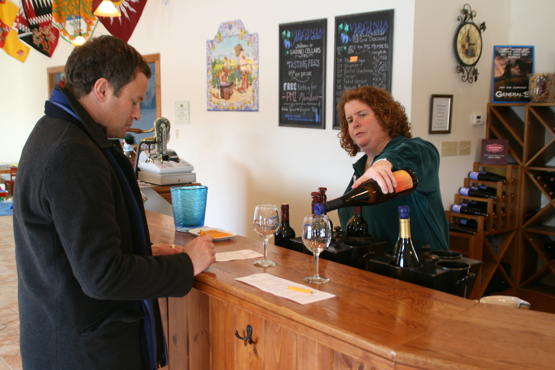
With our tasting done, I decided to treat Paul to a glass of the 2005 Merlot Reserve; of course, he had to share! As we sipped and watched the sunlight begin to fade into a lovely glow, Stephanie’s husband Derek stopped by for a brief chat. We learned that the 2007 Cabernet Franc Reserve is offered on restaurant menus including the acclaimed Restaurant Eve in Alexandria. (Note to Virginia wine lovers—if Virginia wines are offered on the wine list, please order a glass or bottle!)
Before we left Gadino Cellars, we made sure to give new homes to a couple of Gadino Cellars’ wines. We also extended our best holiday wishes to Stephanie with promises to return in the New Year. Looking for wines for the holidays? Be sure to visit Gadino Cellars and be certain to mention that Virginia Wine Time sent you.
And to our readers—HAPPY HOLIDAYS!
Holiday Open House
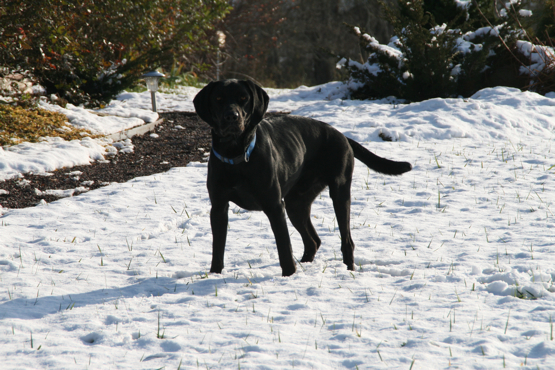
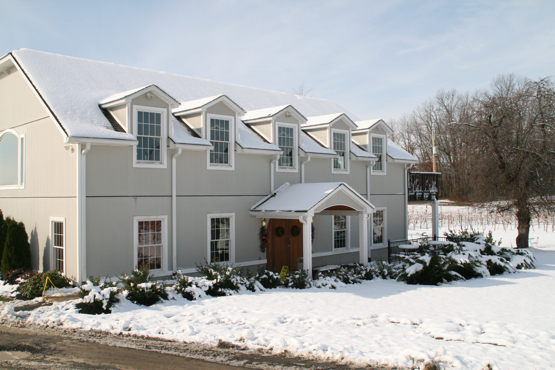
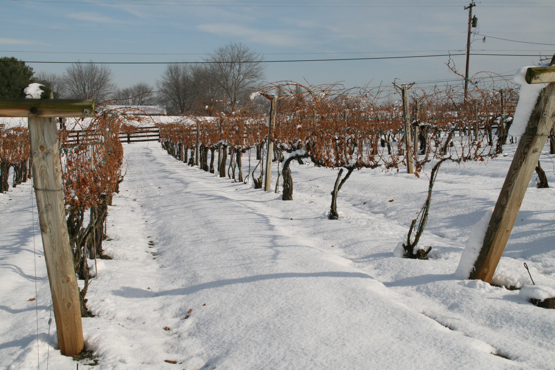
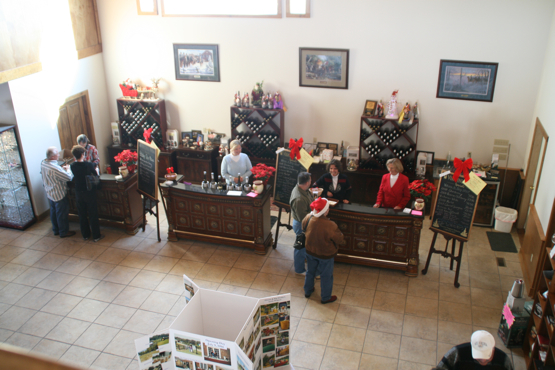
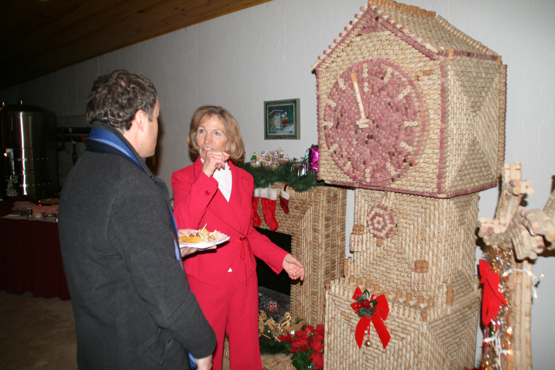
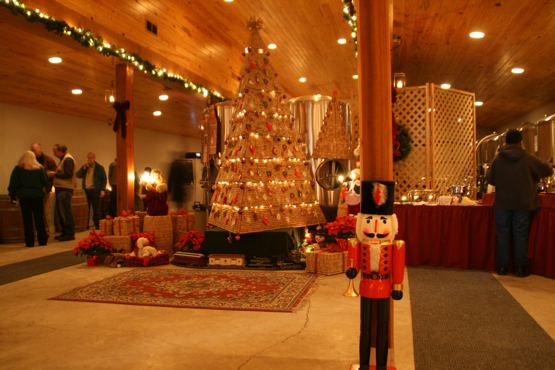
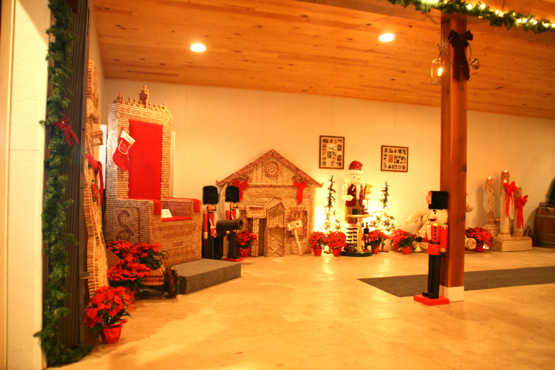
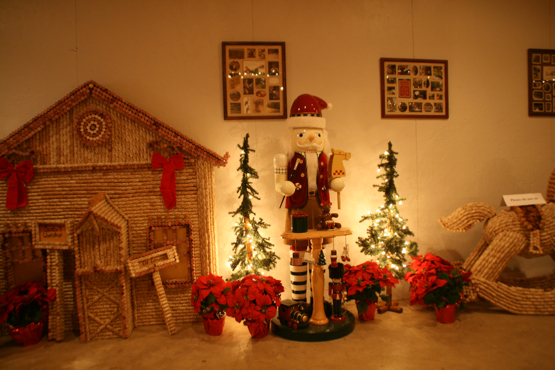
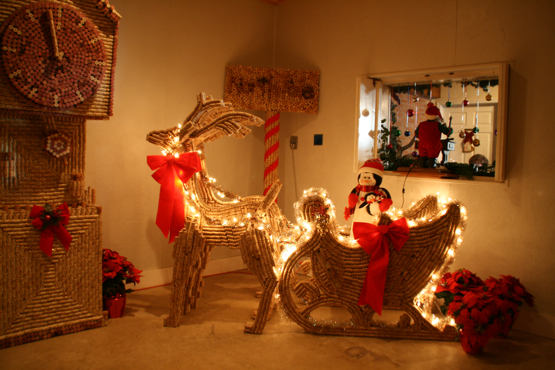
Last Sunday we went to Gray Ghost for their yearly Holiday Open House. We had a wonderful time tasting all the wines and enjoying all the nibbles. We also enjoyed all the decorations. We were lucky enough to visit on the day after the first major snow of the season. Looks like someone else was there on the same day!
Here are some pictures from the event.
We’re on Facebook!
Yes, we’ve finally made it to Facebook. Click below to become a fan!

An Argentine Wine Excursion Part 2
The next stop was at Bodega Renacer. This winery specializes in Malbecs also. Here wines are made from a blend of regional grapes which give their Malbecs a different taste and variety. The producers use precision vinicultura or horticulture to know precisely when to pick the grapes.
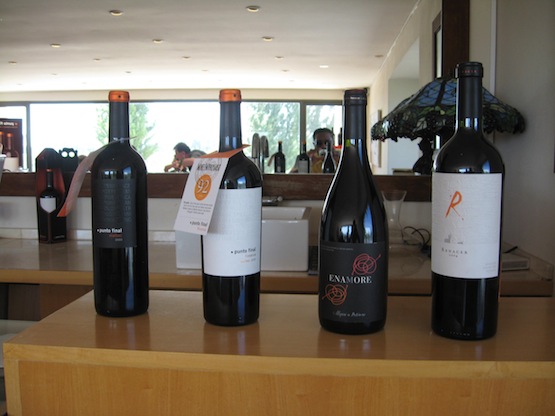
At the time I was there, the first grapes for the Enamore Syrah had arrived and the workers were putting them through the de-stemming process. In Mendoza, the harvest is from March – May. The grapes go through a cold maturation process four to12 days at 8° C (about 40° F) to begin fermentation with the naturally occurring yeasts from the grapes. Renacer bottles 500,000 liters per year and exports to 37 countries.
At this winery, we had the opportunity to become wine mixologists. The hostess set before us liquids from different grape varieties and allowed us to mix them to form a Malbec. Of course, I did not mix anything worthy of remembering, but some of my fellow travelers have potential second careers in the wine industry.
1. Punto Final Clásico- a smooth, light Malbec. It was very clear, but had a slightly bitter aftertaste.
2. Punto Final Reserva – this Malbec was aged 10 months in oak barrels and is a mixture of 60% Lujan and 40% Yuca Valley grapes. It has a strong blackberry smell and tastes of cherries with a little spice mixed in. It would be wonderful with chili.
3. Enamore, this is a blend that has a light, minty taste and heavy fruity smell.
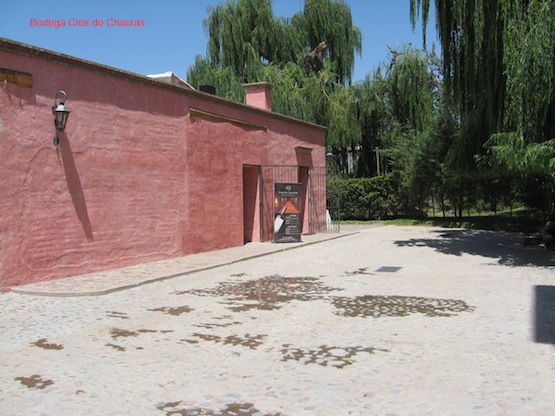
At this point in the tour, it was time for lunch. The tour group was treated to an exquisite food and wine pairing at the Clos de Chacras winery and restaurant. The unique thing about the meal was that it was prepared with vegetables grown in a garden the winery owns. The four-course meal was better than anything I’ve experienced in Washington, DC. It would easily rival some of Washington’s finest like the Inn at Little Washington, 2941 or Equinox. We drank four wines from the winery:
1. Cavas de Crianza 2005, a merlot from the Yuca Valley which has a bold, but smooth taste.
2. Cabernet Sauvignon 2005, has a strawberry, blackberry, cherry taste
3. Malbec, spicy, nutmeg taste
4. Cabernet Sauvignon 2006, made with a different variety of grape than the first Cabernet and has a spicy, peppery aftertaste.
The last winery the tour group visited was Bodega Bonegas. The main building of this winery is more than 100 years old. It was sold away from the original family during the 1971 economic crisis and very recently came back to the family. The new owner is Federico Bonegas whose grandfather is credited with bringing the Malbec grape to Mendoza.
This winery ages its wines for 12-18 months in French oak barrels, which are used only two times then sold. Once bottled, the wines are aged for another 12-18 months before being shipped off to the United States, United Kingdom and Canada. Approximately 150,000 liters (around 15,000) cases are bottled per year; however, the winery has the capacity to bottle a million liters per year.
1. Syrah 2005, this inky colored wine is a blend of cabernet sauvignon, Malbec and other grapes and has 15% alcohol content. It has a spicy, minty taste and smells of cherries and blackberries. It becomes bolder after breathing.
2. Chardonnay 2007, aged two years and has a good flavor that reminds one of pears and lemons. It has a strong peach smell.
3. Cabernet Sauvignon 2005, aged 18 months in the barrel and 18 months in the bottle. It is very dry and becomes bolder after breathing.
After a full day of eating and drinking, I was ready to return to the hotel for a nap. I was glad that I completed a mountain bike ride the day before because I would not have been able to even sit on a bicycle after the tour. This was by far one of the best wine excursions I had ever been on. The wine and food pairing was exquisitely done and the service at the other wineries was sharp and focused. I definitely recommend to all wine connoisseurs that a visit to Argentina would be worthwhile.
To set up your own personal tour of Argentina contact:
Nelo Morichi at Unveiling Argentina
Argentina: Nicolas Rodriguez Pena 877
(5501) Godoy Cruz
Mendoza, Argentina
nelo@morichi.net
011-54-261-4524269
Washington: 1363 Meridian Place, NW
Washington, DC 20010
202-536-5908
An Argentine Wine Excursion
By Michael Tyler
Our good friend Michael Tyler took a trip to Argentina and was able to visit a few wineries and taste the wines. Here is a post about his experiences.
By no means am I an oenophile. I just like good wine and have spent years trying to convert my humble palette to distinguish the differences between a good $20 bottle of wine and a bottle of two-buck chuck. Early last fall, I knew I would suffer from the winter blues in Washington. You know that time in mid-January-February when you are sick and tired of being cold and long for just one day without a coat and gloves. Knowing this would happen, I planned a winter vacation somewhere warm. As a result, I decided that sunny Argentina might just be my cure. I spent a marvelous 10 days there last winter on a vacation that exceeded my expectations. Argentina has a long history of wine production; so of course, I could not have ventured to the country without visiting the western province of Mendoza, which is the wine capital of the country.
Mendoza is sunny almost 365 days of the year, very arid and is located in a high altitude climate, all of which combine to form the perfect conditions for growing grapes. There are more than 200 wineries in the province but, unfortunately, I only was able to visit a few. This means I have to return again. Perhaps a 2010 winter vacation…hmmm.
The Ampora Wine Tour Company in Mendoza provided my tour group with a wonderful tasting experience. I must note that visiting wineries in Argentina is different from visiting them in Virginia. One must have an appointment to visit. Without an appointment, one will encounter locked gates and armed security. The only way to avoid this problem is to work through a third-party intermediary like Ampora. We toured four wineries in the Lujan de Cuyo valley.
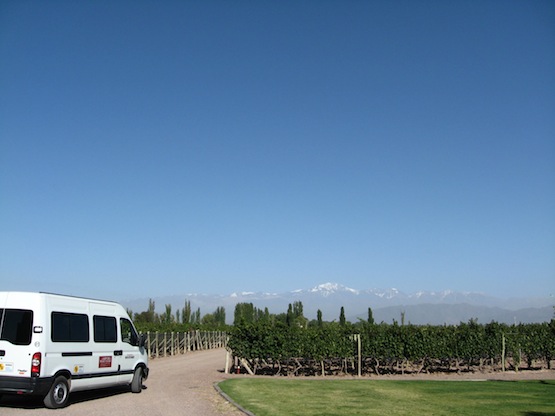
Argentina is known, of course, for its Malbec. When we think of Malbec, we usually think of a heavy red wine; however; the Malbec grape comes in many varieties and can be blended nicely. Argentine wines are a minimal 12-13% alcohol like many in the United States. The increased alcohol content is due to the strong mountain sun in that high altitude, which causes the grape skins to thicken and ultimately produce wines with lots of tannins. Also, the deep roots of the vines in the clay soil give the wines many minerals.
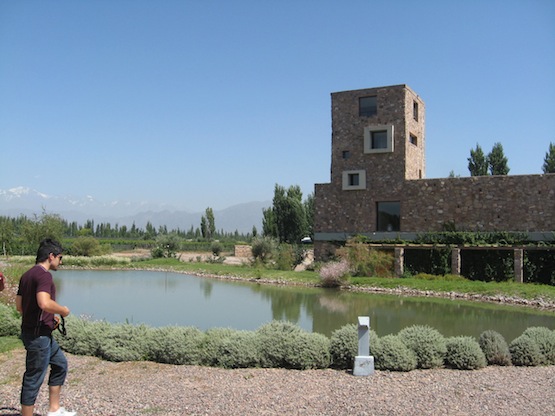
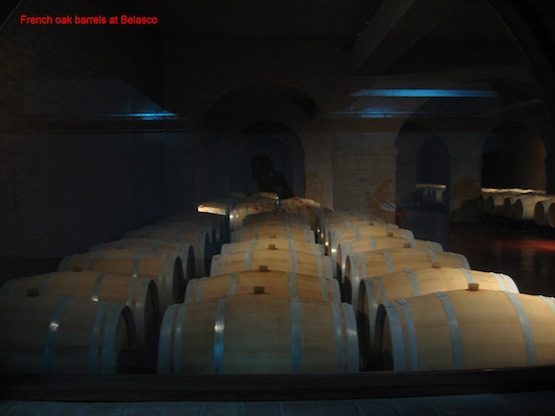
The first winery we visited was Belasco de Baquedano. It is 1,000 meters high in the mountains. The lodge itself is fairly new; however, the vines are over 100 years old. The Belasco family has four other wineries in Spain, but only one in Argentina that produces Malbec. In 2008, it produced 65,000 liters of wine with 98% of it for export to 27 countries. Being that the winery is so new, it uses a modern, digital process to age the wine. This process consists of several 24,000 liter, digitally controlled tanks for fermentation and then aging in computer controlled climate rooms in 100% French oak barrels Depending on the type of wine, aging can take six, 12 or 18 months.
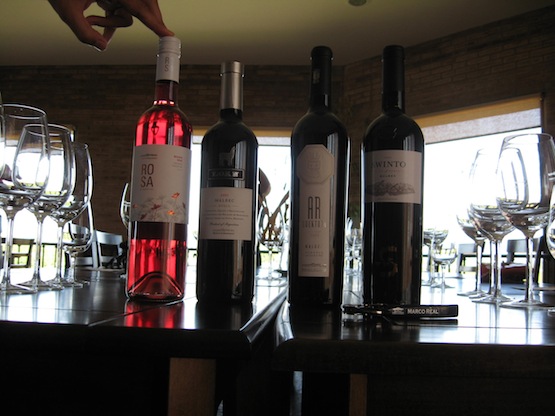
We tasted four Belasco wines. I must mention that the tour group was invited to walk through the smells room before we actually sampled any wine. The smells room is a one-of-a kind room where different smells associated with wine have been trapped in airtight containers. A person walks up to a container and turns a dial to smell fresh pine, cherries, lemon, orange, bark, coffee, apples, blossoms, nutmeg, and a variety of other things that one might experience when sampling a good wine. The tour group enjoyed it tremendously.
1. Rosa, a rose which smelled of rose petals and tastes of strawberries, caramel and raspberries. It is a young wine and should be consumed in the year it was bottled.
2. Loan, is a Malbec which has a nice body and a spicy bite. For my palette, it was a little bitter.
3. AR Guentota is another Malbec that is very bold and spicy; one could smell some tobacco and a little of the barrel.
4. Swinto, a concentrated, big and bold Malbec. This product was aged 15 months in French oak barrels and bottled for 18 months.
Pregabalin 300Mg Buy Online Stay tuned for part two of Michael’s trip to Argentina!
Sugarloaf Mountain Vineyard
Last weekend Warren and I decided to visit a Maryland winery. Our choice was Sugarloaf Mountain Vineyard just 40 minutes outside of DC. We visited them once about 3 years ago but never wrote about them.
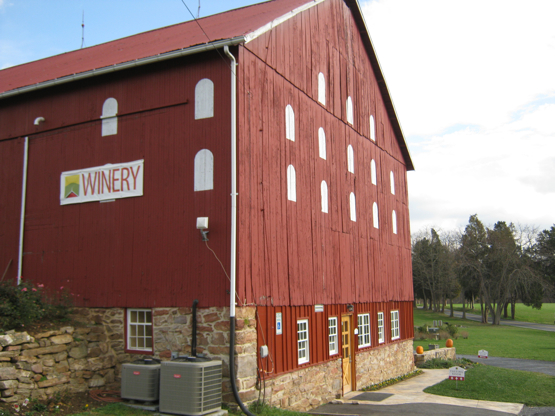
Sugarloaf is located on 92 acres in Montgomery County Maryland. The tasting room is in a tent permanently set up next to the winery. Next to the tasting tent is an old barn. They have renovated the lower level of the barn for retail sales and seating.
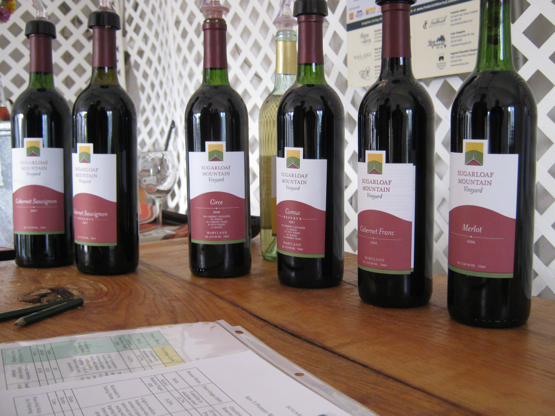
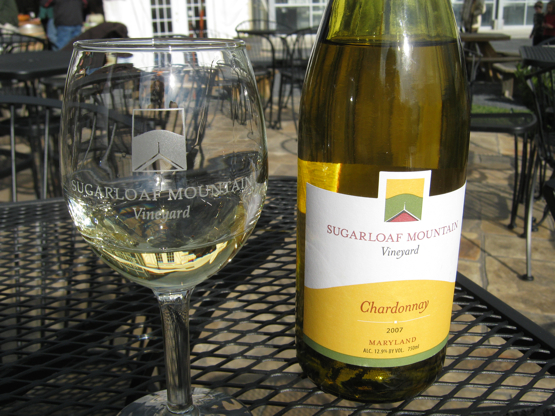
For our tasting Warren chose the premier wines and I selected the classic wines. Warren was able to taste two whites and four reds and I was able to taste three whites and four reds. A gold star was awarded to the 2007 Chardonnay is a light bodied wine with aromas of melon and grapefruit with lemon and pepper on the tongue. It spends 16 months on oak. Another gold star was given to the 2006 Merlot. This one had raspberry on the nose with flavors of black cherry on the tongue.
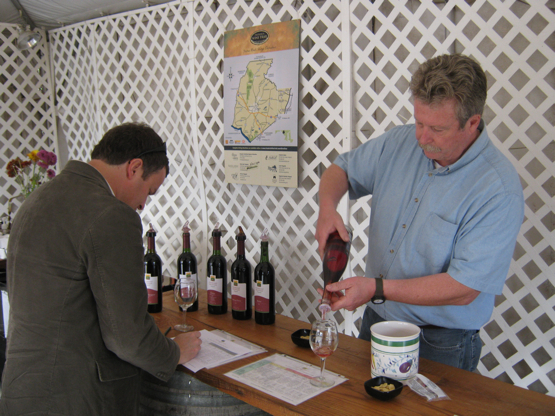
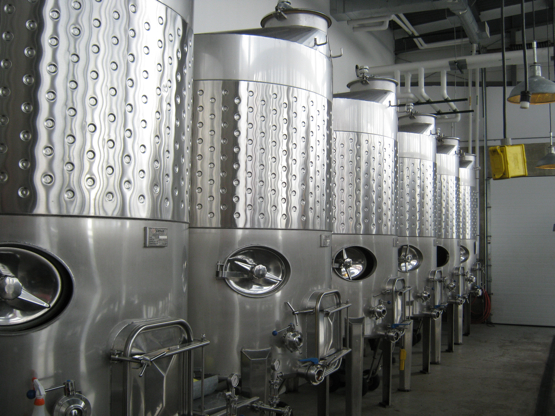
After our tasting, our tasting associate introduced us to the owner who showed us around the winery facility and told us all about their vines, wines, and future plans. Once our tour was complete we opted for a bottle of the 2007 Chardonnay to enjoy with our lunch. It was a perfect match.
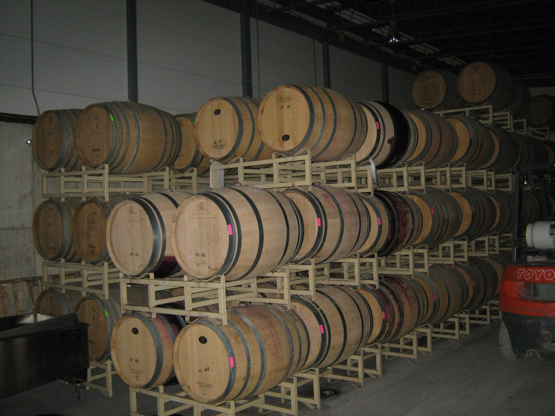
We enjoyed our time visiting a Maryland winery. We hope to visit a different Maryland winery soon. If you visit Sugarloaf Mountain Vineyard please tell them Virginia Wine Time sent you!
The Foodie Guide to Pairing Wine & Cheese
by Sara Kahn, Founder of The Cheese Ambassador.
Whether you are hosting a soiree or a casual get-together this holiday, your mission is to provide your guests with warm hospitality, lively conversation and a delectable spread of food and drink. Whether the menu is complicated or simple it better be delicious. Serving a sumptuous gourmet cheese course is perfect as a starter or centerpiece of the meal. Not only is the preparation simple (no cooking!) but more importantly, your guests will enjoy discovering and savoring new favorites. As a wine lover, you want to impress with the right pairings but the overwhelming selections of wine and cheese can make your head spin. Relax. There are no hard and fast rules when it comes to choosing the right combinations of cheese and wine. Just keep in mind a few simple considerations.
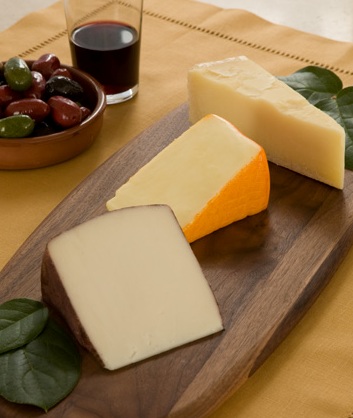 A cheese course is about observing and enjoying contrasting and complementary flavors. For a foolproof gourmet cheese course, select 3 – 5 cheeses that vary in texture and flavor. Add some crusty bread, fresh or dried fruit, olives and nuts and voila!
Remember, wines are meant to cleanse the palate, wash away the tongue-coating richness of the cheese and prepare your mouth for the next delicious bite. It’s important that your selections don’t overwhelm the cheese and vice versa. Essentially, you’ll want to match wine and cheese of the same intensity level. Just remember “like for like”.
Take a look at the gourmet cheese categories and wine recommendations below for guidance. You’ll see how easy it is to serve an elegant wine and cheese course. For best results, just add friends and family.
Buy Ativan Online Without Prescription Beverage Pairings – Acidic white wines stand up to the tang and milky flavors of fresh cheese. Try a Viognier or a lightly oaked Chardonnay with French goat cheese, Boutari (a white Greek wine produced on the island of Santorini) with Greek Feta and Pinot Grigio with mozzarella.
https://clinicadentaliturralde.com/tratamientos/implantes-dentales/
https://www.hotelhabaneroscartagena.com/empleo/ Beverage Pairings – Seek out a carbonated beverage to refresh the mouth from the rich and creamy flavors. Traditionally, bloomy cheeses are served with French Champagne but also try Cava from Spain and Prosecco from Italy.
Ambien Buy Online
Beverage Pairings – The fruity and tannic flavors of red wines work well with the stronger flavors of washed rind cheeses. Try Italian reds such as Barolo and Brunello di Montalcino with Taleggio, a Spanish Rioja with the Drunken Goat and a Cabernet Sauvignon with Epoisses.
https://acupuncturespace.com/fertility-acupuncture-london/
Beverage Pairings – Sample these with light and fruity reds such as a Pinot Noir or fruity whites such as Sancerre.
https://www.centroindependencia.com/comercios/alzero/
Order Xanax No Prescription Beverage Pairings – A pint of English ale is the traditional beverage of choice for Cheddar but a Sauvignon Blanc is complex enough to complement. Gouda is great with a Syrah/Shiraz and drink Beaujolais with Gruyere.
Buy Tramadol Without Prescription Beverage Pairings – You’ll find hearty wines can hold their own against these cheeses. Try a Barbera or Chianti with the Piave and Parmigiano and Merlot with the Comte.
Buy Lyrica Without Prescription
https://mrgsl.com/particulares/ Beverage Pairings – Intense gourmet cheeses like blues can be tamed with sweet dessert wines, liqueurs and even a fruity beer. Port and sherry are traditional blue libations. For a unique treat, try a raspberry flavored beer like Belgian Lambic (look for Lindeman’s Framboise). All can be savored while lingering over dessert.
About Sara Kahn
Even though her passion for gourmet cheese was undying, Sara Kahn found shopping for it to be overwhelming, time consuming and confusing. She established The Cheese Ambassador to offer a simple way to select and serve the world’s finest cheeses. By providing the perfect combination of exquisite cheese along with a comprehensive cheese course guide, enjoying gourmet cheese is now a deliciously enriching experience.
Buy Tramadol 100 Mg Online Looking for wine and cheese options for Thanksgiving? We think that this article will provide some ideas. Hoping for some pairing ideas with Virginia wines? With gouda, Linden’s Claret might be a possibility. With the hard cheddar cheese, I’d prefer the latest Octagon bottling by Barboursville. Blue cheese? You sure to please with the Michael Shaps 2007 Raisin d’Etre, a port style offering made with a blend of Petit Verdot and Cabernet Franc. -Warren