Drink Local Wine Comes to Maryland

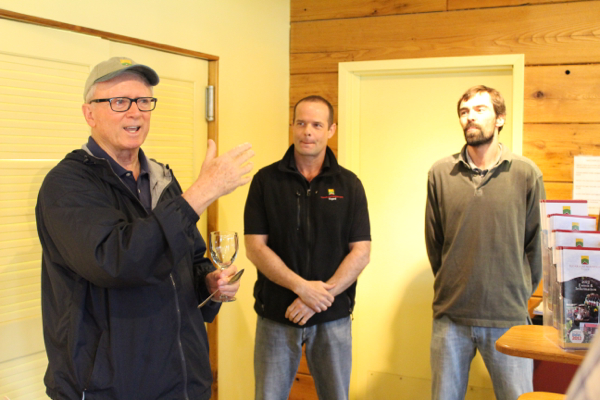
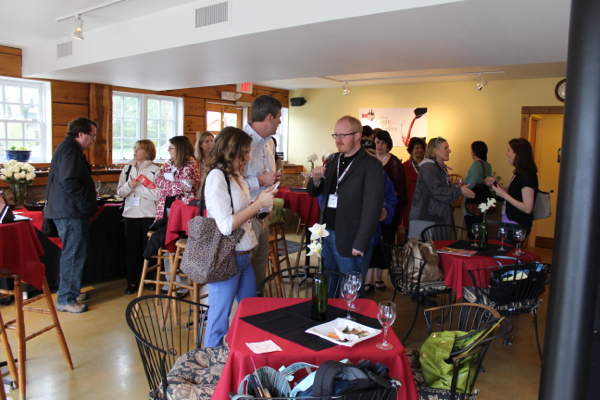
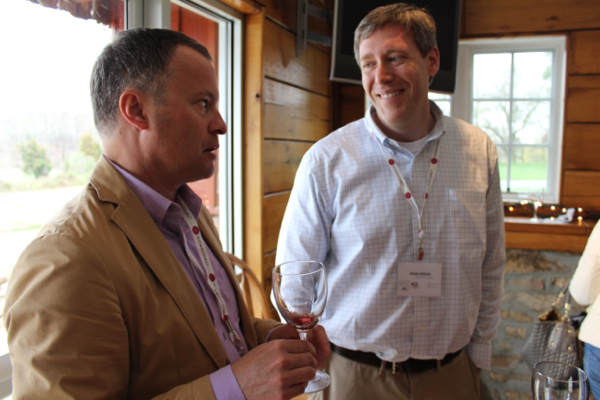
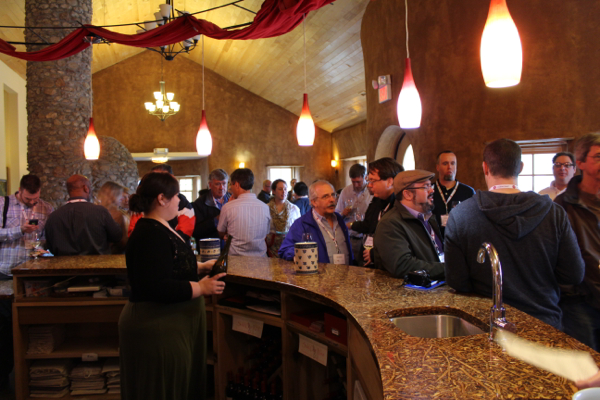
dlw-drink-local-wine-logoDrink Local Wine, established in 2008 by Jeff Siegel of The Wine Curmudgeon and Washington Post wine columnist Dave McIntyre, held its fifth annual drink local conference in Maryland on April 13. In previous years the conference was held in Texas, Virginia, Missouri and Colorado. We attended the event and concluded that it was a wonderful way to showcase the great strides made by Maryland’s winemakers. The next two posts will capture the highlights of the conference that culminated in a twitter tasting held at Camden Yards.

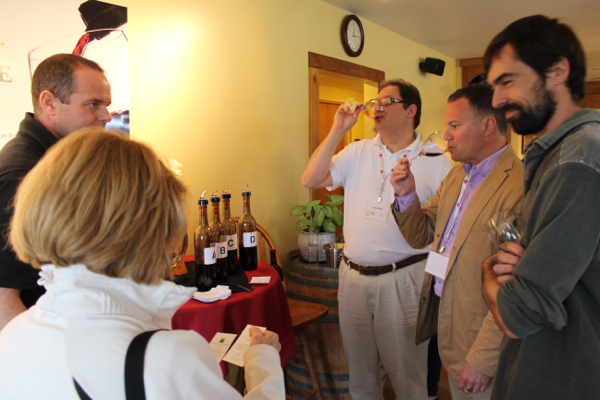
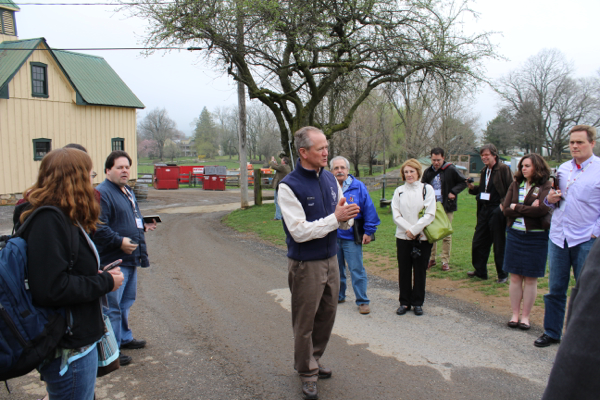
Our participation in the conference actually began with a media tour of Maryland wineries on Friday, April 12. We boarded a bus with other bloggers, columnists, and writers from the Tremont Suites Hotel in Baltimore. Our first destination was Sugarloaf Mountain Vineyard located in Dickerson, Maryland. Winemaker Benoit Pineau was on hand to conduct a tasting of Sugarloaf’s wines; however, Elk Run Vineyards’ representatives were also on hand to likewise showcase their best wines. A buffet of cheeses, olives, breads and deli meats were offered for enjoyment. Favorites included the 2011 Comus, a lush Bordeaux blend created in a difficult year. Yes, Maryland got the same copious amounts of rain in 2011 that plagued Virginia that summer. My ultimate favorite, though, was the 2010 EVOE!, so named after the excited cries of ancient Bacchanalians to honor the god, Bacchus. In a contrast of seasons, the 2010 EVOE! was more dark-hued and complex. Like Comus, it is a Bordeaux-style blend. From Elk Run, I enjoyed the Alsatian-styled 2011 Gewurztraminer. Tours were offered, and an added treat was the ability to vote for an upcoming release. Benoit Pineau asked us all to sample four red wine samples and then to vote on a favorite, and these included a Cabernet Franc, a Merlot, a Cabernet Franc (75%) and Merlot (25%) blend and then a Merlot (75%) and Cabernet Franc (25%) blend. These were all from the 2012 vintage. My vote? The Cabernet Franc/Merlot blend. Benoit will be the ultimate judge on which will be finally bottled, but I will definitely follow up to see if I picked the winner!
DLWDay115
DLWDay114
DLWDay113
DLWDay112
DLWDay111
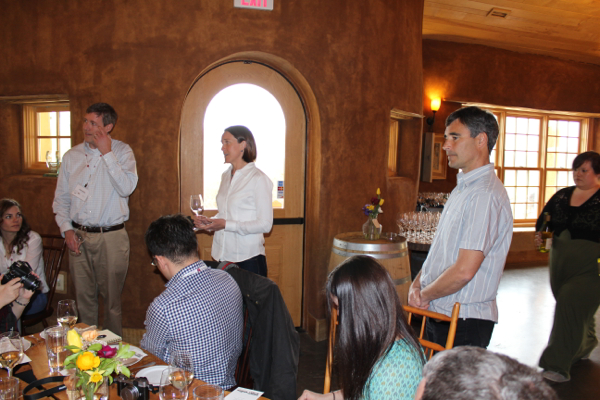
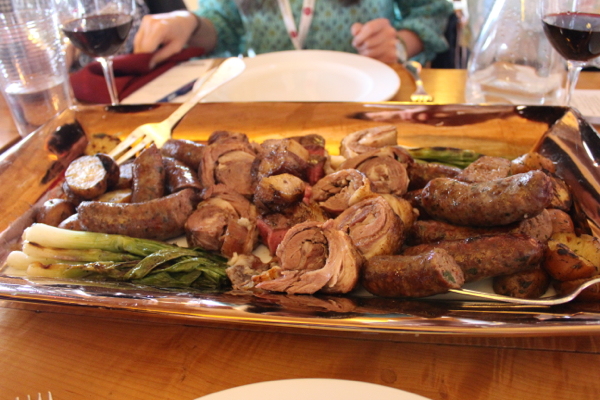
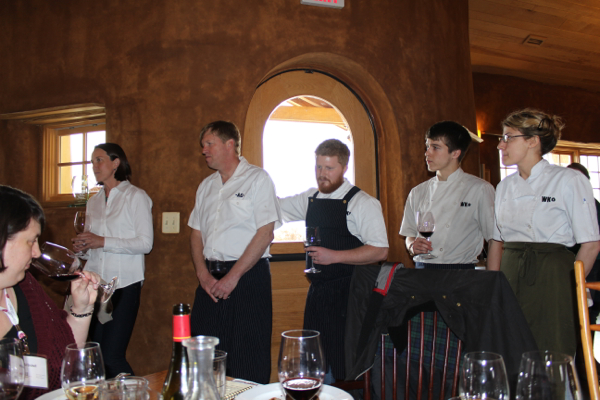
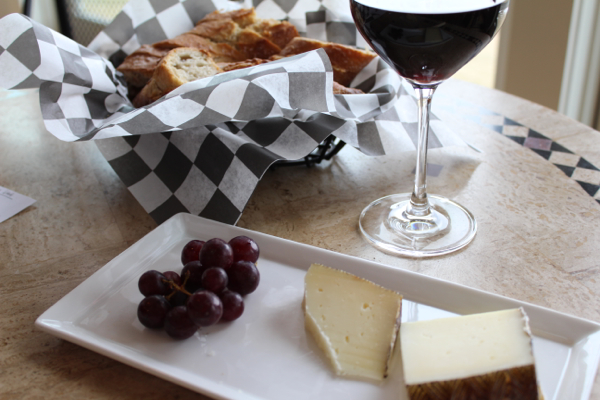
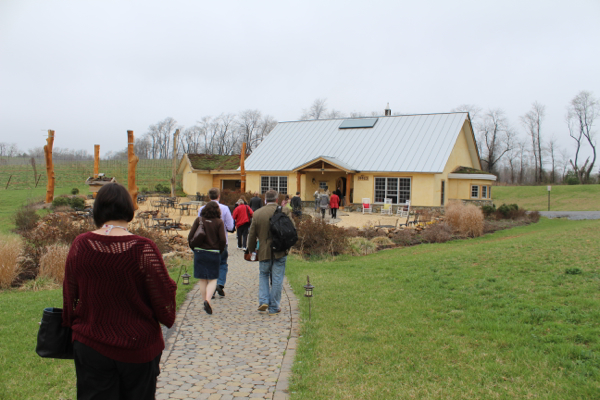
By lunchtime, it was time for the press junket to leave Sugarloaf Mountain Vineyards; our next destination was Black Ankle Vineyards in Mt. Airy. Did I mention lunch? It was here that we were treated to a lunch prepared by Woodberry Kitchen of Baltimore, a restaurant devoted to eating and drinking local. We were greeted by a glass of an outstanding 2012 Gruner Veltliner (yes, Gruner in Maryland) that complemented seasonal tartines. Lunch began with a warm greeting from owners Ed Boyce and Sarah O’Herron. They gave a brief synopsis of their story and the decision to make wine in Maryland. The couple opted to purchase farm property with the rockiest, least fertile soil possible; not good for corn or tomatoes, but great for a vineyard. Anyway, we tasted the excellent results of their decision. With grilled Chesapeake oysters we sipped the floral 2011 Bedlam, a blend of Chardonnay, Albarino, Muscat, Viognier and Gruner Veltliner. Wheat berry salad with radishes, pea shoots and pecans was paired with a berry-driven 2010 Rolling Hills, a red blend that included all of the Bordeaux grapes. The main event, though, was a platter of whole Maryland Suffolk grilled lamb, lamb sausage, scallions, and potatoes. The lamb was indeed fresh and local; Woodberry Kitchen’s George the Butcher butchered the lamb, and it was absolutely divine. Equally divine was the 2010 Leaf Stone Syrah with its elements of tobacco, dark plum, and blackberries. (This was my favorite pour of the day.) A dessert course rounded out our dining experience, and we were served Beiler’s Heritage Acres cornflour cake made from locally produced flour. This was partnered with a port-style Terra Dulce II.
DLWDay110
DLWDay109
DLWDay107
DLWDay108
DLWDay106
DLWDay105
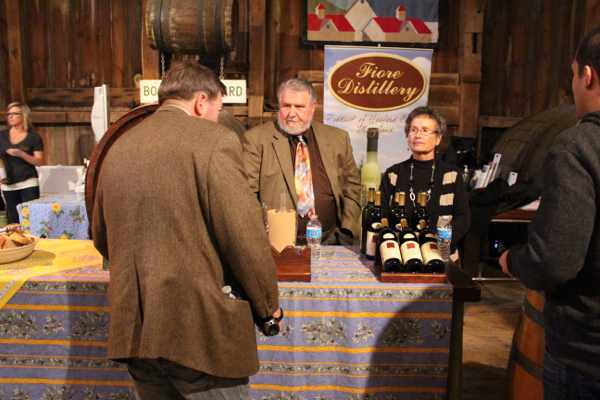
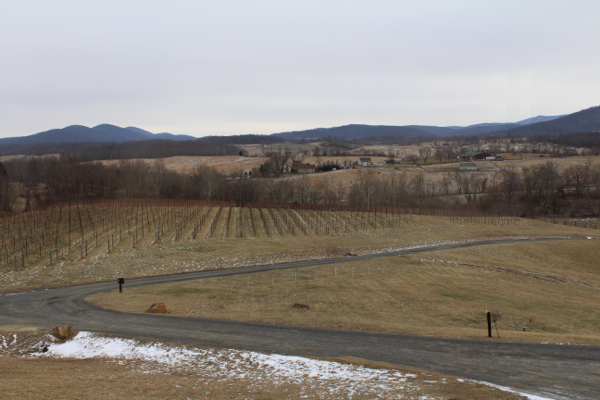
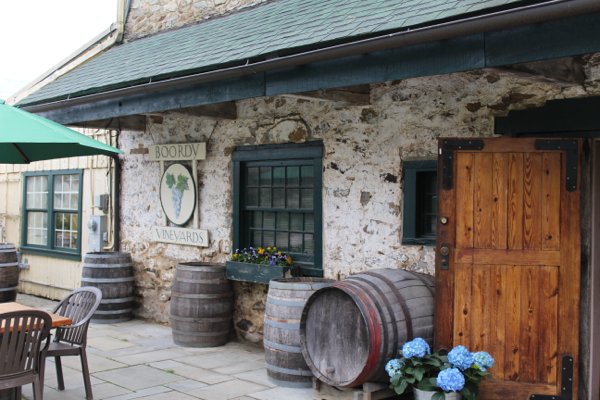
With our appetites satisfied, we departed for the last leg of our tour that concluded with a visit and tasting to Boordy Vineyards located in Hydes, Maryland. Vineyards here are nestled in the Piedmont Plateau and the Blue Ridge Province. Robert Deford greeted us and provided a brief history of the winery. Boordy Vineyards is the oldest commercial winery in Maryland, and Philip and Jocelyn Wagner established the winery in 1930 to protest Prohibition. Deford bought the property in 1980; however, he replanted the vineyard in 2005 to maximize its potential to produce world-class wines. We tasted the results in the tasting room. The buzz-worthy wines were the rich 2010 Cabernet Franc Reserve and the 2010 Landmark Reserve, an award winning blended red wine. Also on hand to pour their wines was Cygnus Wine Cellars and Fiore Winery. Fiore Winery offered two grappas, and these were an interesting twist to the traditional line up of white, red and dessert wines.
DLWDay101
DLWDay104
DLWDay102
DLWDay103
The day ended with a dinner at the Waterfront Kitchen in Fells Point, an event hosted by the Maryland Department of Agriculture and the Maryland Wineries Association. Yes, more food and wine. However, I will provide details about this experience in the next post. Before I sign out, though, I must thank Nomacorc for sponsoring the very comfy bus that took us hither and yon. I’ll write more about Nomacorc in a future post.

Start your own tours of Maryland wineries soon. The wineries mentioned in this post are great places to begin. Just mention that Virginia Wine Time sent you!

Italian Bubbles

I attended a tasting of Lombardy’s version of bubbly from Franciacorta. The tasting was held at the Capital Wine School and conducted by Michael Franz, a local wine writer, educator and consultant.
wineschool
Readers may recall that I have tasted sparkling wines from Franciacorta in the past as part of a Taste of Lombardy event in DC. However, this particular tasting focused exclusively on Franciacorta. So what did I think? Well, I’ll first provide some background about Franciacorta and the wines that is produces. Franciacorta is located in northern Italian region of Lombardy; in particular, in the foothills of the Alps. Still wines have been made in this region since the 1500s; sparkling wines, though, have been produced within the past 50 years. Franciacorta sparkling wines are produced from Chardonnay, Pinot Noir, and Pinot Bianco. The styles range from Saten (blanc de blanc), Rose, Vintage, and Reserve. In Virginia, reserve wines are those that the wine maker deems to be deserving of the reserve label. In Italy, though, it is not that simple. Italian laws dictate which wines can classified as reserve wines, and in Franciacorta, reserve wines (labeled Riserva) are those that stay “on its lees for a minimum of 60 months.”

So what did we taste, and what did I like? We sampled five sparkling wines from Franciacorta, and they included the Ricci Curbastro Saten 2007 ($40), Bellavista Cuvee Brut ($40), Ricci Curbastro Brut ($36) Montenisa Brut Rose ($38), and Bellavista Grand Cuvee Rose 2007 ($65). The Saten was described as a consumer category wine and one that would appeal to an American market. I would compare it to the least favorites of the Virginia sparkling tasting—very fruity with limited acidity and a few bubbles. It suggested sweetness, and I thought of Sunday brunch at a non-descript café. However, the NV Bellavista Cuvee Brut stepped forward to show off what this region can produce. This one spent seven months on oak and was crafted from grapes of several vintages. Fruit elements were more delicate and nuanced; yeasty notes, a firmer mid-palate structure, and bright acidity resulted in a more classic sparkling wine. Exceeding this one was the Bellavista Grand Cuvee Rose 2007, reserve made from both Chardonnay and Pinot Noir. Recall the definition of reserva—it stayed on the lees for a minimum of 60 months; more finesse and better balance were my top descriptors. Not to be outdone, though, was the Montenisa Brut Rose with its strawberry aromas, bready notes, and refreshing acidity. The Ricci Curbastro Brut rated above the Saten but below the other three sparkling wines.

So its NYE and I have a house full of guests. Which Franciacorta sparkling wine do I chill? For $40 it was tough to beat the Bellavista Cuvee Brut. Let’s say it’s a tenth year anniversary or some other very special occasion; then I would vote for the Bellavista Grand Cuvee Rose. At $65, it was on par with Champagne wines (and perhaps a few bucks less.)

This was certainly a nice, intimate tasting with a handful of industry folks who were far more knowledgeable than I. Michael Franz was indeed the expert on the Franciacorta region; in fact, he explained that global warming might be playing a role in that region’s ability to produce quality sparkling wines. This phenomenon has been observed in Champagne, and Franciacorta may be on the verge of adjusting its regulations on where grapes intended for sparkling wines can produced. Franciacorta sparklings are now made from the region’s cooler climates; however, there is a concern that warmer temperatures at these altitudes may produce flabbier wines; therefore, new regulations may require that these grapes be grown at a higher altitude. (Climate change and the impact on wine regions is itself a fascinating topic.)

I also had the pleasure of meeting Jay Youmans, the master sommelier who has revolutionized the judging at the Virginia Governor’s Cup. He is the managing director of the Capital Wine School in Washington DC; in particular, it is near the Friendship Heights Metro. The school offers a number of courses that range from winetasting 101 to master-level, and I may just check out some of these courses for my own enrichment.

Conduct your own tasting of sparkling wines and toss in some samples from Virginia and Italy. Can’t find them at the local wine shop? Ask the manager to stock them. Want to know more about wine tasting? Take a class at the Capital Wine School. Of course, mention that Virginia Wine Time sent you.

Cleve, Barrel Tasting, and More at Philip Carter

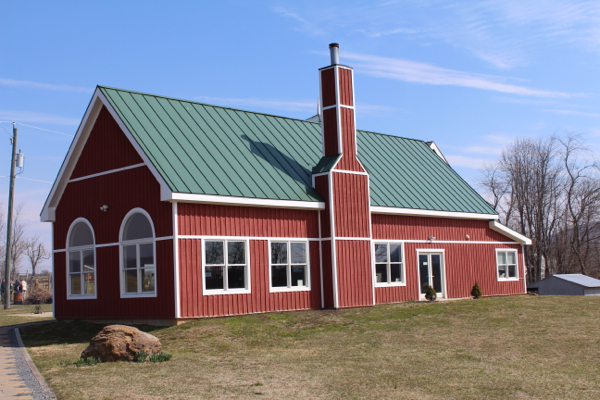
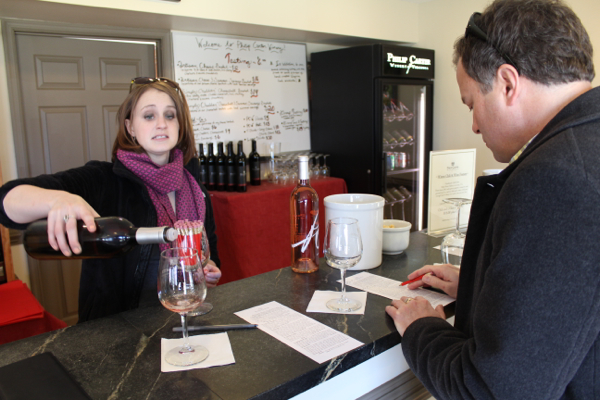
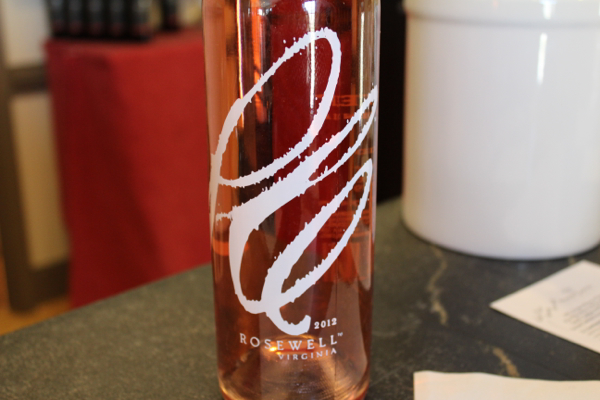
The last weekend of March was very chilly, but that did not deter us from partaking in a barrel tasting at Philip Carter Winery. We also got to sample the very special 2010 Cleve and the newly released 2012 Rose called Rosewell. An extra highlight of our visit, though, had to be the personal barrel tasting conducted by winemaker and native Virginian Jeremy Ligon.
carterphilip5
Our purpose for visiting Philip Carter Winery was indeed to sample the 2010 Cleve. Why? It just won a gold medal at the Virginia Governor’s Cup, and we are determined to try each gold medal winner as they are released to the public. The Cleve line is usually a blend, and this award-winner was a 50-50 mix of Tannat and Petit Verdot. The 2010 harvest in Virginia was one for the record books, and we expect this particular wine to age quite nicely. It possessed a smoky nose with dark fruit elements and a bit of caramel to finish; we noted firm tannins too. I purchased a bottle to rest on the wine rack and will serve with roasted meat. However, for more immediate consumption, we enjoyed the 2012 Rosewell, a dry rose wine made from Tinta Cao grapes and named after the Rosewell mansion that became home to one of Robert Carter’s daughter’s, Judith Carter. Floral notes and strawberry flavors along with a crisp acidity make for a wine that is both refreshing and versatile. Stock up on the Rosewell and enjoy during the warmer months!
carterphilip4
carterphilip3
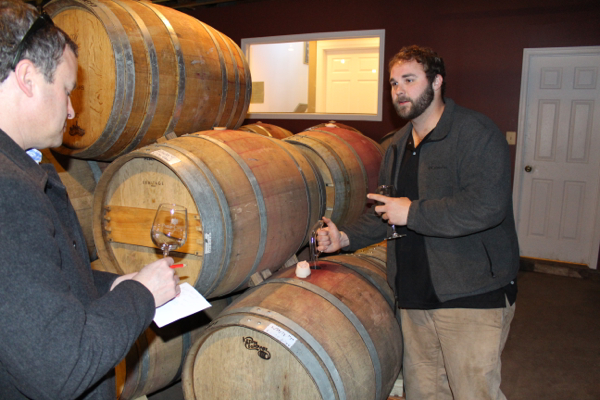
Our visit to Philip Carter coincided with a weekly program during March that featured barrel tastings each Saturday. We just happened to be there on the last Saturday of the program; of course, we just had to participate. Lucky for us, winemaker Jeremy Ligon was on hand to conduct our tasting. Jeremy has been at the winemaking helm at Philip Carter for a year, and he certainly has a vision for Philip Carter wines. We sampled 2012 Chardonnays in both neutral and newer French oak barrels, 2011Bordeaux-style blends, four 2012 Cabernet Francs pulled from both neutral and new oak barrels, and a Cabernet Sauvignon. Jeremy’s goal is to blend the unblended wines to produce more nuanced and complex wines. The Cabernet Franc samples, for example, ranged from soft and fruity to smoky and earthy depending on whether they were aging in neutral or newer oak barrels. Jeremy anticipates blending these to produce more balanced yet complex wines that beg for another sip.
carterphilip2
We also learned from Jeremy that a Viognier will be released this month, and future plantings in the vineyard will include Tannat and Petit Verdot. A follow up to the 2010 Cleve will be a tough order; however, we have no doubt that Jeremy Ligon is up to the task.
carterphilip1
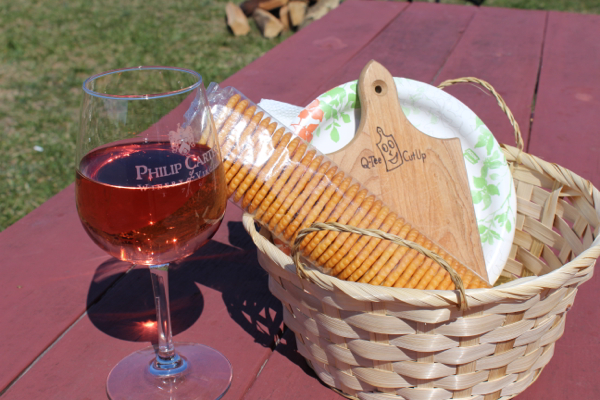
We did linger for a bit at Philip Carter Winery and shared a glass of the 2012 Rosewell. Fire pits warmed the air, so it felt just fine sitting outside and nibbling on cheese as we sipped away. Now that spring is in the air, why not plan a visit to Philip Carter Winery? And when you do, mention that Virginia Wine Time sent you!
Virginia v. The World

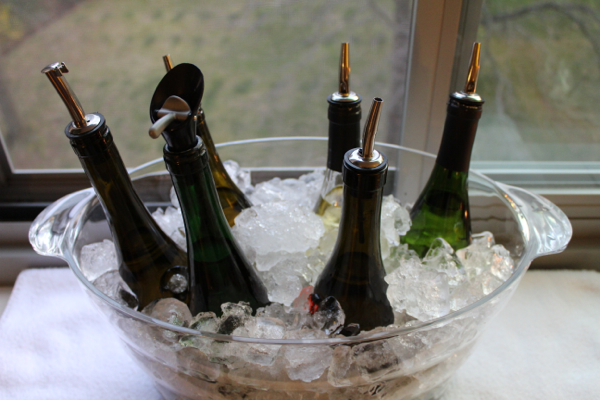
We hosted a wine tasting this weekend for colleagues, and the tasting featured a duel between Virginia wines and wines from around the world. How did I select these wines? I pulled the wines from my wine rack; in other words, I did not get too technical about the matter. However, I did try to pair off similar styles of the same varietals, different vintages of the same varietals, etc. to see which ones earned the most accolades. Tasters were provided with a scoring sheet that provided brief descriptions of each wine, and we started the evening off with a 101 on how to taste wines using the fives “S”es. We then sent tasters off on their own to swirl and sip the wines available for tasting. How did Virginia match up? Here are the results:
vavworld5
White Wines
Riesling: VA Riesling 2011 Ox-Eye v. German 2010 Riesling Kabinett Joh. Jos. Prum
Winner: Germany

Chardonnay: VA 2008 Chardonnay Reserve Gray Ghost Vineyards v. CA 2010 Chardonnay Reserve
Winner: Virginia

Viognier: VA 2010 Viognier Rappahannock Cellars v. France 2011 Viognier Paret
Winner: Virginia
vavworld4
Red Wines:
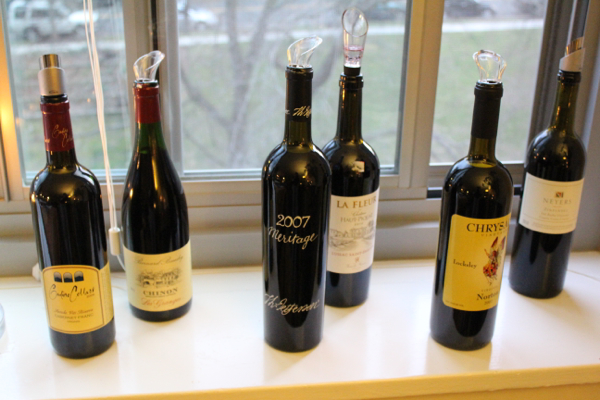
Cabernet Franc: VA 2008 Cabernet Franc Reserve Gadino Cellars v. France 2011 Chinon Bernard Baudry
Winner: Virginia

Bordeaux-Style Blend: VA 2007 Meritage Jefferson Vineyards v. France 2010 La Fleur Chateau Haut Piquat
Winner: France in a nail biter. (The 2010 was opened at least 2 hours before the tasting and then poured with an aerator attached to the bottle.)

Norton/Zinfandel: My oddest contest of the evening. In the past, I’ve tossed California Zinfandels into any tasting involving Norton and with interesting results.

VA 2007 Norton Locksley Reserve Chrysalis Vineyards v. CA 2010 Zinfandel Neyers Vineyards
Winner: Virginia The Locksley Reserve was also opened for about 2 hours, and it initially punched the Zinfandel right in the face; however, with some time, the Zinfandel opened up quite nicely and put up more of a fight. I ended up advising tasters to try the Zin before the Norton. In the end, though, the native Norton prevailed at the ballot box.
vavworld3
Excellent results for Virginia, and I must emphasize the informal nature of the taste off. In fact, the tasting was not even blind; however, few of my guests had experience with Virginia wines. Our goal was to expose tasters to wines and in particular, Virginia wines. The taste off produced lively conversations about wine, and our tasters came away from the experience with more favorable opinions about local wines. (I should also add that in most cases, the Virginia wines were less expensive than their counterparts.)
vavworld1
vavworld2
Why not host your own Virginia v. the World competition? Visit these and other local wineries to plan your own tasting event. Mention that Virginia Wine Time sent you.

Another Take on the 2012 Harvest

jakeJake Busching earned a reputation as an excellent winemaker while at the helm of Pollak Vineyards. He is now the winemaker at a new venture called Grace Estate Winery that will open in April of this year. Grace Estate Winery is also the home of the heralded Mt. Juliet Vineyard that is located in Crozet. The winery is located in the Monticello AVA. We asked Busching to offer an early assessment of the 2012 vintage.

1. How would you describe the 2012 growing season overall?

2012 was a peculiar year; it was an early, yet cool spring, and a blazing hot dry summer, followed by intermittent rains during harvest. I didn’t like it. There were too many odd variables within a given vintage including: 1) too close to frosting early; 2) too close to drought late; 3) July Derecho winds, and 4) too close to hurricane rains on ripe fruit. The plants seemed confused. Timing for bloom was off in the reds. Shoot growth was slow. And overall the cropload was down about 30% based purely on berry size.

2. In particular, how was the season for white grapes?

For the whites all of this strange weather had less effect than I would have thought. The aromatics are rich and the mouthfeel is lush. Acid was lower than I like but that is true in nearly every vintage.

3. And what about the red grapes?

The reds had more of a reaction to the vintage. Tannins are in short supply in almost all of the reds. Color isn’t bad but not as deep as I like due to sun intensity. The wines are good and better than many vintages I’ve worked; time will cure most of my rather exacting concerns. I think on a consumer level the wines will be received as being quite good.

4. What will be the hallmarks of the 2012 wines?

For the wines from Mount Juliet vineyards, Viognier and Chardonnay are both showing very well. The Merlot and Tannat are my top reds this year.

DuCard On The Way Home

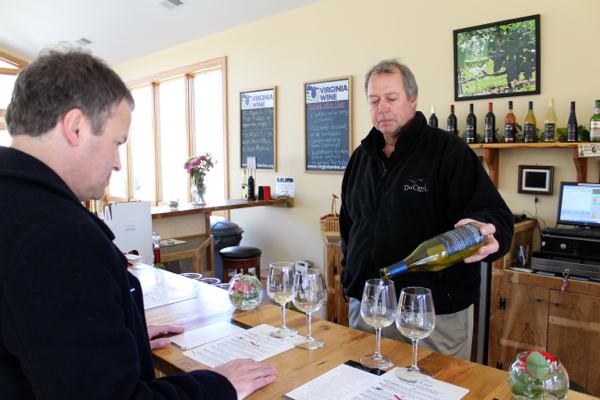
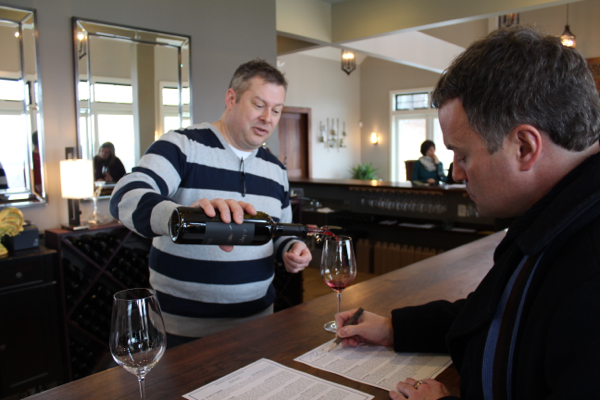
We finished our Presidents’ Day Weekend trip to the Monticello area with a visit to DuCard Vineyards. We first visited DuCard when the winery was newly opened in 2010. Owner and winemaker Scott Elliff was on hand to conduct our tasting on a frigid day.
DuCard3
DuCard Vineyards has made quite a splash with its Signature Viognier with its 2010 version earning accolades at a recent blind tasting held in Richmond. One of the judges was wine expert Steve Spurrier; when the judging was done, the 2010 Signature Viognier scored a tie with a heralded 2010 Condrieu from E. Guigal Vineyards in the Rhone Valley of France. Unfortunately, we have not tasted the 2010 Signature Viognier; however, the 2011 Viognier went toe to toe with the 2012 Viognier that was offered for a side-by-side comparison. My nod went to the very aromatic 2011 Viognier with its peach flavors and bright acidity. The still-evolving 2012 Viognier is destined to find fans; right now, it presents a very fruity nose and palate with a distinct banana note.

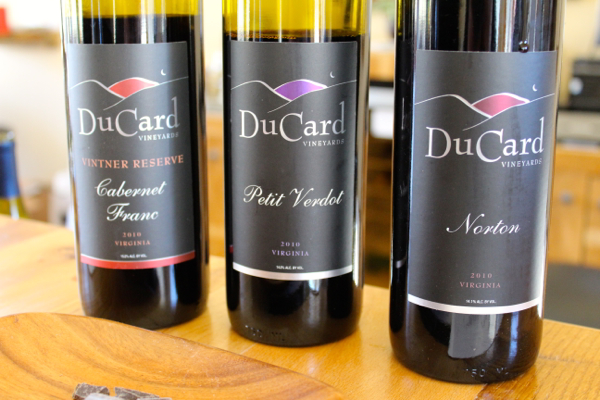
Of the red wines, my favorite was the 2010 Petit Verdot. This Petit Verdot was the product of a hot, dry growing season and presents a very dense color in the glass. I detected a whiff of violet with dark fruit elements that include black currants, dark plums and blackberry. A firm tannic presence suggests aging potential; however, if leg of lamb or thick, juicy steaks beckon for this Petit Verdot, open early or decant. I made certain to purchase a bottle for a future dinner party; of course, future could mean next week or five years from now! In any case, Norton lovers should enjoy the jammy 2010 Norton from DuCard. Paul, though, preferred the lighter bodied 2010 Cabernet France with its brambleberry aromas and flavors and spicy finish. I enjoyed this one too, and it could pair well with herb-crusted poultry or pork; however, I think that it could be enjoyed just by itself either beside a fireplace on a cold day or on the deck on a warmer spring afternoon.
DuCard1
Speaking of a warm afternoon, the 2012 Rose should be a hit in the spring and summer. I like dry roses, and this one was can be considered off-dry with less than 1%residual sugar. This was produced from Cabernet Franc grapes with a splash of Cabernet Sauvignon. Its bright pink color and strawberry nose reminded me that warmer days, fragrant flowers, and lasting sunsets are just around the corner!

Scott Elliff was a very gracious host, and we learned that he remains dedicated to producing limited quantities of quality wine. To celebrate the success of the 2010 Signature Viognier, Elliff will include a copy of the wine-themed movie Bottle Shock with case orders of the 2011 Signature Viognier. Why Bottle Shock? This movie recalled the 1970s judging event that put California wines on the international wine map, and it was Steve Spurrier who hosted it. Spurrier likewise judge the so-called Judgment of Virginia in which Virginia Viognier went up against the best from France. It was the 2010 Signature Viognier from DuCard that showed most brightly!
DuCard2
We made certain to purchase our DuCard favorites and promise to return soon; with spring weather just around the corner, plan a visit to DuCard Vineyards, but mention that Virginia Wine Time sent you.

Michael Shaps Works Wine

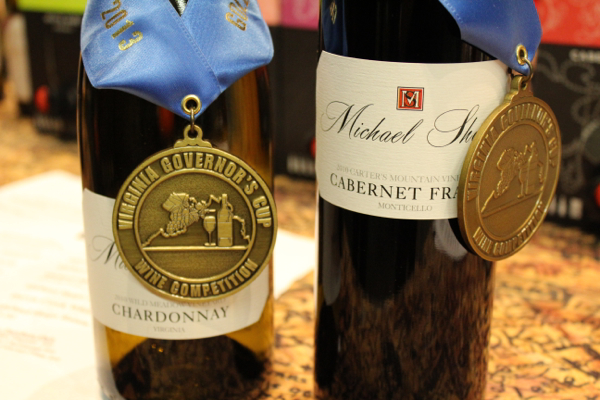
While the title is a twist on Shaps’ Wineworks , it is literally true. Michael Shaps produces wines for his own successful venture, Virginia Wineworks, but he also either makes wine or consults for a number of wineries in the state. This would include the winemaking at Pippin Hill Farm and Vineyards located nearby his Wineworks tasting room. During our recent visit to the Monticello area, we made an afternoon by visiting both wineries.

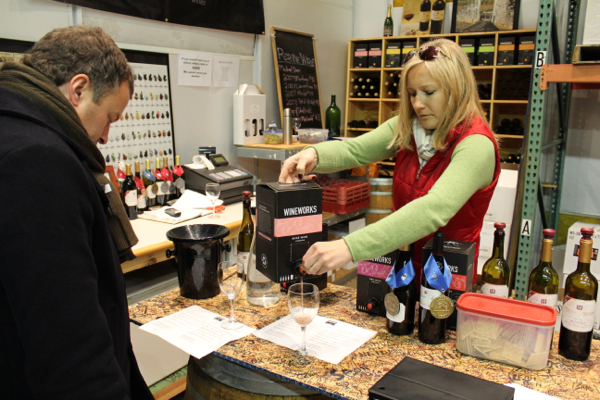
We always enjoy the no-nonsense tasting experience at Virginia Wineworks, and this time around we got to sample wines in boxed containers. Yes, wines in boxes. There is a trend underway to reconsider how traditionally disreputable methods of packaging wine (and that includes screw cap enclosures) are being viewed. However, we’ve had boxed wines from Bordeaux that were very good, and so we tasted the Wineworks boxed wines with open minds. We both concluded that they were very good, and for the amount of wine that they hold (four bottles) well worth the price. The Box Wineworks White Blend is a perfect aperitif; however, Paul favored the Box Wineworks Red, a blend of Merlot, Petit Verdot, Malbec and Tannat. This was a fruity, lighter-bodied wine that is perfect on its own or with simple meals such as meatloaf, grilled chicken, or pork chops.
michaelshaps1
We also got to sample the Michael Shaps-labeled wines, and these are his premium wines. I remain a fan of his Viognier, and the 2009 vintage was my favorite of the white wines. Nice aromatics and a fuller mouth feel make for an elegant wine. However, I also enjoyed the Chardonnay 2008 with its pear notes and creamy finish. Of the red wines, my preference was for the Meritage 2008. Petit Verdot leads the blend at 44% and contributes to the earthy/spicy notes and dark fruit aromas. Merlot (33%) and Cabernet Franc (23%) add elements of cherry and raspberry. Paul favored the Petit Verdot 2009 and its characteristics of black currants, dark cherry, tobacco and pepper.
michaelshaps2
Vintner and wine educator Santa Rava conducted our tasting and expertly answered our questions (which can be numerous). Santa hails from the Sonoma area and is herself a winemaker. The quality of Michael Shaps’ wines and his reputation as a winemaker attracted her to the area in order to become part of the winemaking team at Wineworks. She also share with us that Michael is a full owner of a winery in Burgundy; in fact, Michael and his wife Christie also own and rent a 200-year old home in the winemaking village of Meursault, France. The home boasts two master bedrooms, a large kitchen with a private chef upon request, and heated towel racks. Perfect for a wine-tasting trip to Burgundy, a relaxing European getaway, or a honeymoon—or all of the above!

With our tasting completed, we were ready for lunch and decided to enjoy a bite at Pippin Hill Farm and Vineyards. The focus here is wine, too, and Michael Shaps is the winemaker. Before lunch, though, we had to select a wine to pair with lunch. This, of course, required a trip to the tasting bar. Our favorites? Of the white wines, the 2010 Chardonnay Reserve earned my top honors with its pineapple and pear notes and fuller mouth feel. Paul liked the 2011 Viognier and noted fruity aromas and peachy flavors. The red wines brought us to a joint conclusion—the 2009 Cabernet Sauvignon was our favorite. Smoky notes with cherry, blackberry, and earthy elements made for a more complex yet accessible wine. We opted to enjoy this one with lunch. So what was for lunch? For me, it was the steak frites with parmesan fries; for Paul, it was the homemade pizza. The foods are all the products of local farms, too! A bluegrass trio provided entertainment.
pippinhill2
pippinhill1
Plan a trip to the Monticello area to sample Michael Shaps’ wines, and then enjoy wine and lunch at Pippin Hill. Be sure to mention that Virginia Wine Time sent you.

New Owners, New Vision at First Colony

Our trek through the wine trails in the Charlottesville area brought us to First Colony Winery. A sign that declared, “new owners” intrigued us, and we knew that we had to get the scoop.
firstcolony3
No sooner had we approached the tasting bar, new owners Heather and Bruce Spiess extended their greetings to us. They were also gracious enough to answer all of our questions, too. Heather and Bruce and Jeff Miller had just recently purchased the winery and vineyard; although they live in the Richmond area, they felt a need to rescue First Colony, a winery that had a special connection to them. Their son, Austin, works at First Colony as a vineyard manager, and according to Heather, his hands had “touched every vine on the property.” This personal connection inspired them to purchase the property and to create a new vision for future success.

The first phase of this new vision is to focus on the wines and to improve their quality. Jason Hayman will remain at the helm as winemaker but in a new production facility that will offer an improved environment for winemaking. A special thatched roof will cover the facility to create a unique element. New barrels are already on order, and the vineyards will include new plantings that take advantage of First Colony’s own micro-climate. Bruce even envisions an experimental lot that will allow the winemaker to consider Italian varietals.
firstcolony1
The next phase will then be the construction of a new tasting room, and this will begin once the production facility is completed. Heather and Bruce foresee a tasting room that will be a bit more expansive yet welcoming to customers. Design features will allow tasters to take advantage of First Colony’s scenic view; in fact, Paul took a quick tour of the outdoor trail to snap picture of birds as they fluttered by his camera lens. Fans of the First Colony name, though may have to make an adjustment as a name change may also be in the future.

Owning and operating a winery is tough work, and Heather and Bruce, a physician, still maintain jobs in Richmond. However, we did not doubt their commitment to this new venture; their enthusiasm was almost contagious, and we felt excited for them. Indeed, they already have wines to help them move forward. Our own favorites were the upcoming 2011 Estate Reserve Chardonnay that was lighter on the oak and more generous with fruit notes such as coconut, citrus and melon. The 1670 Port made from the Touriga grape and fortified with brandy should prove to be an elegant way to end a dinner party, and maybe partner with a dense chocolate dessert.
firstcolony2
We will keep abreast of developments at First Colony Winery; in the meantime, be certain to stop by and meet the new owners of First Colony Winery. Mention that Virginia Wine Time sent you.

Taking “Flight” at Early Mountain

Winter weekends are perfect for visiting local wineries. These are quieter times to visit wineries as opposed to summer or fall, and we had that in mind when we planned a President’s Day Weekend to the Charlottesville area. Our first stop was to Early Mountain Vineyards, and we each enjoyed a “flight” while we were there!
earlymountainflights1
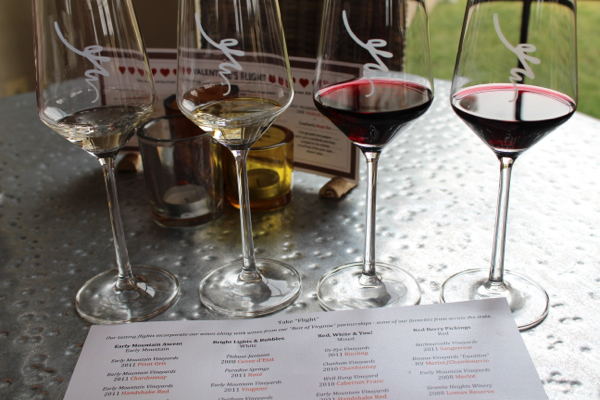
So what’s up with all of this flight business? Readers may recall that we attended the opening of Early Mountain Vineyards last year, and we did report on the Early Mountain’s concept as envisioned by Jean and Steve Case. A short summary of that vision here—Early Mountain Vineyards celebrates the “best of Virginia” and therefore presents for tasting and purchase the quality wines produced by themselves and other participating Virginia wineries. Therefore, a tasting at Early Mountain Vineyards occurs in flights: 1) Early Mountain Ascent, 2) Bright Lights & Bubbles, 3) Red White & You!, and 4) Red Berry Pickings. These should be self-explanatory; however, I will provide a quick description of each: Flight 1: all Early Mountain wines both red and white, #2: bubbly!, #3: a mix of red and white wines from several vineyards, and #4: all red wines from various vineyards.

Decisions, decision! However, we each selected our own flight with Paul opting for the Early Mountain Ascent. My own choice was the Red, White & You!. Our tastings were seated, and we planted ourselves at a table facing the majestic mountain views; it was a very cold day, so the crackling fireplace created the right setting (and the right temperature) to enjoy our flights.
earlymountainflights3
Paul’s Early Mountain Ascent featured the 2011 Pinot Gris, 2011 Chardonnay, 2011 Handshake Red (a blend), and the 2008 Merlot. He favored the Chardonnay that was blended with a bit of Viognier to present a complex wine with pear and citrus elements and a subtle tropical fruit note. Of the reds, Paul preferred the Handshake Red with its dark fruit flavors and earthy notes. It was a bit tight, though, so some swirling may be needed to coax the aromas to move forward.
earlymountainflights2
I had a hard time selecting my faves from the Red, White & You flight. This flight included the Ox-Eye 2011 Riesling, Chatham Vineyards 2010 Chardonnay, Well Hung Vineyard 2010 Cabernet Franc, and Early Mountain Vineyards 2011 Handshake. I kept grabbing the glass of Chardonnay from Chatham Vineyards, and that normally indicates a winner. However, The Ox-Eye Riesling intrigued me since Riesling in Virginia tends to be subpar. However, elegant aromatics and softer notes of stone fruit that begged for a second (or third) sip drive this particular Riesling. Of the reds, I appreciated the Handshake Red but finished my sample of the 2010 Cabernet Franc from Well Hung Vineyard with its aromas of violet and seed berries. Bright Cherry and raspberry flavors ended with a peppery finish to make for a wine that could be enjoyed on its own or with food.

Patrick was our tasting associate; of course, we tend to ask lots of questions, and Patrick answered all of them. We did know that winemaker Franz Ventre has left Early Mountain Vineyards, and assistant winemaker Steve Monson currently overseas the winemaking. Future plans also include new plantings in the vineyard, and the Best of Virginia concept will continue to be the guiding philosophy.
earlymountainflights4
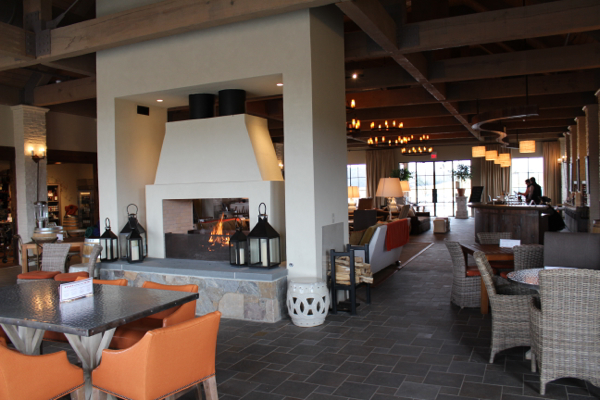
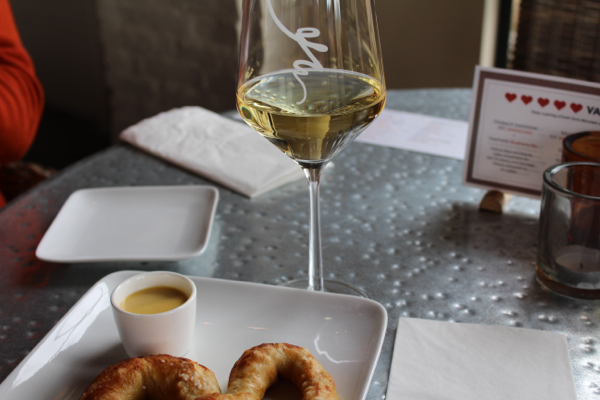
I was awed by the spacious yet tasteful facility with its warm earth tones and regretted finishing my last sip of wine. We snacked on a warm, homemade pretzel with a glass of the 2011 Petit Manseng and appreciated the winter’s landscape while wondering which colors spring would add to the pallet. We are certain that we will return to Early Mountain Vineyards soon. Be sure to schedule your own “flight” soon, and mention that Virginia Wine Time sent you!
Round Up Time

Too many wineries and not enough time to write about all of our experiences—this seems to be the ongoing dilemma for us. I will use this post to play catch up on wineries that we have recently visited:

Delaplane Cellars: We always look forward to a tasting here if only to enjoy the gorgeous view from the windows; of course the wines are pretty good too. The 2009 Melange Rouge remains my favorite on the tasting menu; readers may recall that I enjoyed this Bordeaux-style blend the last time we tasted at Delaplane Cellars. Paul enjoyed the smoky 2009 Tannat with its notes of plum and dried herbs. The 2011 Cabernet Franc was the lightest-bodied red and yet the most versatile red wine on the menu. The bright fruit flavors and peppery elements make for a wine that can be served on its own, with fish or pork, or with Thanksgiving fare that features herbed turkey and cranberry sauce. White wines, you ask? Paul was a big fan of the 2011 Maggie’s Viognier with its floral notes and orange blossom notes. Looking for a reason to join Delaplane’s wine club? The cellar-worthy 2010 Syrah might provide convincing evidence. A smoky nose leads to dark plum and tobacco aromas with similar dark fruit flavors and spicy elements in the mouth. I detected a hint of caramel at the end too.
roundup05
roundup07
roundup06
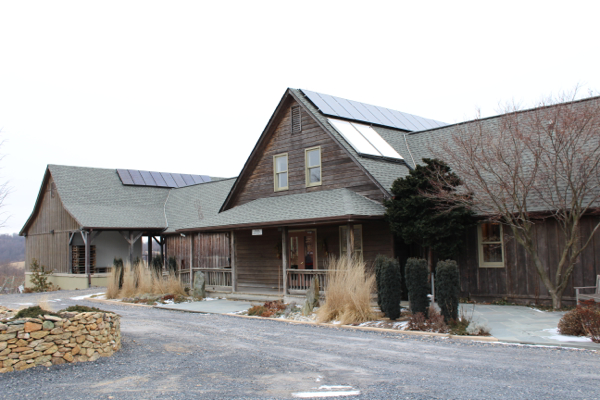
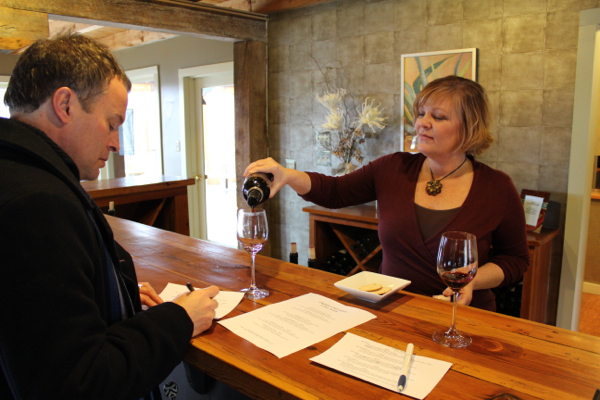
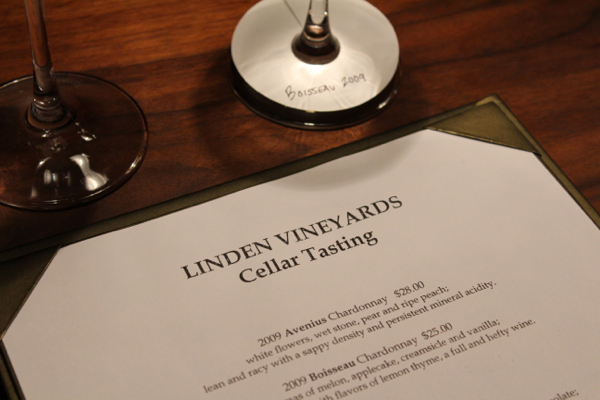
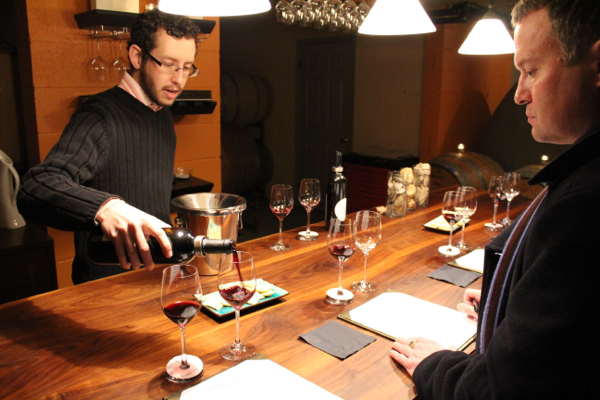
Linden Vineyards: Too easy to say all of the above, but that would be the answer. We always sign up for the cellar tasting, too, and that complicates our decision to pick a favorite wine. From the regular tasting menu, we were fans of creamy 2010 Chardonnay and the jammy 2010 Petit Verdot. The cellar tasting usually brings out the split decisions. We both agreed that the fuller-bodied 2009 Boisseau Chardonnay was ready for prime time. Rich pear and vanilla aromas were matched by ripe pear and honey flavors. However, I own two bottles of the 2009 Avenius Chardonnay, and I was well pleased with its progression in the bottle. Drink now? Enjoy the Boisseau. Enjoy later? Be patient with the Avenius.

On to the red wines, and these included the 2009 Boisseau Red and the 2009 Hardscrabble Red. Ripe berry fruit and violet notes characterized the Merlot-driven Boisseau, and it was Paul’s immediate favorite. However, I preferred the complexity of the 2009 Hardscrabble Red. Cabernet Sauvignon (64%) dominates the blend, and Merlot (19%), Petit Verdot (10%), and Cabernet Franc (7%) serve as sidekicks. Still tight on the nose, swirling brought forward the dark berry and earthy elements. I made certain to purchase a bottle of this special wine before the left the winery! The cellar tasting always closes with a comparison of dessert wines, and the 2005 and 2008 Late Harvest Vidal were presented for our enjoyment. Paul preferred the fresh 2008 Late Harvest Vidal with its bright floral aromas and vibrant tropical fruit and ginger spice components. I appreciated the older 2005 with its more honeyed texture and dried apricot and citrus flavors.
roundup01
roundup02
roundup03
roundup04
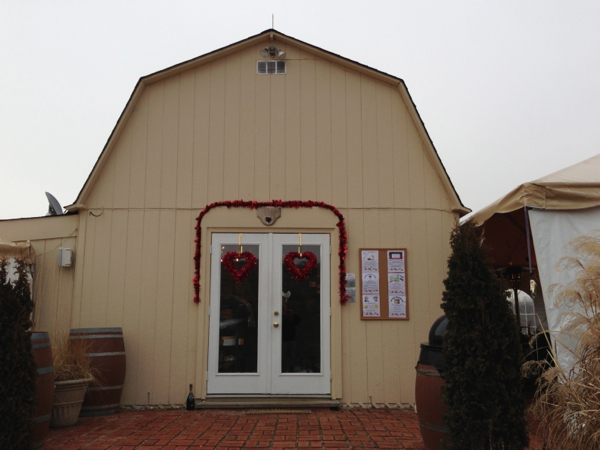
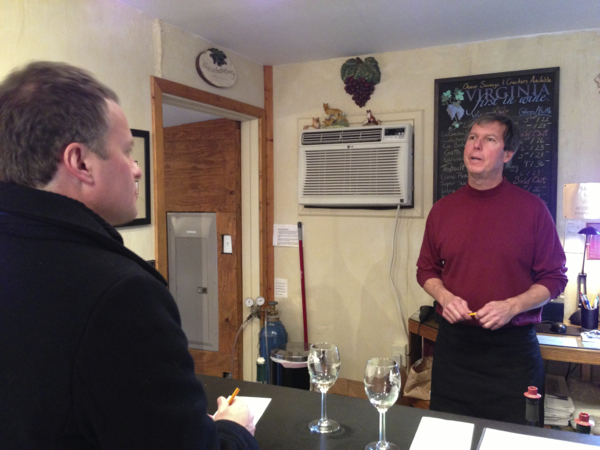
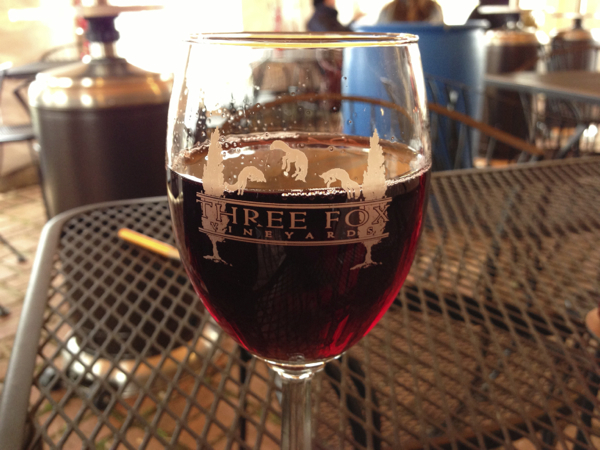
Three Fox Vineyards: The 2011 Gatto Bianco was an easy favorite. This white wine is a blend of Chardonnay and Vidal Blanc, and the 2% residual sugar brings forward the tropical fruit elements. The Leggero Chardonnay is also noteworthy for its pear and pineapple characteristics and crisp finish. We were also fast fans of the 2009 Piemontese Nebbiolo with its aromas of clover and tobacco. Swirling coaxed raspberry, blackberry and pepper notes to move forward. Port fans may also like the Rosso Dolce Chambourcin and its elements of dark cherry and black plum; a mocha splash at the end begged for chocolate; Paul suggested a tobacco treat, but I’ll let readers decide on that one. A dark chocolate brownie for me, and a cigar for Paul!
roundup10
roundup08
roundup09
We made certain to purchase our favorite wines at each of these wineries. Readers may have already concluded that Virginia wineries offer a diverse selection of quality wines, and the only right choices are the ones that best please the palate. Therefore, get out on the wine trails and discover which Virginia wines best suit your own palate! Start with a visit to these wineries, and mention that Virginia Wine Time sent you.