We attended the officially opening of Early Mountain Vineyards, formerly known as Sweeley Estate Vineyards, this past Saturday. Owners Steve and Jean Case actually re-launched the winery under the Early Mountain name in June; however, this event marked the official debut of the Early Mountain brand and concept with industry experts, journalists, bloggers and state officials (Governor McDonnell and Todd Haymore) on hand to toast the future of what will be a highly successful venture.


A new focus was clearly displayed from the moment we walked into the renovated tasting room. Adjectives such as open, light, and warm came to mind. The already expansive tasting room was resigned with an open concept in mind, and warm earth and neutral tones lightened the walls. Light poured through windows, and mountain views greeted the eye at every glance. We were escorted to the dining room located to the right of the main entrance, and here too the interior design can be described as open, bright, and inviting. Guests were handed champagne flute filled with sparkling wine from Thibaut-Janisson, and Jean Case warmly greeted us to the event.

The day’s events began with a luncheon that showcased seasonal fare from the local area. These included spicy sausage, smoked salmon, artisanal cheeses, and fresh breads. These were paired with the Early Mountain Pinot Gris 2011 and the Early Mountain Merlot 2008. It was at the luncheon that Jean Case addressed the attendees and filled us in on the Early Mountain concept known as Best of Virginia. Jean revealed a lifelong love of Virginia as well as a lifelong love of wine. She became excited about the state’s growing wine industry and wanted to be a part of it; in particular, Jean wanted to bring the best Virginia wines to consumers. The Best of Virginia, then is an initiative designed to “elevate, celebrate and champion the finest Virginia wine to both consumers and the wine industry” with an ultimate goal of increasing consumer exposure to Virginia wine. Therefore, Early Mountain Vineyards will not only feature their own wines in the tasting room but also other Virginia wines from Ankida Ridge, Barboursville, Breaux Vineyards, Chatham, King Family, Linden, and Thibaut-Janisson. Heading the Early Mountain team of experts to identify the Best of Virginia is sommelier Michelle Gueydan who has worked for celebrity chef John Besh; Gueydan travels the state to identify the top wines in Virginia. These selections then become part of Early Mountain’s wine portfolio, and consumers can then purchase these wines in the tasting room.

After lunch, we were then given a guided tour of the vineyard and barrel room by winemaker Frantz Ventre. Frantz had been the winemaker for Sweeley Estate and therefore has intimate knowledge of the vineyard, its soils and microclimate. We were led to a block of Cabernet Franc that looked ripened and about ready for harvest. It was here that Frantz shared with us the advantages of the site’s red clay and quartz soils, and its location allowed the mountains to protect the vineyard from weather hazards such as heavy rain and hail. Mountain breezes help to regulate temperatures while warding off flying pests that can affect the grapes. We also learned that a goal at Early Mountain Vineyards is to move away from heavy chemical sprays with a complete conversion to bio-dynamic practices and products in the near future.


We were guided from the vineyard to the barrel room where we were treated to a sample of the newly released Chardonnay. As we transitioned from the warm outdoors to the cool climate of the barrel room, the crisp Chardonnay proved to be quite refreshing. In the barrel room, we learned that Early Mountain’s focus will be on smaller production of quality wines (about 3000-4000 cases) as opposed to Sweeley Estates’ emphasis on volume. Both the tank and barrel room were spotlessly clean. As we toured the facility, Jean Case commended the Sweeley’s for dedicating their resources to building a quality winery, including the barrel room and the state-of-the art equipment.


Our tour then led us back to the tasting room where we could then taste wines from the Best portfolio and walk about the tasting room. A sumptuous buffet awaited us with wait staff offering oysters on crackers, salmon slices, and mushrooms on toast points. A market shop featured Best of Virginia wines, gourmet food items, and other wine-related products. As we sipped and snacked, we chatted with other bloggers and industry folks such as Annette Boyd, head of the Virginia Marketing Office, Melissa Harris of Flavor magazine, and Claude DelFosse of DelFosse Vineyards.

We were very pleased with the new direction that is being taken by Early Mountain Vineyards. The unique Best of Virginia concept, a sharper focus in the vineyards, and a quality team of passionate experts headed by Jean Case should steer Early Mountain Vineyards to a bright future. We know that we will return to Early Mountain Vineyards in the near future, but readers may want to visit sooner especially with fall colors on the way. Trust me, the views will be spectacular and more so with a favorite Best wine. Be sure to mention, though, that Virginia Wine Time sent you.
Monthly Archives: September 2012
We Add Reynard Florence to Visits List
Yes, we are getting to yet another milestone in our growing list of wineries visited. To date, we have visited 148 wineries, and we hope to reach 150 by the end of the year. During a recent visit to the Monticello area, we were able to add relative newbie Reynard Florence Vineyard the list.
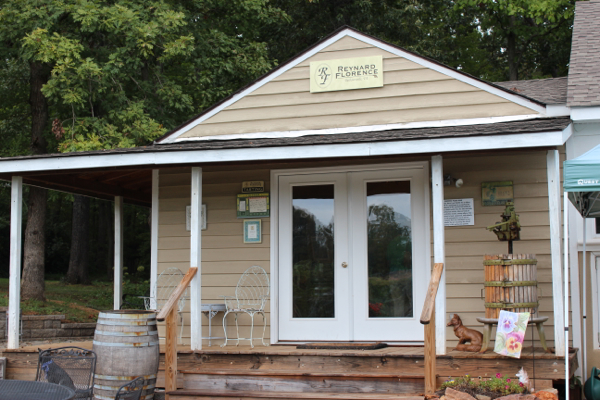
Sue Haney was our tasting associate on the day of our visit, and she proved to be quite skillful in presenting the wines at Reynard Florence Vineyards. Sue also provided us with information about the vineyard and winery, because we always ask those pesky questions! Anyway, our tasting began with four white wines including two white blends that featured Petit Manseng. The first white offering was also my favorite, the crisp Reynard Blanc 2010. This is a blend of Riesling (33%), Traminette (33%), Petit Manseng (25%), and Viognier (89%) and presented a full floral nose and tropical fruit aromas; nice citrus flavors and a vibrant acidity made it an easy sipper. A residual sugar of 3% served to enhance the fruit characteristics of the wine without making it cloyingly sweet. The Reynard Blanc Monticello 2011 was likewise aromatic and fruity with a slightly more weight in the mouth. The blend includes Traminette (33.3%), Vidal Blanc (33.3%), and petit Manseng (33.3%) and spent some time in neutral oak; it likewise has a 3% residual sugar.
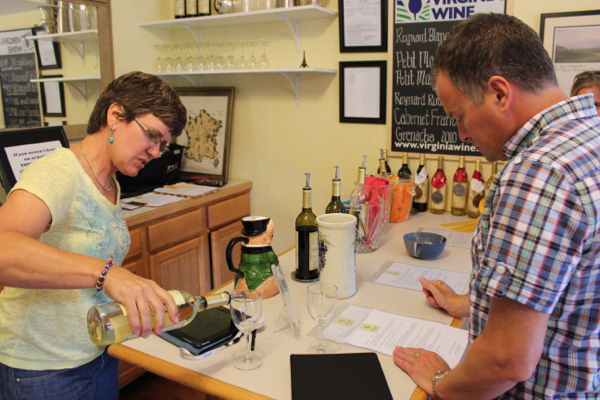
The next two white offerings were Petit Manseng from two different vintages— 2010 and 2011. Petit Manseng is the esoteric varietal that is catching on in Virginia in much the same way as Viognier did several years ago. Of the two, I preferred the 2010 vintage. It offered a rich palate of pear, lychee nut and straw; although the residual sugar clocked in at 6%, I thought that it had a leaner edge than the 2011 counterpart. Paul favored the 2011 version that shared the same characteristics as the older vintage but I noted a more viscous mouth feel. We’re paying more attention to Petit Manseng, and I must admit that I still educating my palate about the grape. However, it is beginning to emerge from its usual designation as a dessert wine as winemakers are experimenting with Petit Manseng as a possible rival to Viognier a leading grape in Virginia.
Of the red wines, the Cabernet Franc 2010 was described as a “Virginia classic”, and it indeed it was. Light bodied with flavors of raspberry and cherry, it also presented subtle earthy nuances with a peppery finish. The Reynard Rouge 2010, a blend of Merlot and Malbec with a “touch” of Viognier, presented more complexity with elements of blackberry, cherry, tobacco, and vanilla.
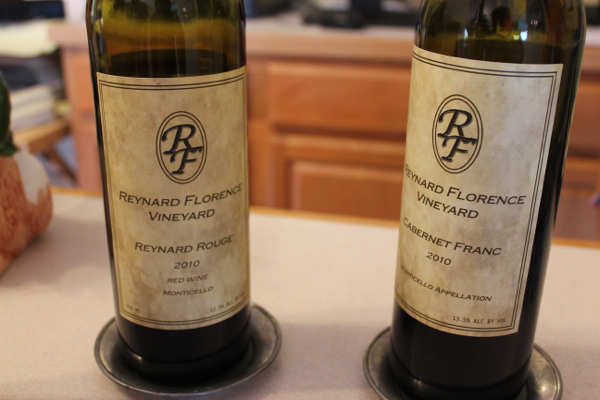
As we swirled and sipped at the tasting bar, Sue provided us with a brief background about the vineyard and winery. Owners Roe and Dee (Florence) Allison planted their vineyard, located in the foothills of the Blue Ridge Mountains, in 2006 with a first harvest of grapes in 2009. By 2006, both earned certificates in viticulture, and they maintain that good winemaking begins in the vineyard. They are therefore dedicated to appropriate vineyard practices that include growing varietals that are appropriate to their site. They currently have less than one acre of property planted in vines, and these yield a production of 500 cases; however, the goal is to increase production to at least 1000 cases. Their flagship grape? Petit Manseng, of course. The Allisons also grow Grenache, a grape that is widely planted in France’s Languedoc region. Michael Schaps is the winemaker.
With our tasting done, we purchased our favorite Reynard Florence wines, and we know that will return to Reynard Florence Vineyard to taste their latest releases. Plan a visit to Reynard Florence Vineyard and mention that Virginia Wine Time sent you.
Gray Ghost Harvest
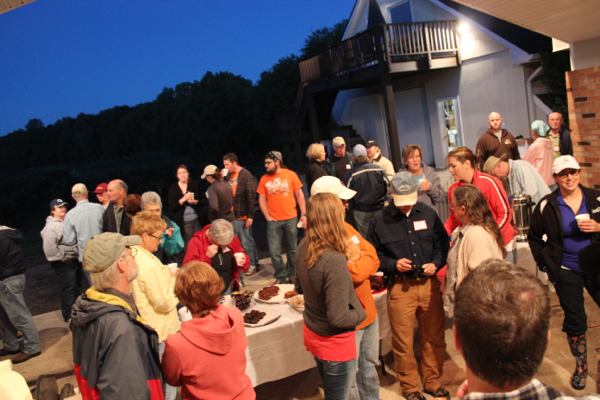
On Sunday we went to Gray Ghost to help harvest the chardonnay grapes. We do this every year and always have a good time. Here are some pictures from the day.
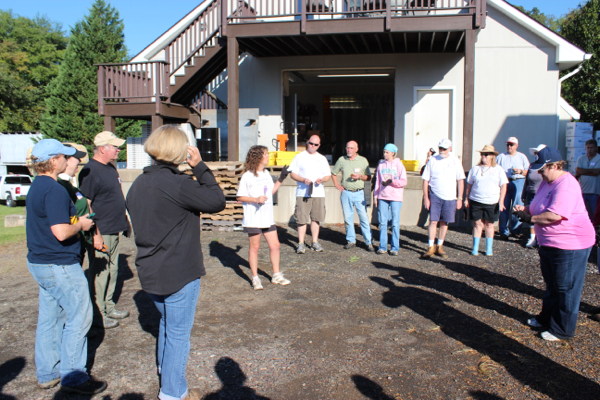
We all gathered very early in the morning.

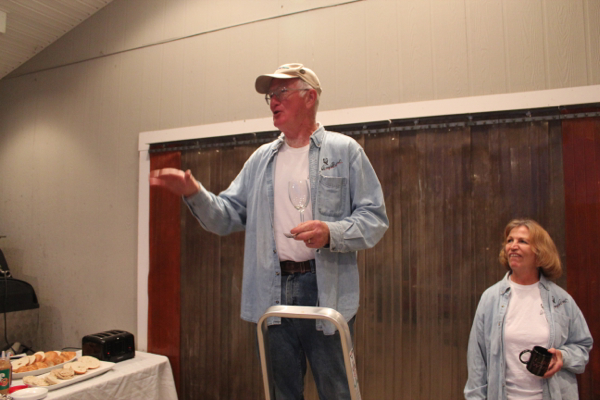
Al Kellert told us all about the process.

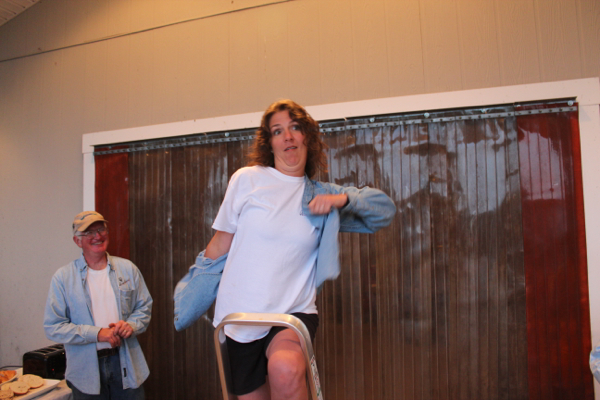
Amy showed us what this year’s T-shirt looked like.

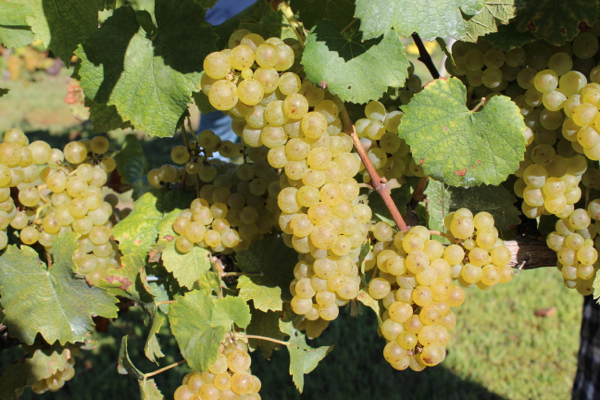
These are the grapes we were harvesting.

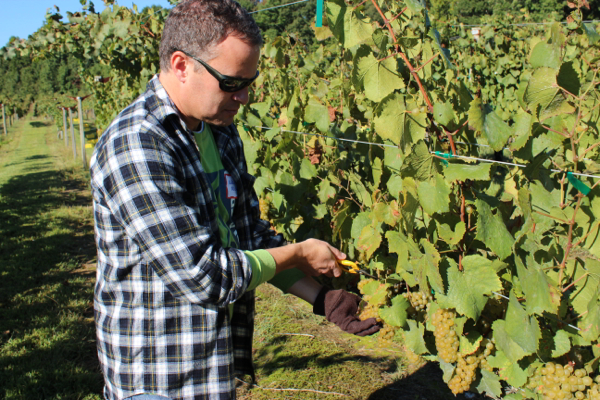
Here’s Warren harvesting the grapes.

During a break, Amy reminded us of a few things to remember when harvesting.

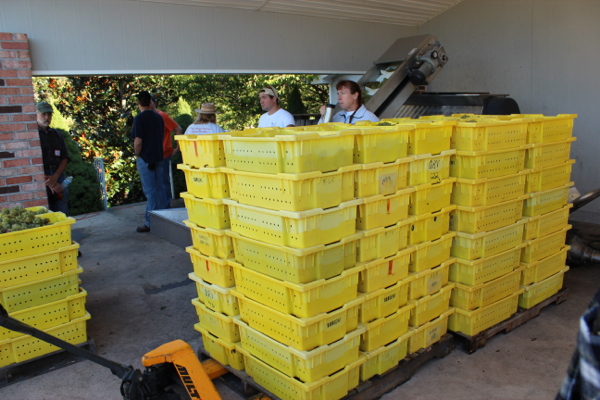
Al estimated we brought in more than 10 tons of grapes.

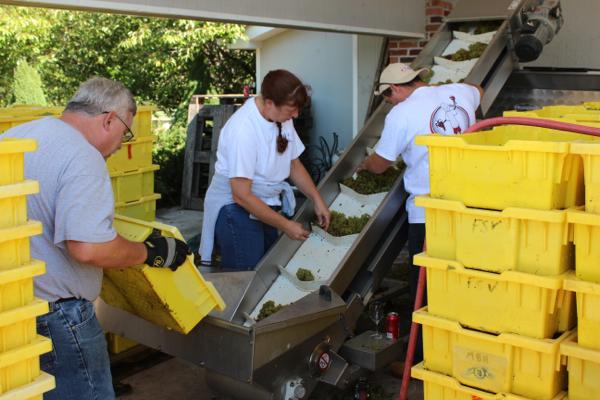
The grapes were put through the de-stemmer.

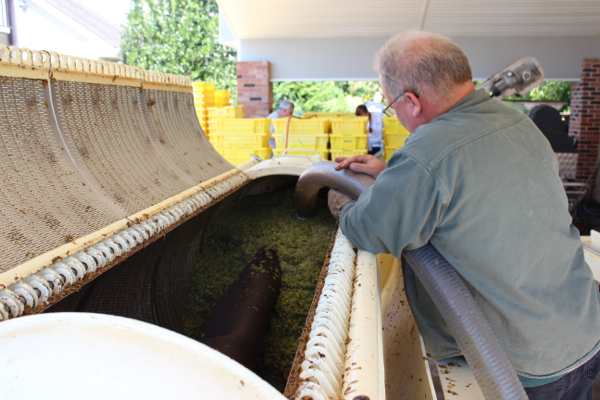
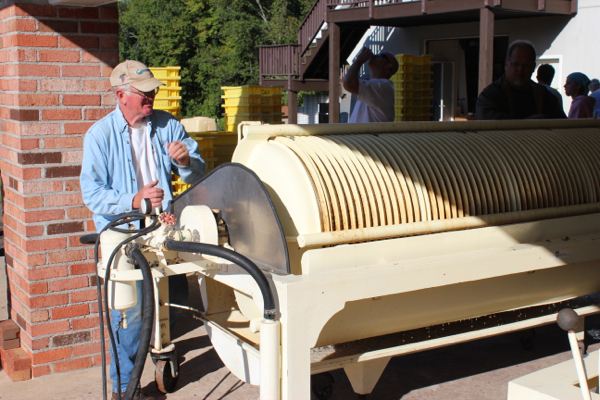
Then they were fed into the bladder press.

Here’s Al working the bladder press.

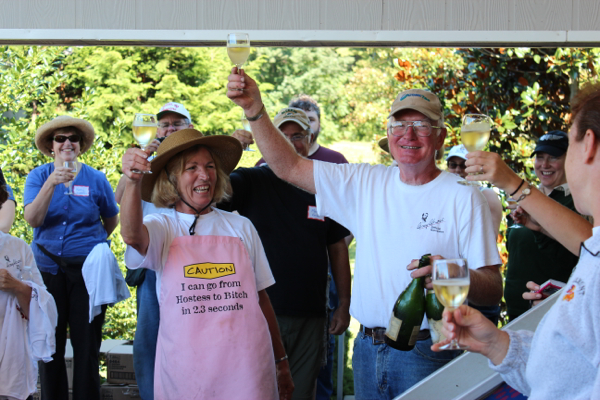
When we were all done we had a congratulatory toast.

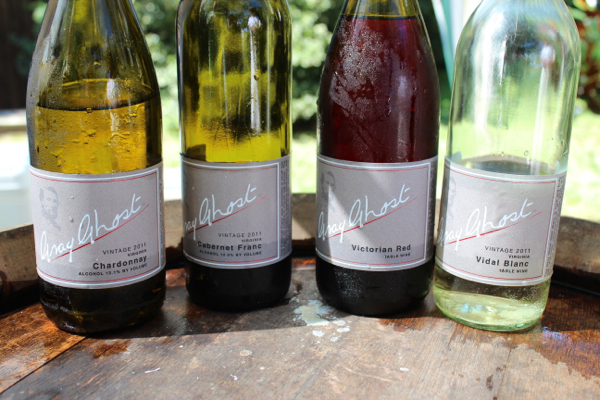
And this is why we work so hard to harvest the grapes.